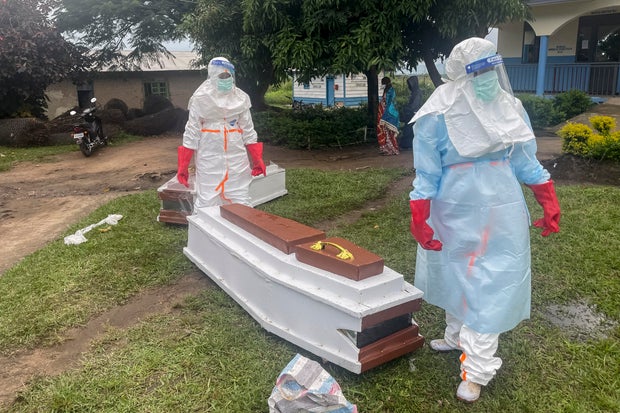
The head of the World Health Organization announced that the Ebola outbreak in the Democratic Republic of Congo is spreading rapidly, posing a very high risk at the national level. On the same day, northeastern Congo authorities banned funeral wakes and gatherings of more than 50 people.
WHO Director-General Tedros Adhanom Ghebreyesus raised the organization’s alert level concerning the outbreak’s spread within Congo. While the risk remains high in the region, it remains low at the global level.
“The Ebola outbreak in the Democratic Republic of the Congo is spreading rapidly,” Ghebreyesus stated. “We are now revising our risk assessment to very high at the national level.”
Medical staff, clad in personal protective equipment, are responding to the outbreak, which has confirmed 82 cases and seven deaths in Congo. The epidemic appears larger with approximately 750 suspected cases and 177 suspected deaths.
Neighboring Uganda’s situation is stable, although two confirmed cases and one death related to visits from Congo were noted.
Congo’s provincial government temporarily halted wakes and gatherings exceeding 50 people, mandating funerals adhere to stringent health protocols. Journalists now require permits to report on the outbreak, complicating their efforts.
Health officials face challenges due to community resistance, misinformation, and conflicts between medical policies and local customs, including traditional burial practices.
A setback occurred when locals in Rwampara set fire to an Ebola treatment center after being prohibited from retrieving the body of a deceased local man. A witness described the violence sparked by ongoing fears and anger over the health crisis. The police’s attempt to calm the situation proved unsuccessful.
Treatment centers are crucial in controlling the virus’s spread since bodies of Ebola victims remain highly contagious. Health workers are managing burials amidst protests from victims’ families.
Images from Reuters captured the burning center, where Congolese police stood guard as agencies intensified containment efforts.
While calm was later restored, the complexities faced by authorities and aid agencies remain pronounced. Early detection of the virus is critical, yet regional health infrastructure is weakened, further exacerbated by cuts in international aid.
There are 920,000 internally displaced people in Ituri Province, according to the UN, complicating crisis responses due to armed conflicts.
Additionally, the Bundibugyo strain responsible for the outbreak lacks immediate vaccine availability; experts predict availability in six to nine months.
Red Cross official Ariel Kestens emphasized the urgency of acting swiftly and working closely with communities during this critical period.
Ebola spreads through contact with bodily fluids and presents symptoms such as fever, vomiting, diarrhea, muscle pain, and potential internal and external bleeding.
The virus remained undetected for weeks due to prior testing for a different Ebola strain commonly seen in Congo.
Both the U.S. government and other organizations have implemented travel restrictions as a preventive measure.
Due to the outbreak, several events like Congo’s soccer team training camp and the India-Africa Forum Summit in New Delhi have been postponed.
No “patient zero” has been identified, indicating the outbreak might have started months ago, according to WHO expert Anaïs Legand.
 Lawsuits Claim Vision Loss Risk from GLP-1 Medications
 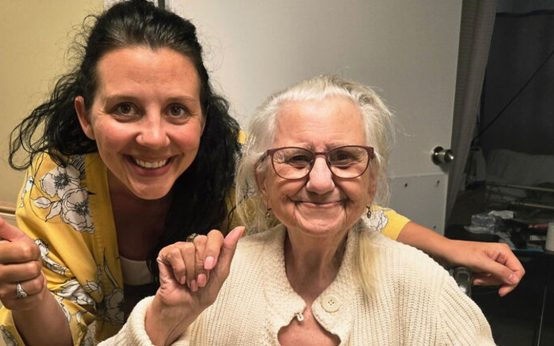 Concerns Raised Over Canadian Assisted-Dying Program
  States Tighten Regulations on Tianeptine, Known as ‘Gas Station Heroin’
  Lithuanian President Urges U.S. to Maintain Military Presence Amid NATO Challenges
 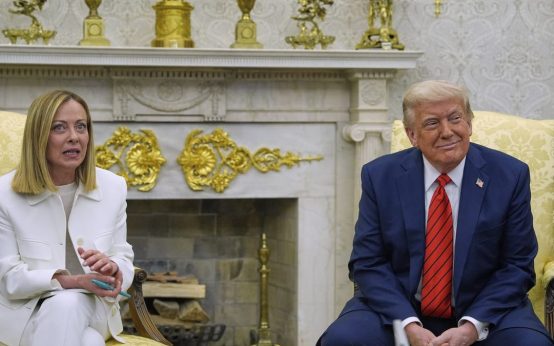 Italian PM Giorgia Meloni Skips UN General Assembly Amid U.S. Tensions
 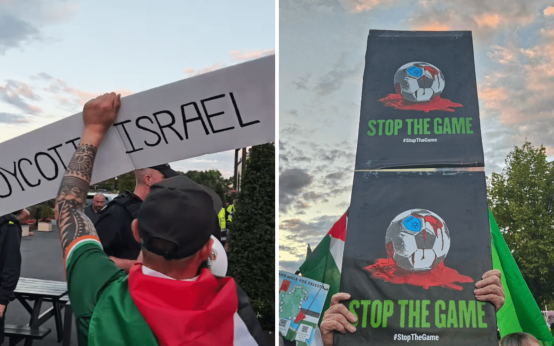 Ireland Faces Calls to Boycott Matches Against Israel