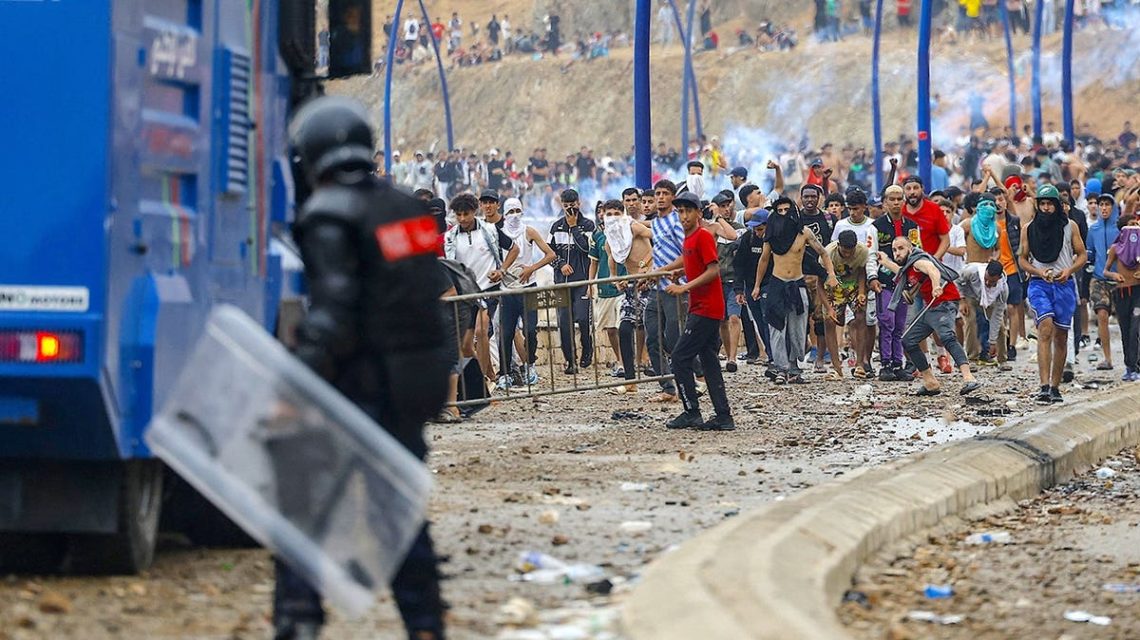
The arrival of approximately 72,000 Moroccan migrants in Ceuta, Spain, highlights Europe’s complex migration challenges and the potential rise in Islamic terrorism. Experts urge European leaders to address radical Islamism’s roots to prevent terrorism effectively.
A Europol report from July showed Spain leading in arrests related to jihadist terrorism, with 117 cases in 2025. Recent events in Ceuta have also exposed the tensions between Spain and Morocco, as reports emerged of previously deported individuals crossing back into Ceuta. However, Spain’s interior ministry stated that these arrivals do not pose a threat to public security.
“This is Europe. This is the way it has been for the last 15 years,” says Lorenzo Vidino, Director of the Program on Extremism at The George Washington University. “Europe has learned to live with this reality.”
Mideast and European analysts emphasize the need for honesty about the sources of terrorism. Tom Gross, a British political commentator, notes that Western Europe faces significant threats from radical Islamic influences. He points out the necessity for European leaders to support efforts against regimes like Iran’s Islamic dictatorship.
Following an antisemitic attack in London, the UK’s terror threat level was raised to “severe.” Mayor Sadiq Khan’s administration has invested £16 million in community initiatives to combat hate and extremism, indicating a strong stance against violence.
Recent attacks, such as the incident at Berlin’s Pride Parade reportedly carried out by an Islamist extremist, highlight the ongoing threats. German authorities have faced criticism for releasing suspects with known ties to Islamic State activity.
Germany’s federal intelligence reports a growing number of individuals involved in its Islamist scene, with a significant portion linked to jihadi violence. This rise correlates with an increase in crimes attributed to religious ideologies.
Expert Nervana Mahmoud warns that Europe’s battle against Islamist extremism requires addressing radicalization’s root causes. Efforts must focus on disrupting foreign funding and ideological networks fueling such movements. This approach aims to reduce the risk of future attacks.
The UK has seen several convictions related to Islamist terrorism, including Abdullah Bin Yasir, who was sentenced for possessing bomb-making guides. These developments reaffirm the UK’s commitment to counter-terrorism.
Northern Europe faces a similarly significant terrorist threat, as reported by Danish security services. Despite improvements, challenges remain as small countries adapt to radicalization threats.
Benjamin Weinthal from Fox News Digital continues to monitor developments across Europe. Follow him for updates on security and international affairs.
 Secretary Rubio Discusses Middle East Conflict and NATO Relations
  Israeli Leader’s Upcoming U.N. Assembly Speech Marked by Controversy
  United States Secures Arctic Defense Pact
  Trump’s Engagements at the UN: Focus on Ukraine and White House Developments
  Trump Administration to Admit 17,500 Afrikaner Refugees from South Africa
  Trump’s Vision for Global Security: Iran, AI, and the Role of the U.S.