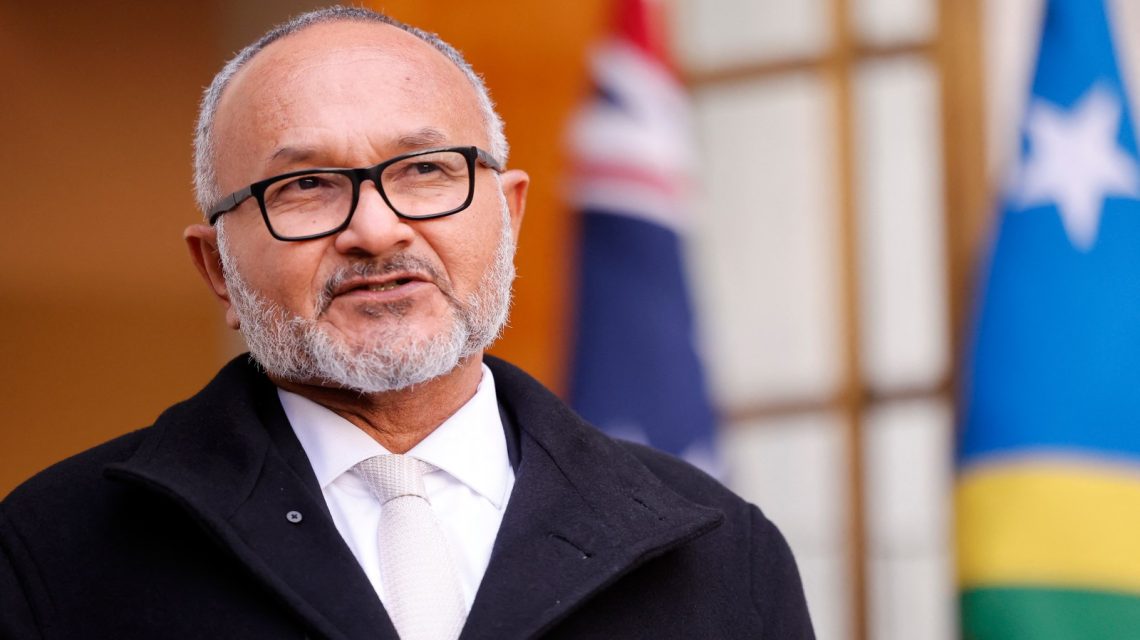
A proposed treaty between Australia and the Solomon Islands may hinder China’s rapid diplomatic efforts in the South Pacific. However, it involves significant financial investment. Australia has pledged approximately $980 million Australian dollars, equivalent to over $700 million U.S. dollars, to support the Solomon Islands’ economy and politics. This information became public through a leaked message, as reported by Australia’s ABC News.
Washington views the treaty as beneficial. Solomon Islands’ shift away from China follows Australia’s new security agreements with Vanuatu and Fiji earlier in the year. China’s reaction is negative, as it provided over $1 billion in aid to these nations in the past 20 years.
Checkbook diplomacy matters more to small and medium powers than appeals to liberal democratic values.
China faces potential loss of another strategic partner, underscoring a principle acknowledged by both Xi Jinping and Donald Trump.
No Free Lunch
Much like life, politics requires cost. The U.S. learned this lesson 40 years ago with its “compacts of free association” with Micronesia, the Marshall Islands, and Palau. These treaties exchanged economic aid and protection for U.S. military access. A policy funded by taxpayers is not certain, particularly when economic priorities shift domestically.
In 2024, U.S. defense leaders found relief with Congress approving $7.1 billion for COFA funding through 2043, thus securing valuable gains amid global competition with China.
China seizes opportunities in regions overlooked by the West, including Eastern Europe, Central Asia, Latin America, and the Indo-Pacific.
Since 2008, China committed $7.5 billion and spent at least $5 billion in Pacific islands development aid, as per Lowy Institute data. The aid funded infrastructure projects under China’s Belt and Road Initiative, including $516 million for Vanuatu and $529 million for Fiji.
Australia reclaimed these neighbors with fiscal support promises amounting to $1 billion over ten years. Although some Australians may find this difficult, U.S. officials commend Australia’s effort to counter China regionally.
Trump Speaks Xi’s Language
Xi Jinping’s effective diplomacy is due to understanding America’s traditional partners value presence. Trump recognizes this too. The peace treaty between Armenia and Azerbaijan was complemented by U.S. plans to invest $2.5 billion in a South Caucasus economic corridor, countering Russian and Iranian influence.
The U.S. and New Zealand’s agreement to fund a new port on Cook Islands’ Penrhyn atoll aimed to counter Chinese attempts to access ocean floor minerals.
The Solomon Islands’ shift away from China surprised Beijing, particularly after a 2022 agreement with China for infrastructure and political support. According to Lowy Institute data, $194 million in aid, mostly provided after 2019, was given to Solomon Islands. The sweeping agreement China pursued in 2022 ultimately faltered.
Matthew Wale, Solomon Islands’ prime minister since May, played pivotal roles in China’s South Pacific retreat. Wale has reservations about China’s reliability. He cited a non-disclosure agreement preventing him from discussing his country’s pact details.
The U.S. and allies have a rare chance to regain South Pacific influence. Yet, China remains a significant presence. Demand for Chinese loans in the Pacific decreased, owing to debt concerns. Despite China’s fiscal constraints, state-owned enterprises dominate Pacific infrastructure construction, according to the Lowy Institute.
 Assassin of Chilean Diplomat Orlando Letelier Faces Deportation 50 Years After Assassination
  Gorillaz and Macklemore Respond to Controversy Over Israel-Palestine Statements
  Investigation into Lion Deaths in Tanzania
  Merz Stays Resolute Amid Electoral Shifts in Germany
  The Impact of Arts and Closure on Democracy
  U.S. Ambassador Comments on Iran War Duration Amid Political Concerns