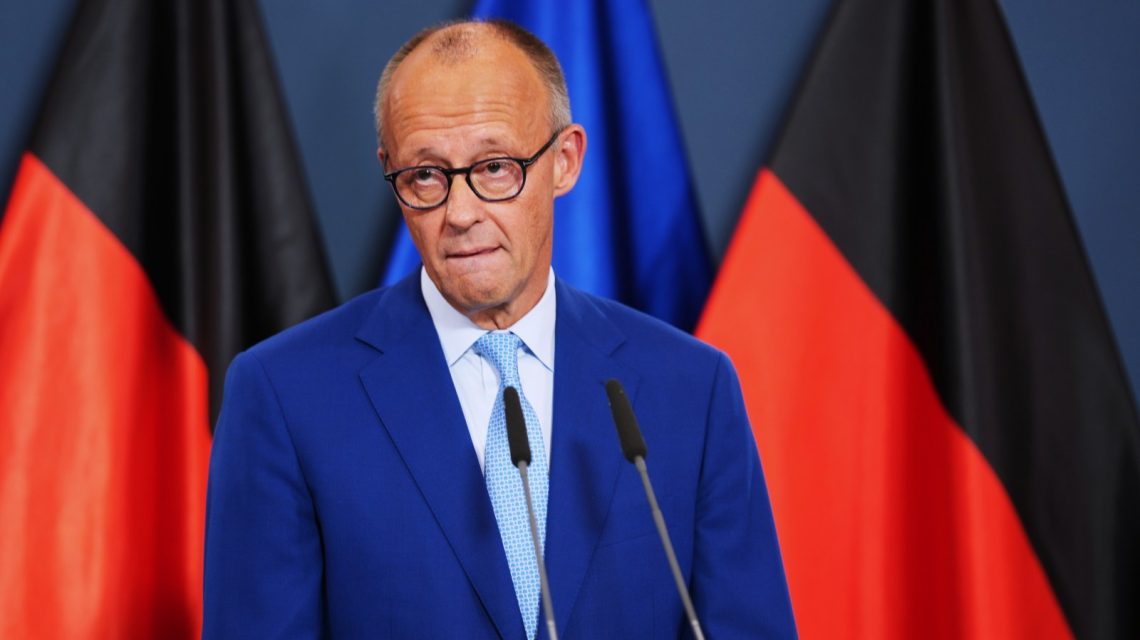
German Chancellor Friedrich Merz committed to remaining in office despite his conservative bloc facing setbacks in regional elections. The far-right Alternative for Germany (AfD) secured another victory, reflecting its growing influence. In Mecklenburg-Western Pomerania, the AfD clinched 37 percent of the vote, and in Berlin, it garnered 15.7 percent, according to ARD exit polls. Meanwhile, Merz’s Christian Democratic Union (CDU) dropped to 5.5 percent in Mecklenburg-Western Pomerania and fell to second place with 20 percent in Berlin. The Left Party (Die Linke) emerged successful in Berlin with 24.5 percent.
Merz called the election results a “disaster” but dismissed suggestions to step down. He affirmed his intention to continue leading the government amidst rising opposition from critics and some coalition members, as reported by the Associated Press. “What needs to be done now requires backbone, steadfastness, and patience,” Merz asserted in a statement upon the release of exit polls. “I will demonstrate these qualities as chairman of the CDU and, above all, as Chancellor of our country.”
The AfD’s rise reflects voter dissatisfaction and skepticism towards traditional parties, especially as Germany faces economic challenges, immigration debates, and disillusionment with mainstream political organizations. This trend mirrors the rise of populist and nationalist movements across Europe.
The elections could significantly influence Germany’s political dynamics ahead of future contests. Political analysts and rival parties are monitoring whether the AfD’s regional achievements might extend to a broader national foothold.
AfD’s Previous Success
Before this weekend’s election, the AfD gained momentum from a significant win in Saxony-Anhalt on September 6. In that eastern state, the party captured 43.8 percent of the vote, far surpassing the CDU’s 17.2 percent. Although the AfD secured first place by a considerable margin, it did not achieve an outright majority, obtaining 39 of 83 seats in the state parliament. This marked the most substantial performance by a far-right party in a German state election since World War II.
Despite the AfD’s electoral gains, most mainstream German parties continue to adhere to a policy of neither governing with nor formally cooperating with the far-right party. This stance raises questions about political power dynamics in regions where the AfD prevails.
Note: Newsweek’s reporters and editors used Martyn, their AI assistant, to produce this story. For further details, contact editors Steve Mollman and Anthony Murray.
 U.S.-Iran Relations and Diplomacy at Upcoming U.N. Assembly
  US-China Relations Under Scrutiny: Expert Warns of Escalating Tensions
  Extradition of Suspects in Haitian President’s Assassination
  No Timeline for End of Iran Conflict
  Trump’s UN Visit: Focus on Iran and Reforming the Global Institution
  North Korea’s Latest Missile Launches and Regional Tensions