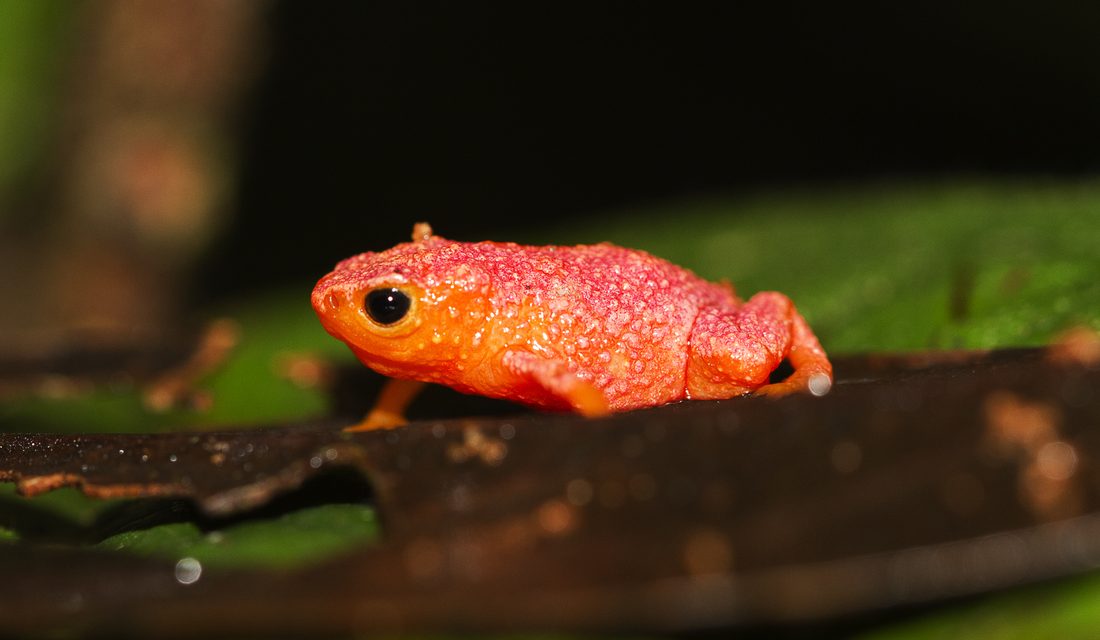
Brachycephalus ephippium, commonly known as the pumpkin toadlet, is a small amphibian found in the neotropical rainforests along the Atlantic coast of southeastern Brazil. Despite its name, it neither resembles a pumpkin nor is it a true toad.
As an adult, this tiny creature is about the size of a chickpea. This miniature scale presents both advantages and challenges. While their small size helps them blend into their environment, it also comes with limitations. One major drawback is the underdeveloped inner ear, affecting the toadlet’s ability to move efficiently. This results in awkward, erratic movements, setting them apart from other frogs.
Katie Wu, an Atlantic science writer, delves into the peculiarities of these frogs. She questions whether a frog that cannot jump well can still be classified as such. This investigation sheds light on the unusual lifestyle and evolution of pumpkin toadlets.
For those interested, additional information can be found in Katie Wu’s article titled ‘A Frog So Small, It Could Not Frog.’ Additionally, the Florida Museum offers a video displaying the toadlets’ unique movement patterns.
This content was produced by Rebecca Ramirez and underwent editing by Gabriel Spitzer. It was thoroughly fact-checked by Rachel Carlson to ensure accuracy.
 Animal Self-Medication Insights
  Carlo Rovelli’s Perspective on Physics and Ultimate Reality
  Department of Defense Legal Waiver Promotes UAP Disclosure
  Ancient Ring Offers New Insight on Pontius Pilate’s Authority
  Lost City Linked to Jesus Discovered Near the Sea of Galilee
  Genetic Study Links Personality Traits to Health Outcomes and Life Patterns