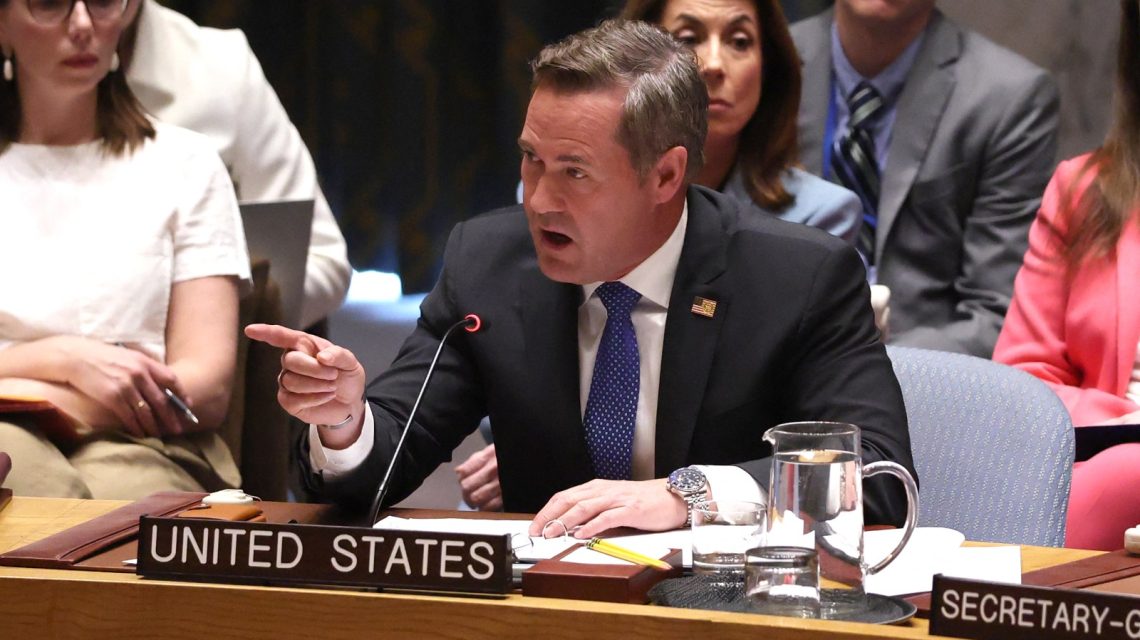
The United Nations ambassador appointed by President Donald Trump refrained from specifying a timeline for ending the ongoing conflict with Iran. This war, now nearing its seventh month, contrasts sharply with Trump’s early prediction of a resolution within weeks. The statement by Mike Waltz coincides with a new NBC News poll indicating widespread doubt, with 62 percent of voters believing the war is unjustified, and 57 percent stating their reluctance to support candidates endorsing it. These sentiments reflect growing unease within the Republican Party about the war’s political implications, especially in the context of competitive midterm elections. Newsweek attempted to reach the White House for comments on Sunday.
Waltz’s Perspective on CNN
During an appearance on CNN’s State of the Union, Waltz faced inquiries about private discussions among senior White House officials concerning the war’s potential to continue for years. Waltz responded, saying, “I wouldn’t necessarily put a timeline on it,” highlighting a deviation from Trump’s initial statement that the conflict, initiated on February 28, would conclude in “four or five weeks.” Waltz maintained that U.S. actions, such as economic pressure and a naval blockade, were effective, asserting the administration had time on its side.
His remarks came amidst escalating regional tensions. Iran issued a warning that any new U.S. attack would lead to sustained retaliation against American interests. Meanwhile, Iran-backed Houthi forces have intensified attacks in Saudi Arabia and near the Bab al-Mandab shipping corridor, strategically significant for global trade.
Despite these developments, Trump expressed optimism at a rally in North Carolina, stating, “That war is going to end very soon. Watch, you just watch.”
Poll Results: Public Skepticism
The NBC News poll results suggest the Iran war is a political burden for Republicans. Key findings reveal:
- 62 percent regarded the Iran war as unjustified.
- 57 percent expressed reluctance to support a candidate who endorses the war.
- Only 24 percent indicated a higher likelihood of supporting such candidates.
- Democrats maintain a 4-point advantage regarding voter trust to manage the Iran conflict.
The war appears to be contributing to broader political challenges for Republicans as the November midterms approach. The poll shows Trump’s approval rating at 41 percent, while 56 percent disapprove of his performance. Fifty-five percent claim Trump’s policies have adversely affected the economy.
Furthermore, 43 percent of voters regard their congressional votes as messages opposing Trump, compared to 27 percent expressing support for him. NBC noted this as the highest figure recorded in its pre-midterm polling history.
Republican Dissent
The administration faces visible dissent within Republican ranks. Seven House Republicans joined Democrats seeking to restrict further military action against Iran without congressional approval. Although largely symbolic, the resolution reflected substantial Republican defection and highlighted growing concerns regarding the prolonged conflict.
Republicans supporting the resolution included Iowa Representatives Zach Nunn and Mariannette Miller-Meeks, alongside South Carolina Representative Nancy Mace. This vote emerged as Republicans prepare to maintain a fragile House majority amidst a challenging political landscape.
Iowa Republicans Express Concerns
Particular attention was drawn to Nunn and Miller-Meeks due to their representation of highly contested districts targeted by Democrats in November. Nunn emphasized opposition to extended military engagement, stating, “Having deployed multiple times and flown over 700 combat hours in the Middle East, I will not support another open-ended war,” in a statement shared on X.
Miller-Meeks further called for the administration to outline a conflict resolution plan to Congress and the American public, focusing on returning soldiers home and reducing costs. Her remarks critiqued the war’s potential to become “another forever war.” These statements indicate concerns transcending foreign policy, touching on economic issues central to competitive races.
Both lawmakers are campaigning in a state where economic concerns and rising fuel costs are significant factors.
Economic Consequences
The political risks linked to the conflict relate not only to military issues but also to economic affordability. The NBC poll found a majority belief that Trump’s policies have negatively impacted the economy. Previous surveys identified concerns over the war’s effect on energy prices.
Earlier findings revealed overwhelming majorities stating the conflict increased oil and gas costs. This issue is particularly sensitive in rural areas, where farmers experience record diesel prices during harvest season. The war’s economic impact remains a growing concern for Republicans as voters continue to cite inflation and energy costs as primary issues.
Reuters reported ongoing disruptions in the Strait of Hormuz and Bab al-Mandab shipping corridor, exacerbating uncertainty in global energy markets.
Midterm Challenges
Upon entering office for a second term, Republicans planned to focus on immigration, border security, and crime. Instead, inflation, energy costs, and the Iran war have centered the campaign narrative. The conflict has revealed divisions within Trump’s coalition, including differing opinions on U.S. involvement duration.
Simultaneously, several Republican candidates in competitive races have distanced themselves from the administration’s approach to the conflict. For Democrats, this presents an opportunity to integrate the war into a wider argument over economic challenges and government priorities.
Future Outlook
Waltz’s refusal to define a conflict resolution timeframe is likely to intensify inquiries regarding the administration’s long-term plan. With Iran continuing retaliation threats, expanding Houthi attacks, global energy market pressures remaining, and a diplomatic solution absent, uncertainty persists.
The White House asserts its strategy’s effectiveness, believing economic pressure will eventually prompt Iranian concessions. However, as the war nears its seventh month, some Republican lawmakers openly discuss the necessity of an exit strategy, and new polling suggests persistent voter skepticism regarding both the conflict and its costs.
As midterms approach, Republicans face the challenge of convincing voters that a war initially framed as short-term maintains a feasible path to successful resolution.
 The Impact of Arts and Closure on Democracy
 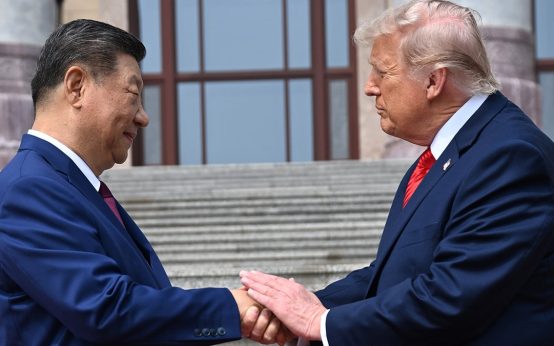 US-China Relations Under Scrutiny: Expert Warns of Escalating Tensions
  No Timeline for End of Iran Conflict
 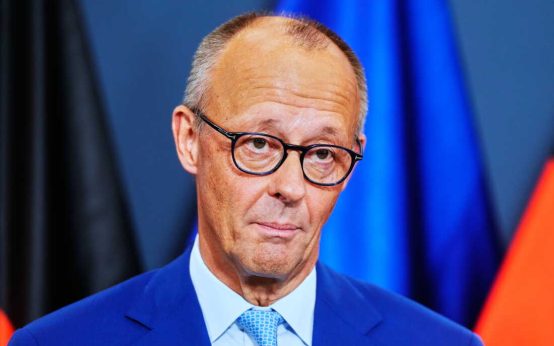 German Chancellor Merz Vows to Pursue Reforms Despite Election Setbacks
 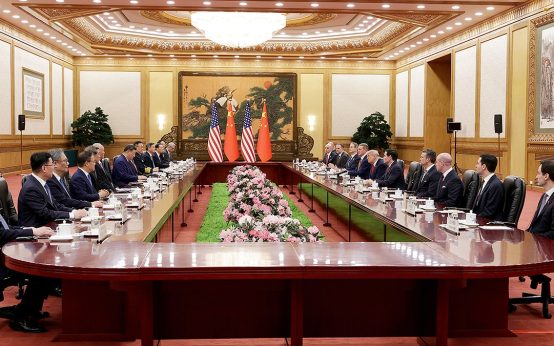 The Technology Rivalry: Trump’s Meeting with Xi and the AI Ecosystem Clash
  Mayor Mamdani’s Meeting with President Trump to Address NYC Issues