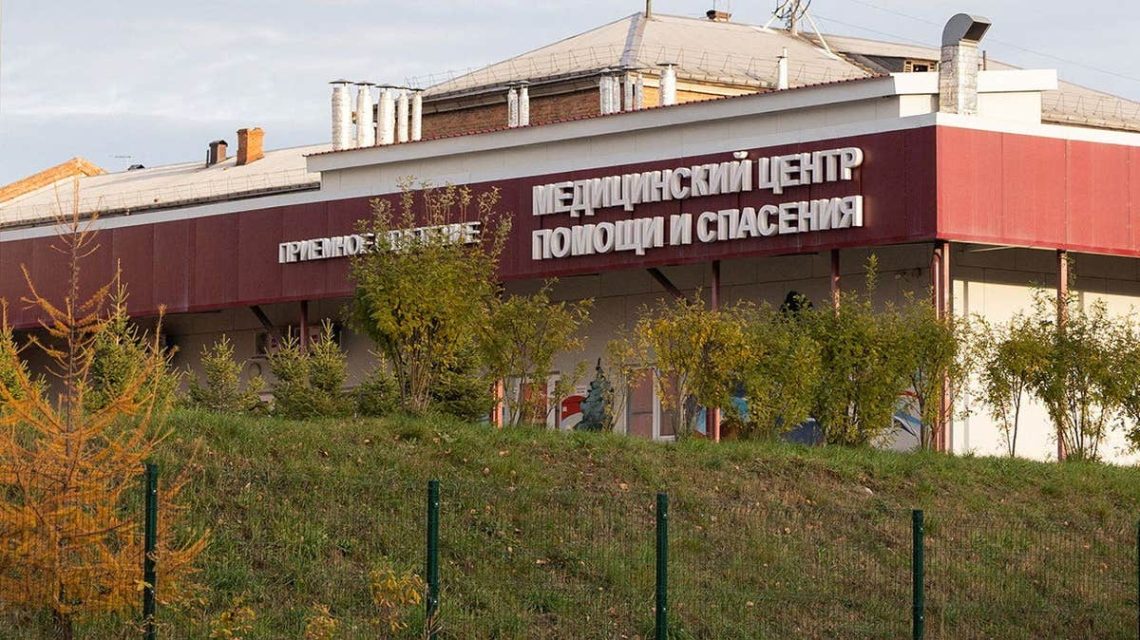
Secretary of State Marco Rubio, currently visiting Iceland, Greece, and Portugal, has stated that the United States is keeping a close watch on reports of a lab worker infected with the plague in Russia.
Russian authorities have taken extensive measures, quarantining a hospital and putting many individuals under medical observation. This follows the death of a 28-year-old employee at a Siberian plague research institute from a mysterious pneumonia case, raising concerns about a potential pneumonic plague outbreak.
Darya Shipilova, employed at the Irkutsk Anti-Plague Research Institute of Siberia and the Far East, succumbed to an unidentified pneumonia type. Despite rigorous testing, Russian health officials have found no connection between her illness and the pathogens she worked on. The cause of her death remains publicly unidentified.
“The precautions taken have led to speculation both within Russia and internationally,” Reuters reported.
All known contacts with Shipilova have been traced and are under medical supervision, with no new cases reported among the institute’s staff.
Rubio reassured the public, stating that the situation is not alarming but requires attention and monitoring. He highlighted that limited travel exists between Russia and the U.S. yet cautioned that diseases can spread rapidly if unchecked.
The State Department has confirmed that the case is under observation by the Centers for Disease Control and Prevention and other federal bodies. It emphasized the unconfirmed details and urged Moscow to release accurate information promptly.
Reports from East2West news agency indicate over 60 employees are confined within the Irkutsk institute, with nearly 200 contacts of Shipilova being monitored. However, these figures have not been officially confirmed. Neighboring countries like Kyrgyzstan, Uzbekistan, and Kazakhstan are heightening border health precautions.
The Shelekhov hospital in the vicinity of Irkutsk, where Shipilova was treated, has halted admissions and discharges under quarantine, according to The Associated Press. Irkutsk Governor Igor Kobzev labeled the infection as potentially dangerous.
Russia’s public health chief Anna Popova attended an emergency meeting in Irkutsk following Shipilova’s death. Nearby industries, such as an aluminum plant, have mandated mask-wearing for their workers.
Kremlin spokesman Dmitry Peskov advised the public against relying on rumors, stressing the need for official information.
Rospotrebnadzor, Russia’s health watchdog, diagnosed Shipilova with “pneumonia of unknown etiology.” Their tests found no relevant microorganisms linked to her professional activities, nor any lab incidents with pathogens.
Pneumonic plague is a severe form of plague, caused by Yersinia pestis, transmissible via respiratory droplets in close contact. Early antibiotic treatment can successfully combat this condition.
Despite Russian authorities asserting no evidence of a plague outbreak, the primary question remains: What caused Shipilova’s fatal pneumonia, and why such extensive containment?
 Poland Prepares for Potential Conflict Amid NATO Concerns
  Drone Warfare Redefines Ukraine’s Frontline Conflict
  Key Developments in the Iran Conflict Affecting Global Oil Markets
  U.S. Military Strikes Vessel in Caribbean, Allegedly Involved in Drug Trafficking
  Australia Probes FlyDubai Co-Pilot’s Connections
  Assessing the Impact of American Military Actions in the Strait of Hormuz