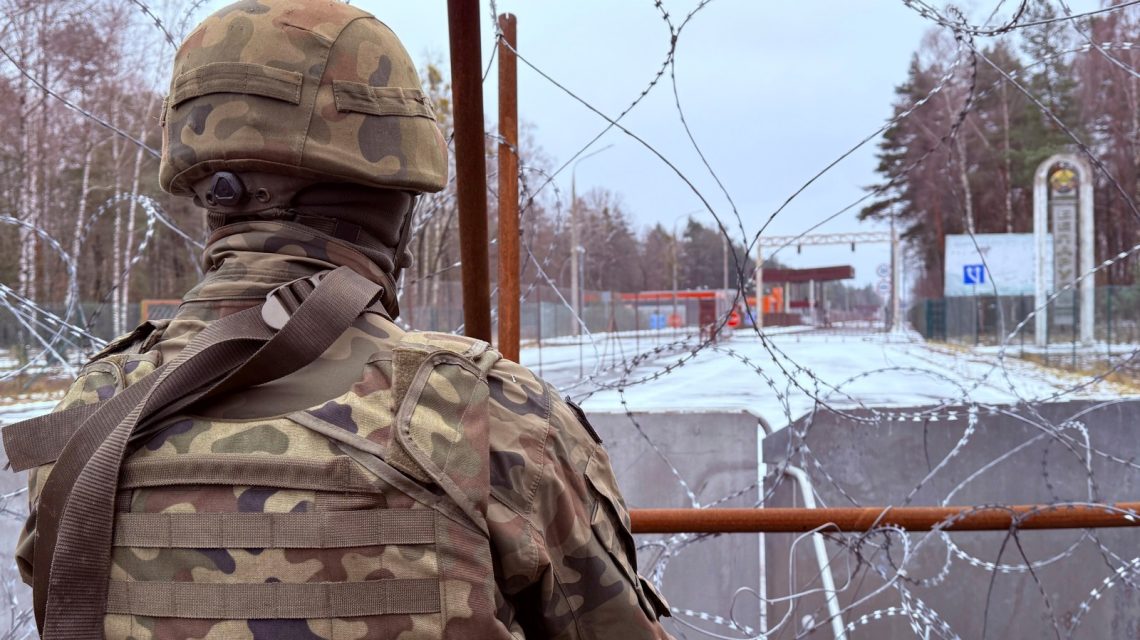
Polish lawmakers are taking steps to ready their nation for a potential conflict period, amid worries from NATO officials about a possible Russian attack on a NATO member. Poland’s defense ministry has drafted legislation to enhance the country’s defense capabilities and strengthen ties between the military and internal security services, reported Rzeczpospolita, a Polish newspaper.
An unnamed source, reportedly close to the president, emphasized that this move is to prepare the state for a pre-war period. Newsweek has sought comments from the Polish defense ministry via email.
In 2022, Poland announced substantial changes to its military structure. The plan includes increasing the army’s size, purchasing new weapons, mostly from the U.S., and simplifying military recruitment processes.
By 2039, Warsaw aims to have 300,000 active-duty soldiers, according to RMF24, a Polish online news portal. This marks a significant increase from 2015 numbers. An additional 200,000 will serve as reservists, the report states.
Poland has been a strong supporter of Ukraine since Russia launched a full-scale invasion over four years ago. It ranks as NATO’s top military spender based on GDP percentage, dedicating over 4.81 percent to defense this year.
Recently, NATO officials have expressed concern about potential Russian hybrid warfare tactics against alliance members or even a small-scale land incursion as early as this fall. ‘Hybrid warfare’ includes activities like cyberattacks, misinformation campaigns, or attacks on infrastructure.
European countries have raised alarms over events perceived as hybrid warfare attacks, often attributing these to Russia. Russia’s London embassy has denied these claims, suggesting such issues are wrongly blamed on Russia without evidence.
Polish authorities have claimed that a fire at a Starlink satellite site related to the Ukrainian military was an act of sabotage, with suspicions of Russian involvement. Moreover, a Russian drone reportedly hit a passenger train engine near the Polish border last month.
A Russian helicopter allegedly breached Polish airspace from Russia’s Kaliningrad exclave. Drone and missile intrusions have heightened concerns, with officials speculating that Russia is testing NATO’s responses to weaken the alliance.
Polish Prime Minister Donald Tusk noted intelligence reports indicating a real risk of further drone and missile incursions into NATO airspace. Russia may claim these incidents are accidental, Tusk added.
On Saturday, Poland’s Deputy Prime Minister and Minister of National Defense, Władysław Kosiniak-Kamysz, stated that Poland would increase its helicopter and fighter jet activity due to various Russian provocations threatening perceived safe areas.
Denmark’s military and foreign intelligence services issued a statement in late September, acknowledging an uptick in Russian cyberattacks and sabotage in Europe. Denmark described Russia as more willing to take risks and warned of greater impacts from hybrid warfare on targeted nations.
Kaliningrad and Nuclear Concerns
Russian President Vladimir Putin has pledged to use Russia’s nuclear arsenal to defend Kaliningrad if the region faces attack. NATO denounces such nuclear rhetoric, asserting the alliance poses no threat to Russia, even during Baltic Sea military exercises.
Kaliningrad, strategically located between Poland and Lithuania, links to Belarus through the Suwałki Gap. This territory houses a prominent Russian naval fleet and missile launchers, surrounded by NATO countries.
Last month, a British miniseries examined a hypothetical Russian attack on the UK, which included actions against Kaliningrad, capturing British media attention.
A report from the Danish Defence Intelligence Service found a ‘low but growing risk’ of a limited Russian military action against NATO’s eastern members. A small-scale land operation against NATO soil is seen as the worst likely scenario, not a full-scale invasion akin to Ukraine.
 Drone Warfare Redefines Ukraine’s Frontline Conflict
  Key Developments in the Iran Conflict Affecting Global Oil Markets
  U.S. Military Strikes Vessel in Caribbean, Allegedly Involved in Drug Trafficking
  Australia Probes FlyDubai Co-Pilot’s Connections
  Assessing the Impact of American Military Actions in the Strait of Hormuz
  Violence Overshadows Student Protests in France