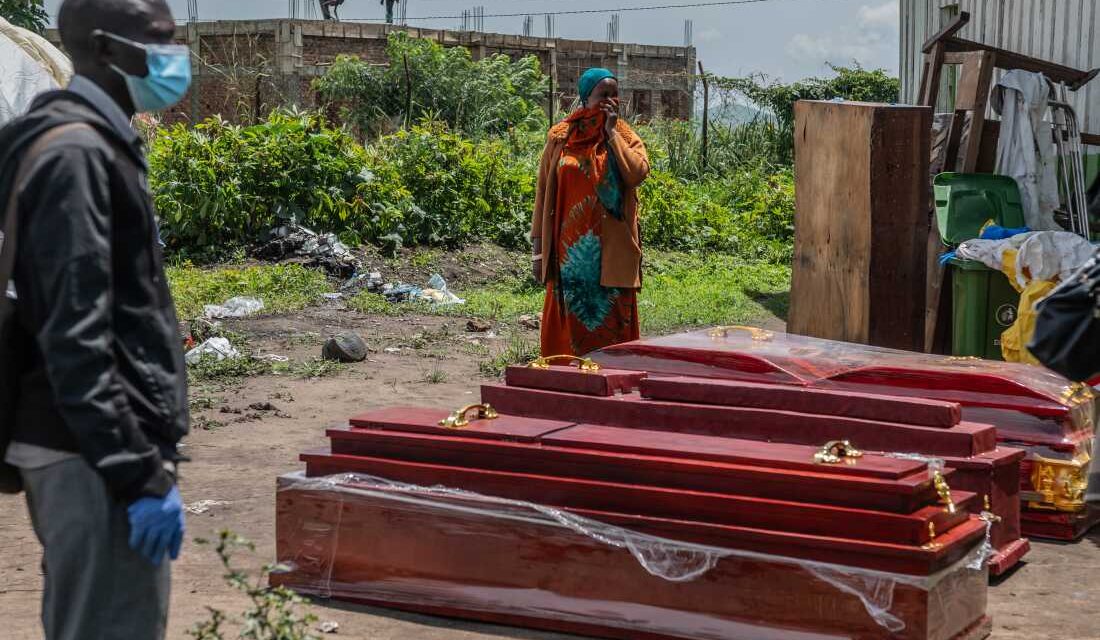
Family members mourn beside coffins at a health center in Rwampara, Congo, on May 20, 2026. The recent Ebola outbreak of a rare virus type has raised significant concerns among healthcare workers in eastern Congo who feel inadequately protected and unprepared. This region, already suffering from frequent attacks by armed groups, now faces a public health crisis.
Mounting Concerns in a Volatile Region
Healthcare workers describe mounting anxiety as they navigate the Ebola outbreak in one of the world’s most remote regions. The area’s history of conflict adds complications to current efforts to control the virus spread. Notably, a recent attack claimed 17 lives in Alima village, Ituri, intensifying the crisis.
The World Health Organization (WHO) reported a low global risk, and efforts to identify the first patient have been unsuccessful. Bunia resident Justin Ndasi expressed the community’s distress, citing multiple crises affecting the area.
Health supplies, including masks and disinfectants, remain expensive and scarce in Bunia. Prices have escalated sharply, making basic protective items less accessible to locals.
Grief and Desperation at Treatment Centers
At Rwampara’s treatment center, the pain of loss is evident as families witness healthcare workers handle the bodies of suspected Ebola victims with protective gear. The disease’s sudden onset was often mistaken for more common illnesses like malaria, leading to rapid health deterioration.
A mother shares her experience watching her son bleed and vomit, underscoring Ebola’s severe symptoms, which include fever, diarrhea, and muscle pain.
Scale of the Epidemic Alarming
The WHO has declared the outbreak a public health emergency. The rare Bundibugyo virus spread went undetected for weeks. Investigations suggest the virus has circulated longer than initially thought, with 51 confirmed cases in Congo and two in Uganda. Total suspected cases are near 600, but actual numbers might be higher. The MRC Centre in London suggests cases could exceed 1,000.
Despite Congo’s history of Ebola outbreaks, the current strain poses unique challenges. The health ministry reports capability to respond but notes most past outbreaks involved the more common Ebola type.
Vaccine Development and Health System Challenges
Dr. Vasee Moorthy from WHO mentions possible vaccine availability is six to nine months away. Eastern Congo’s health system struggles under immense pressure from ongoing conflicts and previous funding cuts. The U.S. has pledged $23 million and focused on establishing emergency clinics in affected areas.
Daily Life Amid the Outbreak
Schools and churches in Bunia remain open despite the outbreak. In other parts of Ituri, hospitals struggle to isolate suspected Ebola cases due to overcrowding, causing significant concern among healthcare workers who feel unprepared without proper facilities and training.
In Mongbwalu, daily life continues with minimal public panic. However, a lack of handwashing stations and isolation facilities exacerbates Ebola’s spread.
International Response and Challenges
An American who contracted Ebola is in isolation in Berlin, Germany. The U.S. coordinates with international agencies for patient transfers. A Czech Republic official reported receiving an American doctor who treated Ebola patients but showed no symptoms.
Dr. Satish Pillai from the CDC explains that rapid mobilization efforts are vital, stressing the need for coordination between the U.S. State Department and other agencies in the response strategy.
 Secretary Rubio Discusses Middle East Conflict and NATO Relations
  Israeli Leader’s Upcoming U.N. Assembly Speech Marked by Controversy
  United States Secures Arctic Defense Pact
  Measles Exposure in Philadelphia Raises Health Concerns
  Trump’s Engagements at the UN: Focus on Ukraine and White House Developments
  Trump Administration to Admit 17,500 Afrikaner Refugees from South Africa