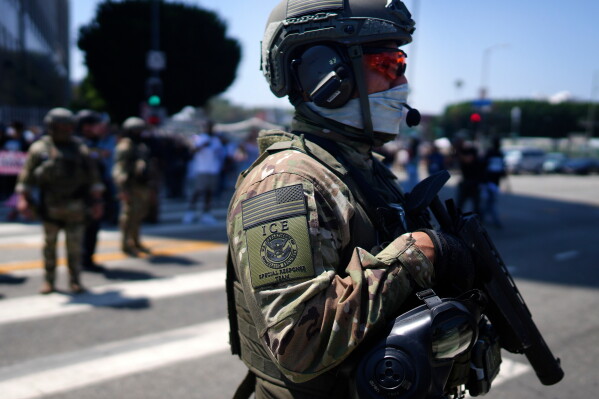
The U.S. Immigration and Customs Enforcement (ICE) announced plans to equip all field officers and agents with body cameras by the end of August. This rapid deployment could provide extensive visual documentation of federal immigration enforcement operations.
Despite this expansion, the public’s access to footage remains uncertain and is largely controlled by ICE itself. The agency defended its policy in response to criticisms related to withholding or indefinitely delaying footage after serious incidents or deaths in custody.
Policy Clarification
Acting Director David J. Venturella stated that the policy aims to protect ongoing investigations and privacy, aligning with federal laws and practices of other law enforcement agencies. He addressed a report by the Associated Press (AP) that raised concerns over ICE’s provisions.
AP’s report focused on ICE’s policy for releasing footage after significant incidents, such as serious injuries or deaths.
Venturella argued the AP’s portrayal of the policy was a mischaracterization, emphasizing that the policy only restricts footage release if it risks compromising investigations or privacy.
Transparency and Accountability
Despite the recent scrutiny ICE faced after a fatal shooting in Maine and another incident in Houston, Venturella assured the agency’s commitment to transparency. Both cases involved ICE officers but were not captured on camera, a void the new policy seeks to fill.
Comments from Christopher Schneider, a sociology professor, highlighted that while selective release of footage happens in law enforcement, ICE’s clear contemplation of this in policy is unusual.
The article pointed out that Customs and Border Protection, another agency, has withheld footage from a fatal January shooting, labeling it as part of an ongoing investigation. The footage will be released when deemed appropriate.