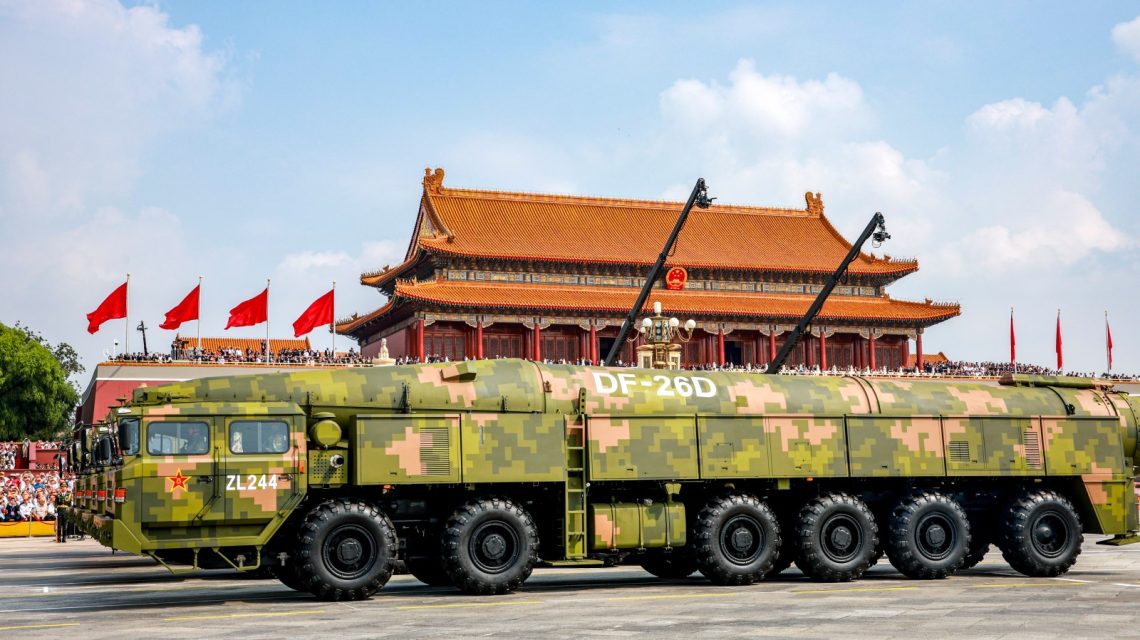
China’s Military Expansion
A recent report from Australia’s Lowy Institute reveals that China is developing long-range missiles with the capability to strike Australian territory. The report notes that while China already has the means to inflict significant economic harm during a regional conflict involving the United States, the People’s Liberation Army (PLA) continues its rapid military expansion. This build-up challenges U.S. military dominance in the Indo-Pacific region and pressures nearby countries to align with Beijing’s interests.
Addressing the potential for conflict over Taiwan—a self-governing island backed by U.S. security guarantees—the PLA prioritizes this issue. However, China also aims to project military power over large distances. The nation’s arsenal, including missiles, aircraft, and ships, is increasingly capable of reaching Australia.
Military Rise and Regional Impact
The PLA’s rise marks a historic shift with implications for Australia, irrespective of China’s ability to directly attack Australian soil. According to the report, the PLA’s strategy encompasses a readiness to strike from the sea or air. China’s DF-26 intermediate-range ballistic missile, for example, can target northern Australia from bases in the South China Sea. Furthermore, the DF-27 missile, with a reach of up to 5,000 miles, can cover the entire Australian landmass, potentially being operational already.
In the event of a war where Australia supports the U.S., China’s targets might vary depending on its objectives. Potential strategies include attacks on offshore oil facilities, public infrastructure, or government buildings.
China’s Nuclear and Defense Budget
While the report excludes nuclear weapons analysis, China’s nuclear arsenal might grow significantly by 2035. The PLA’s modernization is supported by a defense budget possibly as high as $540.7 billion, which is estimated to be roughly twice the publicly stated amount.
Naval Threats and Economic Concerns
Australia’s key maritime trade routes face potential risks from China’s growing military capabilities. Subsea cables critical for communication are vulnerable to sabotage. According to a Ports Australia industry group study, 99% of Australia’s international trade by volume in 2024 passed through seaports, equating to 1.6 billion tons or $460 billion dollars. Oil, gas, and fuel, comprising 50% of imports, were the largest category by volume, followed by construction materials and chemicals.
The report suggests that maritime traffic to Australia could be restricted through blockades or other displays of force. In March 2025, a Chinese naval flotilla performed live weapon drills near Australia without prior notice, indicating an increase in such exercises.
Australia’s Strategic Response
In response to the growing threat, Australia is increasing its defense budget and strengthening ties with the U.S. This includes procuring nuclear-powered submarines under the AUKUS pact and hosting U.S. military forces. However, these preparations might exacerbate China’s security concerns, indicating complex regional tensions.
Assessing Capability
Australian Defense Minister Richard Marles highlights China’s military expansion as unprecedented since World War II. The U.S. also voices concern over China’s reluctance to engage in arms control talks, fearing broader ambitions. Although U.S. officials believe Xi Jinping wants the PLA capable of seizing Taiwan by 2027, they do not anticipate an imminent invasion.
Chinese spokesperson Lin criticized the Lowy report’s interpretation of China as a hegemonic power. The report’s authors avoided speculating on China’s motivations, focusing instead on its capabilities. They emphasized the importance for governments to plan based on possible actions rather than intentions.
 Concerns Raised Over Canadian Assisted-Dying Program
  Lithuanian President Urges U.S. to Maintain Military Presence Amid NATO Challenges
 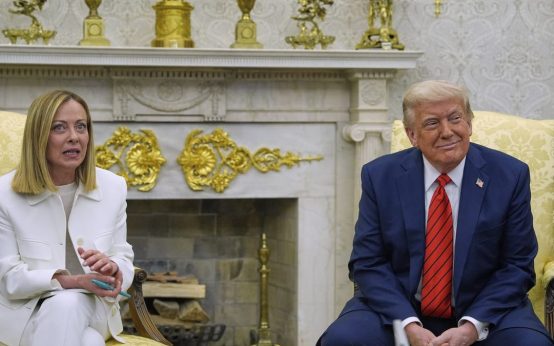 Italian PM Giorgia Meloni Skips UN General Assembly Amid U.S. Tensions
  Ireland Faces Calls to Boycott Matches Against Israel
  Social Media Influencer Faces Serious Charges
 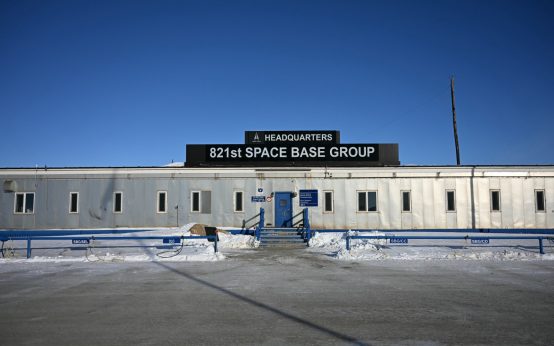 U.S. Military Expansion in Greenland