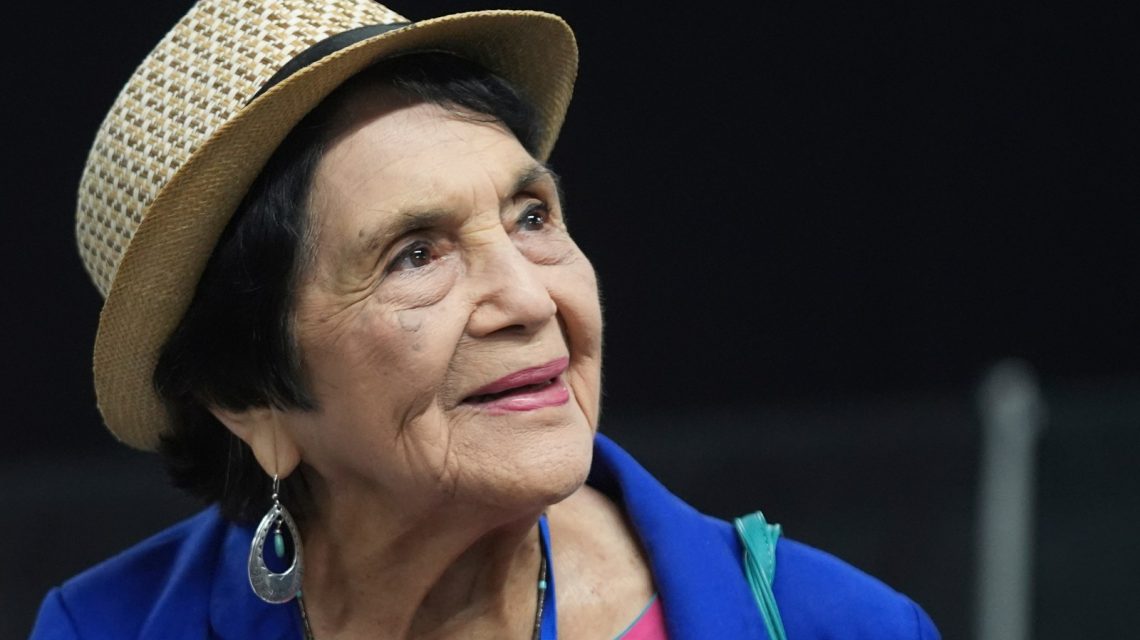
Dolores Huerta, a pivotal figure in labor organization and civil rights, passed away at her home in Bakersfield, California, at the age of 96. She significantly contributed to co-founding the United Farm Workers (UFW) of America and was recognized for her landmark labor contracts and the phrase ‘Sí, se puede.’
A family statement expressed the immense loss felt by her passing and requested privacy. The Dolores Huerta Foundation confirmed she was with family. Further details on her life celebration are pending.
“We are deeply saddened to announce that our beloved mother, Dolores Huerta, has passed away today at the age of 96,” the statement said. “We know that many of you around the world share in our mourning, and we will be following up on plans to recognize and celebrate her incredible life and legacy.”
Huerta’s impact stretched from labor organization to civil rights. She organized workers with limited political influence, achieving contracts that improved wages and workplace conditions.
Her advocacy extended to voting rights, women’s political participation, and environmental justice. She was a leading Latina activist in multiple fields of social justice, including LGBTQ+ rights.
National Impact
Huerta played a central role in shaping farmworkers into a unified political force. While César Chávez was more publicly recognized, Huerta led critical negotiations and legislative efforts that framed the movement.
Her successful advocacy led to legislative victories: extending protections like Aid to Families with Dependent Children to farmworkers and allowing driver’s-license exams in Spanish. She was a key advocate for the California Agricultural Labor Relations Act of 1975, which allowed farmworkers to organize and negotiate collectively.
Derrick Johnson, NAACP president, called her a “guiding light in the struggle for justice,” emphasizing her influence in both labor and civil rights.
Early Life and Path to Activism
Born on April 10, 1930, in Dawson, New Mexico, Huerta was inspired by her parents’ activism. Her father, Juan Fernandez, participated in union activities, while her mother, Alicia Chávez, was active in community work.
Huerta initially pursued teaching but shifted to organizing after recognizing the dire needs of her students. She joined the Stockton Community Service Organization, where she organized voter registration and fought discrimination.
Building the Farmworker Movement
Introduced to Chávez by Fred Ross Sr. in 1955, Huerta co-founded the Agricultural Workers Association with Larry Itliong. This collaboration, particularly the 1965 Delano grape strike, led to the formation of United Farm Workers.
She played a critical role in sustaining the national grape boycott, negotiating with growers and coordinating support from diverse groups.
The Rallying Cry: ‘Sí, Se Puede’
Huerta introduced ‘Sí, se puede’ during the farmworker movement, promoting collective action for change. Barack Obama’s 2008 campaign adopted the phrase as ‘Yes, we can,’ acknowledging its significance when he awarded Huerta the Presidential Medal of Freedom in 2012.
Her career exemplified the value of grassroots organizing and political pressure through community engagement.
Beyond Labor
Huerta connected labor efforts with feminist and Latino political advocacy. Her interactions with feminist leaders inspired her to challenge gender discrimination within the movement. She supported many political candidates and remained active in various social causes, even into her 90s, when she was arrested during a protest for home healthcare workers’ pay.
Challenging Partnership with Chávez
Huerta later revealed a complex history with Chávez, alleging sexual abuse in the 1960s. Despite this, she emphasized the collective achievements of the labor movement. Her story highlighted the challenges faced and her leadership beyond Chávez’s legacy.
Recognition and Influence
Huerta’s contributions earned her numerous honors including the National Women’s Hall of Fame, the Eleanor Roosevelt Human Rights Award, and the Presidential Medal of Freedom.
The Dolores Huerta Foundation continues her legacy by empowering local leaders in education, voting rights, and social justice.
Kendall Scudder of the Texas Democratic Party emphasized her influence, stating that Huerta demonstrated the power of collective action and the importance of political participation.
Huerta’s lifetime of activism showed that mobilizing communities could impact even seemingly unchangeable institutions. Her legacy encourages all to recognize organizing opportunities in everyday life.
 Concerns Rise Over Cross-Border Abductions of Dissidents
 The Implications of America’s Geopolitical Decline
 Sisterhood Through ‘Redemption’: Inmates and Nuns Bond on Death Row
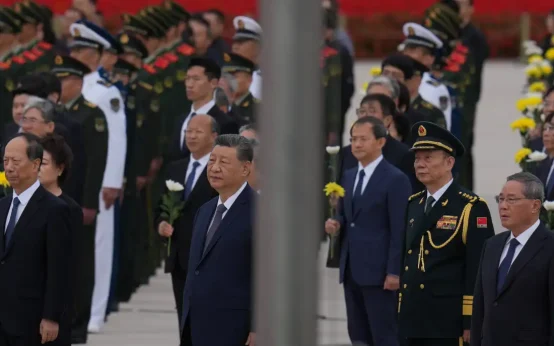 Xi Jinping Elevates General Zhang Shengmin to Politburo Amid Party Consolidation
 Massive Data Center Project Sparks Community Debate in Wisconsin
 U.S. Blocks Shipments from BGI Group Citing Forced Labor Concerns