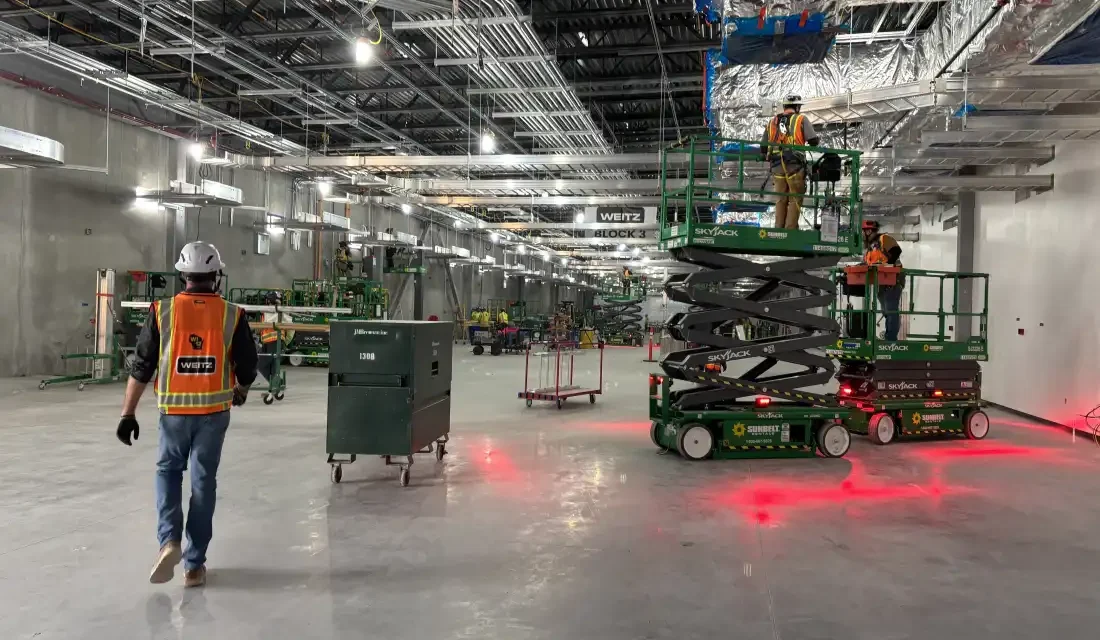
Amid tranquil cornfields and rolling landscapes north of Milwaukee, a significant construction project disrupts the serenity of Port Washington, Wisconsin. Covering two and a half million square feet of former farmland, a vast data center complex is taking shape. This burgeoning infrastructure, named Project Lighthouse, has sparked community unrest.
Artificial intelligence companies are rapidly establishing this hyperscale data center to support their expanding models. As resistance grows, this local issue reflects wider national concerns regarding the proliferation of data centers. NPR visited the site and engaged with locals, observing protests led by residents like Amanda Mueller, aged 67, who expressed unease about the proximity of such massive facilities to residential areas.
Mueller advocates for a buffer zone of at least one mile around data centers to protect residents. Her concerns mirror those voiced by many in Port Washington, where demonstrations have resulted in legal confrontations and civil disobedience arrests.
The project’s supporters, however, emphasize economic benefits. Port Washington Mayor Ted Neitzke champions the data center, arguing that it could lower taxes and inject new revenue into the community that historically thrived on an industrial base. Neitzke assures that measures are in place to safeguard the community.
Nonetheless, uncertainty lingers around Project Lighthouse, a collaboration among Vantage Data Centers, Oracle, and OpenAI. Key questions remain unanswered despite strong advocacy from proponents.
 Xi Jinping Elevates General Zhang Shengmin to Politburo Amid Party Consolidation
 U.S. Blocks Shipments from BGI Group Citing Forced Labor Concerns
 China’s Tense Relationship with Foreign Celebrities and Free Speech
 U.S. and AI: Navigating the Path Forward Amid Global Competition
 New York Enacts Tough AI Restrictions to Protect Children
 DoorDash Acquires Instacart for $17 Billion