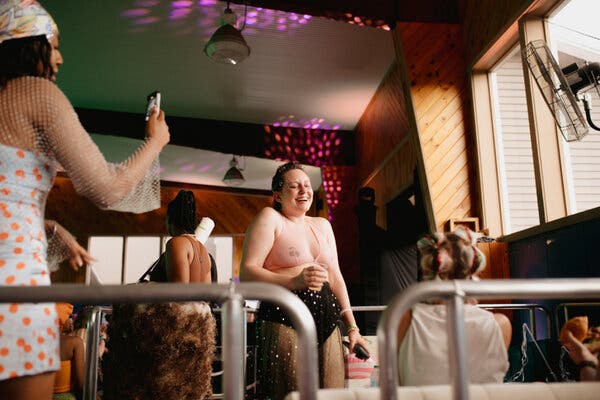
The annual four-day retreat in Pennsylvania attracts hundreds of breast cancer survivors. Organizers plan to extend the reach by adding a West Coast location due to its growing popularity.
During the last evening of Camp Breastie, women adorned themselves for a dance gathering known as Breastival.
At Camp Breastie, the first activity of the day, a lakeside venting session, required an early start. Participants descended from cabin bunks to the shore with the sun still low in the sky. Before the activity, they wrote their worries on small stones and tossed them into the water as a symbolic gesture.
“Anger,” wrote Shelby Jones, 33, from New York City. “Fear,” said Emily Tout, 30, a single mother with metastatic disease from Buffalo.
Nancy Antoine, a cancer survivor from Davie, Fla., who has practiced scream therapy for years, often alone at home, encouraged the group to release their emotions with a good scream.
“Just release what you’re carrying with you, and let the lake receive it,” Ms. Antoine, 51, advised.
These screamers were among 500 women, including breast cancer survivors, women with advanced stages of the disease, and those at high risk who had taken preventive measures. They gathered at a campsite near Honesdale, Pa., in early June. This annual retreat’s popularity has led organizers to plan another location next year to double its capacity.
In the United States, over 350,000 women receive a breast cancer diagnosis yearly. There has been a noticeable increase in cases among younger adults. The camp, particularly appealing to this demographic, often sees a demand for spots that surpasses availability. Camp tickets sold out within two weeks in 2025, and in under two hours this year.
Campers are grouped into cabins named after fruits, such as one called Apple.
 Artist Speaks Out on Rare Condition Impacting Her Career
  Mindfulness: Manage Stress by Embracing the Present
 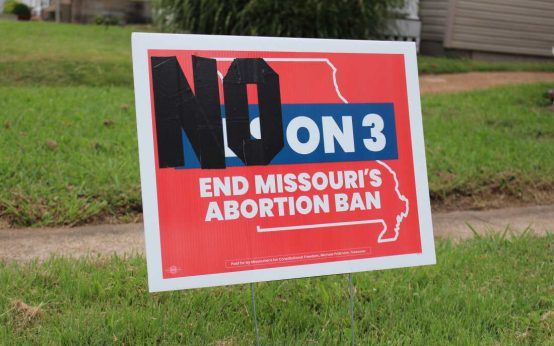 Missouri’s Abortion Policy: Conflicting Amendments and Voter Decisions
  Levoit Cordless Vacuum: An Affordable and Efficient Cleaning Solution
  The Impact of Extended Job Searches on Mental Health
  Philanthropic Shift Towards Supporting Women in Midlife