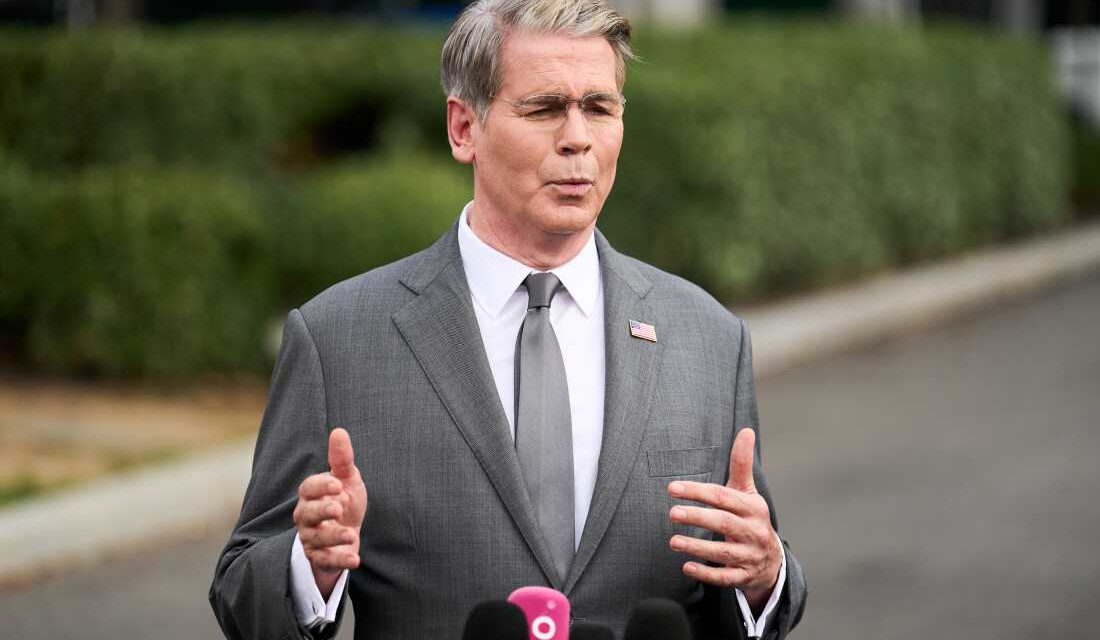
Treasury Secretary Scott Bessent is poised to announce comprehensive economic sanctions against Iran, described as the “single greatest financial offensive ever.” President Trump deemed this initiative an “economic D-Day,” vowing to pursue other nations that support Tehran economically. Consequently, the Iranian Rial has plummeted to unprecedented lows, reflecting the impending pressure.
These new sanctions come on the heels of long-standing U.S. measures against Iran, some dating back nearly 50 years, with the latest penalties in June targeting entities aiding Iran in circumventing existing financial barriers. There is also an ongoing U.S. naval blockade hindering goods from reaching Iran.
The fresh strategy by President Trump and Secretary Bessent aims to intensify pressure not only on businesses but also on countries and governments that facilitate financial flow to Iran. In a Financial Times editorial, Bessent stated the objective is to cut off all economic lifelines sustaining the regime until Tehran is isolated. He mentioned nations still trading with Iran, urging them to reconsider the implications. Notably, China, Iran’s largest oil customer, was criticized last week for historically purchasing about 90 percent of Iran’s oil.
However, some analysts question the efficacy of new sanctions. Alan Eyre, a former U.S. diplomat engaged in Iran’s nuclear program negotiations, told NPR’s Emily Feng that the U.S. has already exhausted effective sanction options.
“The low-hanging fruit, the mid-hanging fruit, the high-hanging fruit, the tree,” Eyre stated, “there are no new sanctions that are effective.”
Iranian security chief Mohsen Rezaei, a hardliner and former leader of Iran’s Revolutionary Guards, has warned of a “seismic” retaliation. As a military adviser to Supreme Leader Ayatollah Mojtaba Khamenei, Rezaei cautioned Gulf states that cooperating in new restrictions would make them targets.
Iran has attacked U.S. bases in Jordan and Gulf countries like the UAE, Kuwait, and Saudi Arabia since tensions escalated six months ago. Rezaei indicated further actions might target oil tankers in the Persian Gulf, potentially crippling oil exports further after significant disruptions.
The Gulf nations that invested in pipelines bypassing the Strait of Hormuz have yet to comment on additional sanctions.
For Iranian citizens, these sanctions foretell increased hardship. For nearly fifty years since the Islamic Revolution of 1979, ordinary Iranians have suffered under U.S. sanctions. The current conflict, sparked when the U.S. and Israel engaged with Iran in February, exacerbated Iran’s economic woes. The Statistical Centre of Iran reports inflation nearing 90 percent.
NPR spoke with a 30-year-old Iranian woman grappling with daily expenses. She shared that many Iranians now rely on credit to purchase food due to insufficient cash. Rising prices have also made essential medicines unaffordable, with power shortages and escalating unemployment aggravating daily struggles. Economic distress and high living costs propelled earlier protests, which faced brutal government suppression.
 Gorillaz and Macklemore Respond to Controversy Over Israel-Palestine Statements
  Investigation into Lion Deaths in Tanzania
 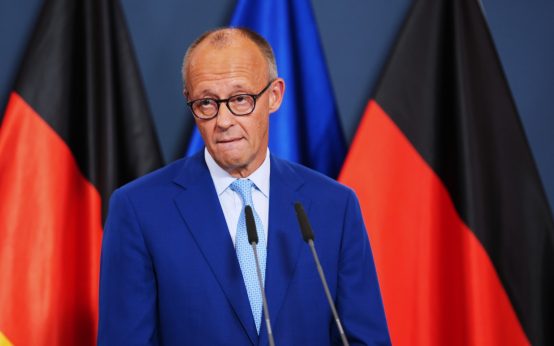 Merz Stays Resolute Amid Electoral Shifts in Germany
  The Impact of Arts and Closure on Democracy
 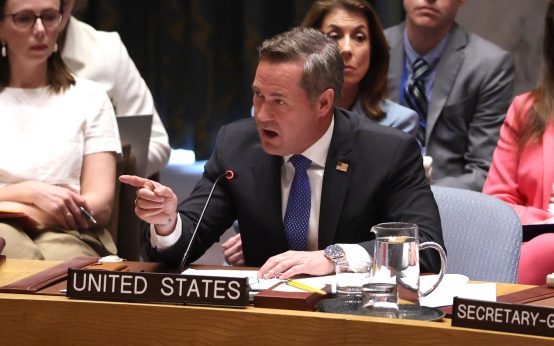 U.S. Ambassador Comments on Iran War Duration Amid Political Concerns
  U.S.-Iran Relations and Diplomacy at Upcoming U.N. Assembly