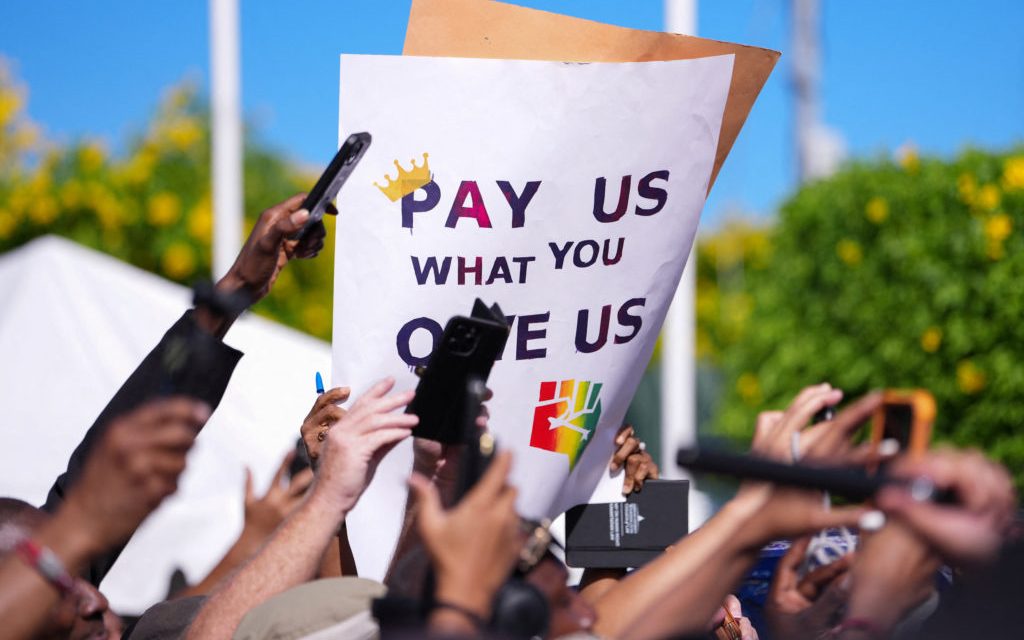
King Charles III finds himself in a challenging position regarding Britain’s history with slavery as he embarks on a tour of the Bahamas, Guyana, and Antigua and Barbuda. This journey highlights the legacy of the British throne’s connection to the enslavement of millions of Africans who were transported to the Caribbean and North America. These individuals labored for the benefit of their owners and, ultimately, the British Empire.
As Charles faces calls for Britain to apologize and provide reparations, palace officials mention that he plans to reiterate previous statements describing slavery as an “atrocity that forever stains our history.” However, he is not expected to issue a formal apology.
“It is only right that we should acknowledge the great suffering and injustices of the past,” Charles stated at a youth rally in Nassau, the Bahamian capital.
Critics, such as Brooke Newman, author of “The Crown’s Silence: The Hidden History of the British Monarchy and Slavery in the Americas,” argue that Charles’ expected comments are inadequate. They feel this approach doesn’t promote meaningful dialogue or engage with descendants, leaving the issue unresolved.
Monarchy’s Historic Links to Slavery
Newman’s book highlights the monarchy’s involvement with slavery from the late 1500s to the abolition of the slave trade in 1807 and slavery’s eventual end in the British Empire 26 years later. The study goes beyond acknowledging the monarchs’ roles in the empire upheld by African enslavement across the Atlantic Ocean.
The book reveals that as early as 1563, more than four decades before England’s first North American colony, Queen Elizabeth I supported sea captain John Hawkins’ slave-trading activities. By lending Hawkins a Royal Navy warship, the queen secured a share of his profits.
Almost 100 years later, King Charles II granted the Company of Royal Adventurers into Africa, later known as the Royal African Company, exclusive trading rights to the West African coast. The company expanded from commodities like gold and ivory to the slave trade. The king and his brother, the Duke of York, later King James II, invested in this venture.
Calls for Reparations
The pressure for reparations has grown over recent years, with Caribbean and African nations advocating for Britain, the U.S., Portugal, and Spain to compensate for slavery. The United Nations General Assembly passed a resolution pushing for reparatory justice, including a full apology and compensation for both the period of enslavement and its lasting impacts on economic opportunities and life expectancy for Black populations in the Caribbean and the Americas.
Despite this, the U.K. abstained from the vote. Craig Prescott, an expert on constitutional law, mentions that the king cannot issue an apology because he represents the elected government. Current government policy acknowledges slavery’s historical stain but asserts that reparations are not owed. Addressing these demands could be financially significant, complicating the issue further.
Continued Challenges
During the final days of King Charles III’s Caribbean tour, Hilary Beckles, chair of the Caribbean Community’s reparations commission, appealed to him as an individual rather than a royal leader. Beckles emphasized the historical enrichment slavery provided to the royal family, urging Charles to understand the impact of that legacy.
Britain and the monarchy have faced these issues before. In 2007, during the 200th anniversary of the slave trade’s abolition, Prime Minister Tony Blair and Queen Elizabeth II experienced such challenges firsthand. Despite celebrating abolition, Toyin Agbetu’s protest at Westminster Abbey highlighted the lack of acknowledgment regarding the deep suffering caused by slavery.
Brooke Newman emphasizes that current discussions about colonialism and slavery’s “afterlives” remain unresolved. Addressing these issues requires more than brief comments, and the challenge continues for Charles and the nation.
 Fatal Train Collision Shocks Spain
 Pilot Fatigue Raises Safety Concerns
 Flávio Bolsonaro Labels Himself ‘President-Elect’ in Exile
 Brazil’s Legal System Faces Scrutiny in Bolsonaro Case
 Dolores Huerta: Legacy of a Labor and Civil Rights Leader
 Controversy Over Russian Diesel Shipments to the U.S.