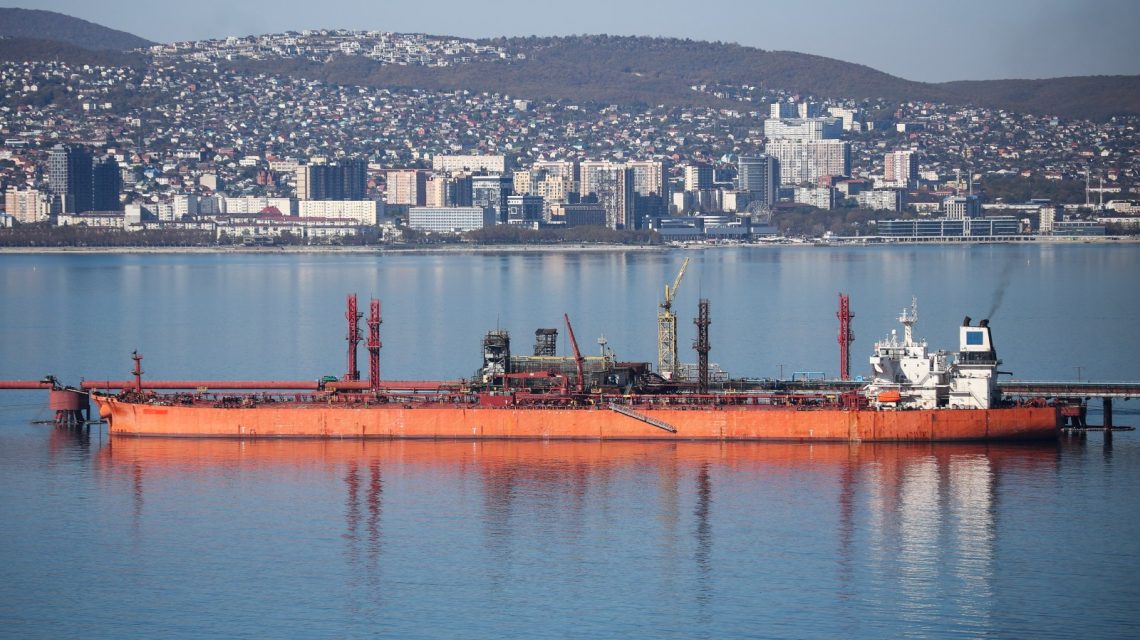
Three tankers transporting Russian diesel fuel, including two vessels reportedly under Western sanctions, are en route to the U.S. This development comes as President Donald Trump faces increasing scrutiny over his agreement with Russian President Vladimir Putin to resume fuel shipments.
According to maritime intelligence firm Kpler, the tankers—Agioi Fanendes, Leruo, and Talisman—departed from Russia’s Baltic port of Primorsk between October 16 and 22. They are expected to arrive on the U.S. East Coast between November 7 and 11, as per vessel-tracking data reported by AFP.
The Agioi Fanendes was initially recorded as heading to New York. The destinations of Leruo and Talisman are listed as the Atlantic Coast. Kpler indicates that these three vessels collectively carry 924,000 barrels of diesel, equating to about one-third of the U.S. transportation sector’s daily consumption.
President Trump’s announcement of this agreement aims to reduce fuel prices before the November 3 midterm elections.
The White House has referred to the president’s remarks for any comments regarding the agreement. The deal has drawn criticism from Ukrainian President Volodymyr Zelensky and some Republican Party members, who argue that it could benefit Moscow amid its ongoing war with Ukraine.
Details on the Three Tankers
The tankers are currently near the United Kingdom and northern Europe, based on MarineTraffic data. The first of these, the Malta-flagged Agioi Fanendes, loaded roughly 40,000 metric tons of ultra-low-sulfur diesel at Primorsk on October 22. Reports indicated its destination as New York with an expected arrival on November 7. However, its status has changed to “for orders,” meaning its final destination is unclear as it sits near the U.K. Coast.
The second tanker, Leruo, flies under a Sierra Leone flag and loaded diesel in Primorsk on October 16. It reportedly faces sanctions from the U.K., Canada, and the EU due to shipping practices like disabling location technology and breaches concerning G7 oil price caps. It is assigned to reach the Atlantic Coast, around November 11, though its position has not been updated for several days.
The third vessel, Talisman, is identified by Kpler as carrying Russian diesel to the U.S. Allegedly sanctioned by both the U.S. and the EU, it is expected around November 9 in the North Sea region. The legal framework of these shipments—considering U.S. authorizations and other international restrictions—remains under scrutiny.
The Trump-Putin Diesel Deal
Trump announced the diesel agreement on October 9 following discussions with Putin, emphasizing its intent to lower fuel prices for U.S. consumers, including farmers and truckers. Initially, Russia was to supply over 300,000 metric tons of diesel, with plans for 500,000 metric tons in November, expanding further.
This policy shift follows past U.S. restrictions on Russian energy imports after Russia’s Ukraine invasion. A temporary authorization from the U.S. Treasury allows these shipments for six months, potentially extending through April 2027.
Russian Deputy Prime Minister Alexander Novak confirmed that the first tankers are heading to the eastern Atlantic as part of this supply arrangement. Expectations for a fourth tanker have been mentioned with future shipment details yet to be confirmed.
Ukraine and Republican Concerns
The deal has raised tension between Washington and Kyiv, with Zelensky criticizing it as a sanction-easing measure that could extend Russia’s conflict with Ukraine.
Opposition from the Republican Party is also evident. On October 11, GOP Senator Thom Tillis questioned the agreement’s legality. Bipartisan senators called for a reversal, highlighting potential financial benefits to Russia over American consumer gains.
The decision has sparked debates over the administration’s authority to amend or suspend Congressional sanctions. Defending his decision, Trump argued that restricting domestic oil and diesel could have broader global market repercussions. He emphasized the international implications of the agreement rather than framing it as a personal deal.
The impact of these shipments on U.S. diesel prices remains unclear. Analysts raise doubts regarding the effectiveness of redirecting Russian diesel to significantly boost global supplies or merely divert purchases from other regions.
 Arrest Made in Connection with Death of American Citizen in Costa Rica
 Lula da Silva’s Fourth-term Victory and Brazil’s Strategic Implications
 U.S. Military Strikes In Eastern Pacific: Accusations and Concerns
 Uncertain Outcome in Israel’s 2026 Election Amid High Voter Turnout
 Political Influences on Consumer Shopping Habits
 U.S. Expels Cuban Diplomat After Alleged Incident