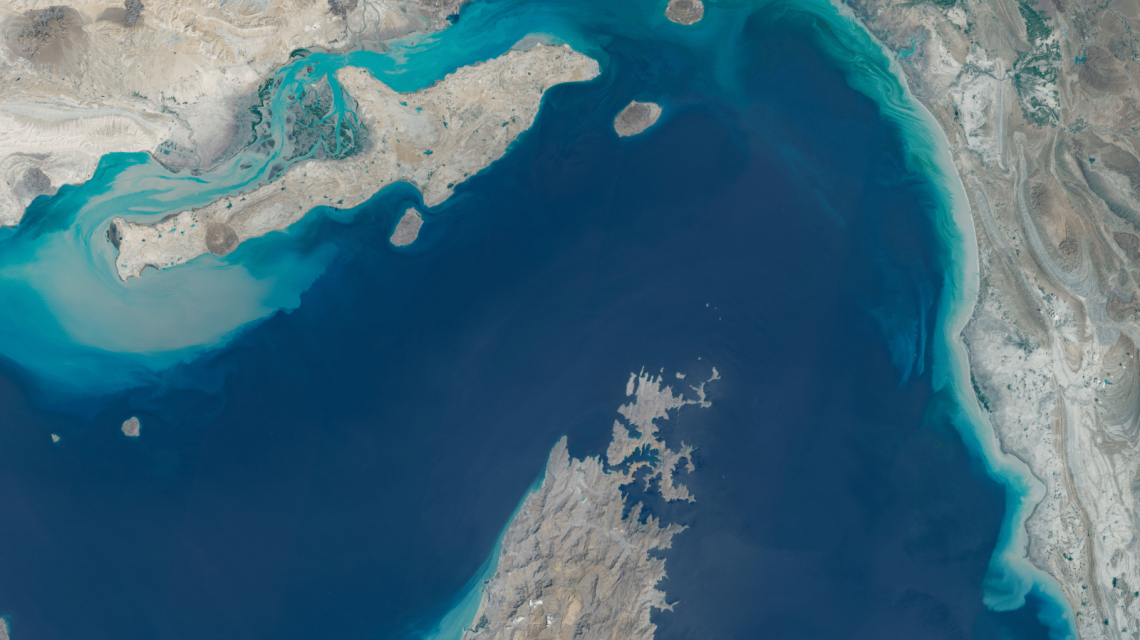
President Donald Trump recently declared on Truth Social that Iran is prohibited from imposing fees on ships in the Strait of Hormuz during or after a 60-day ceasefire period. He added that if discussions fail, the U.S. might implement tolls as a form of compensation for providing security in the area.
This statement adds tension to the negotiations concerning the strait. It is a vital oil passage that was toll-free before the conflict erupted in late February. The strait has become a strategic leverage point. A broader ceasefire was agreed upon by the U.S. and Tehran, allowing toll-free operations in the strait for 60 days and a halt to combat across various areas. However, the two governments have differing views on future arrangements.
Importance of the Strait of Hormuz
The Strait of Hormuz is crucial as it handles a significant portion of the world’s sea-based oil and gas transport. Traditionally, vessels transited the strait without mandatory fees in line with accepted international norms. The situation shifted after the conflict began on February 28, when U.S. and Israeli actions against Iran heightened regional tensions. Iran tightened control over maritime access, potentially disrupting traffic and raising global energy supply concerns. Consequently, the waterway became central to military and diplomatic strategies.
Post-Ceasefire Conditions
The current ceasefire provides temporary clarity: Iran will not charge ships during the 60-day window while negotiations progress. The disagreement lies in the post-ceasefire period. Trump insists on maintaining toll-free transit beyond the ceasefire, while Iran suggests the toll suspension is temporary and strictly for the negotiation period.
Iran’s Transit Fee Setup
Iran has been preparing a system supporting its stance by establishing a regulatory body to oversee ship movements and collect transit fees. Officials argue these charges cover services like navigation, security, and environmental protection instead of tolls. Oman has engaged in talks to coordinate these services, given its strategic position across the strait. This puts Tehran in direct conflict with Trump’s view that opposes any Iranian-imposed fees.
Challenges Ahead for Talks
Negotiations are scheduled to start Sunday in Switzerland. They aim to address unresolved concerns, including sanctions, security, and Hormuz shipping regulations. The agreement faces early challenges. Iranian military officials claim the strait closed again due to alleged deal violations, though U.S. authorities counter that traffic continues.
This issue coincides with renewed clashes in Lebanon between Israel and Hezbollah, which have affected ceasefire terms in the broader deal. The deal’s success relies on ceasing hostilities across multiple fronts. Escalation in one area could impact U.S.-Iran discussions. With the ceasefire clock ticking, the management of the Strait of Hormuz and its toll status becomes central to a deal that may shape regional stability and global energy supply.
 Secretary Rubio Discusses Middle East Conflict and NATO Relations
  Israeli Leader’s Upcoming U.N. Assembly Speech Marked by Controversy
  United States Secures Arctic Defense Pact
  Trump’s Engagements at the UN: Focus on Ukraine and White House Developments
  Trump Administration to Admit 17,500 Afrikaner Refugees from South Africa
  Trump’s Vision for Global Security: Iran, AI, and the Role of the U.S.