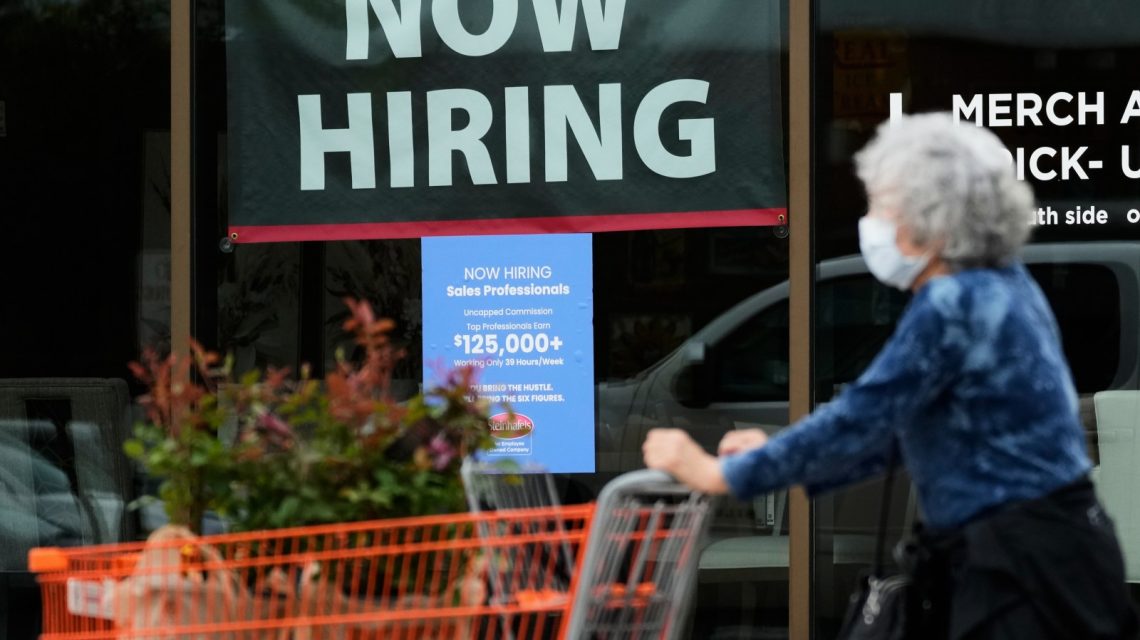
The latest jobs report shows a surprising decrease in employment, suggesting that the Federal Reserve may not raise interest rates this year. This shift could provide relief to potential homebuyers concerned about rising mortgage rates, though it comes with drawbacks.
Employment Decline and Labor Market Weakness
According to data from the Bureau of Labor Statistics, U.S. employers reduced their workforce by 23,000 jobs in July. Previous months also saw substantial downward revisions in hiring. Employment declined significantly in sectors such as local government, education, and retail trade. This unexpected downturn indicates a weaker labor market than analysts predicted.
The magnitude of the payroll miss suggests the labor market may be losing momentum and can no longer be considered the pillar of strength,” said Charlie Ripley, senior investment strategist at Allianz Investment Management.
This report shifts focus back to the employment aspect of the Federal Reserve’s mandate. The Fed is unlikely to overlook these signals, making any interest rate hikes in the fall less probable.
Impact on Mortgage Rates
The loss of jobs is a factor supporting the Fed’s decision not to raise rates in July. In a meeting held late July, the Federal Reserve kept the interest rates unchanged, ranging between 3.5 percent and 3.75 percent. Concerns over inflation persist, partly due to ongoing international conflicts.
Kevin Warsh, the new chair, stated that the central bank aims to reduce inflation to 2 percent but acknowledged this could take time.
With a weak labor market, the possibility of the Fed increasing its key rate later this year lessens. The Fed’s decisions indirectly influence mortgage rates through long-term Treasury yields, which respond to changes in the federal funds rate. Should the Fed decide on a rate increase later to address inflation, mortgage rates might rise further.
Before today, many were expecting that the Fed had no choice but to raise rates due to strong inflation, but this report shows that isn’t the case,” stated Chris Zaccarelli, chief investment officer at Northlight Asset Management.
The next Fed meeting for decision-making is set for September.
Implications for Homebuyers
The current delay in the Fed’s rate hike, reinforced by the jobs report, supports potential rate cuts. Jake Krimmel, a senior economist at Realtor.com, suggested that anything below a rate hike benefits homebuyers.
While a pause in rate increases is favorable for mortgage affordability, a weaker job market may diminish buyers’ confidence. Concerns about job security, hiring slowdowns, and economic uncertainty might deter long-term purchases, like a 30-year mortgage.
A modestly weak labor market might improve financing conditions, though it could also reduce demand from potential buyers. For the housing market to benefit, the labor market’s weakness would need to remain limited.
Realtor.com reported a calm housing market in July, although signs of a summer slowdown were present. Homes spent less time on the market compared to the previous year, and sellers adjusted prices more realistically. The recent jobs data underscores that the labor market isn’t providing strong support for housing demand.
Both the Federal Reserve and potential homebuyers seem to be in a holding pattern. As of this week, the average 30-year fixed-rate mortgage was at 6.69 percent, slightly up from 6.66 percent the previous week.
The annual inflation rate dropped to 3.5 percent in June from 4.2 percent in May, marking the first decline in five months. Projections indicate a potential 0.2 percent increase in core inflation for July, and 2.5 percent for the 12 months ending in July, as per the Federal Bank of Cleveland’s model. The upcoming inflation report by the Bureau of Labor Statistics on August 12 will provide further clarity.