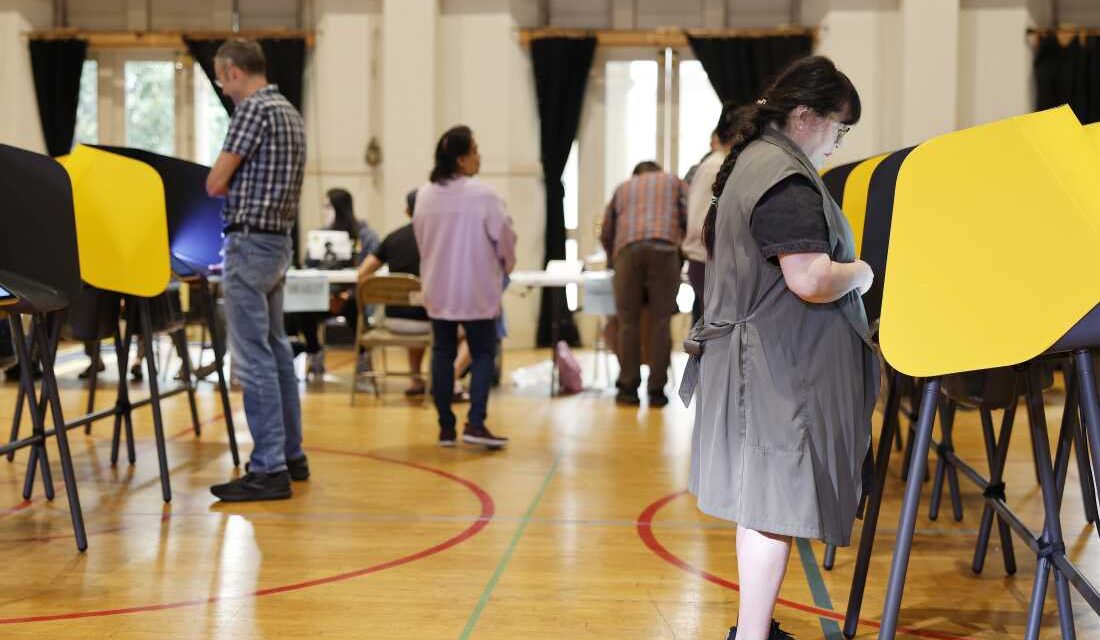
A Republican-led bill aimed at revising voting procedures returned to Capitol Hill. This time, the proposal includes a photo ID requirement and a name change. President Trump is pushing the bill, called the SAVE America Act, during a critical midterm election year. Opponents argue it would prevent many people from voting.
The SAVE America Act narrowly passed the U.S. House with full Republican support and one Democrat. This occurred 10 months after the original SAVE Act passed. It faces challenges in the GOP-led Senate, where Democratic opposition and the 60-vote threshold for cloture make it difficult to pass.
There are calls from some Republicans to bypass the filibuster, but GOP leaders are not pursuing this. The bill would require voters to show proof of citizenship, such as a U.S. passport or a birth certificate with photo ID when registering. Additionally, voters need a photo ID to cast their ballots.
Rep. Bryan Steil, R-Wis., stated, “This bill takes a strong piece of legislation, the SAVE Act, and makes it even stronger in the SAVE America Act.” Current laws already ban noncitizens from voting, and actual instances of fraud are rare. However, Steil and others argue for stricter documentation beyond the current requirement of attesting citizenship under penalty of perjury.
Some states already verify citizenship for new voter registrations. In addition, about three dozen states require ID at the polls. Opposition from Democrats and voting rights advocates focuses on the new act’s potential to make voting particularly difficult for those without easy access to required documentation. For example, as of 2023, about half of Americans did not have a passport.
The provisions would take immediate effect, complicating the process for voters and election officials right before midterms, without additional resources. Officials could face imprisonment for registering voters lacking citizenship proof. Despite public support, with 8 in 10 Americans favoring ID requirements in polling, the likelihood of Senate approval is low.
Trump and his administration continue to promote the bill, linking it to wider claims of fraudulent elections. The president’s opponents see it as a strategy to instill doubt in the electoral process. Michael Waldman from the Brennan Center for Justice called it “Trump’s power grab in legislative garb.” Trump suggested that Republicans should “nationalize” elections and hinted at a new executive order demanding voter ID.
The U.S. Constitution gives states and Congress control over election rules. A 2025 executive order from Trump on proof of citizenship was stopped by federal judges, who said it exceeded the president’s powers.
Key Provisions of the New SAVE Act:
- Photo ID Requirements: Acceptable IDs include U.S. passports, driver’s licenses, state IDs, military IDs, and tribal IDs. Voters without an ID vote provisionally and must return with ID within three days or sign a religious objection affidavit. Mail voters must also submit a valid photo ID copy.
- Name Discrepancy Handling: The bill allows an affidavit explaining discrepancies, such as name changes due to marriage, to ensure documentation reflects previous names.
- Exemptions for Service Members: Absentee military personnel and their families receive specific exemptions.
- Data Verification: States must share voter lists with the Department of Homeland Security to verify against the Systematic Alien Verification for Entitlements (SAVE) system. Overhauls to SAVE have aimed to remove noncitizens, but the system sometimes incorrectly flags U.S. citizens.
 Key Issues Emerge in Maine Senate Debate
  Steve Hilton Emphasizes Principled Policies Amid California’s Political Landscape
  Former German Spy Chief Arrested for Espionage and Treason
  Debra Messing Endorses Republican Bruce Blakeman, Citing Concerns for New York
  Trump Criticizes Fox News for Airing Democratic Candidates
  Susan Collins and Troy Jackson’s First Senate Debate Highlights