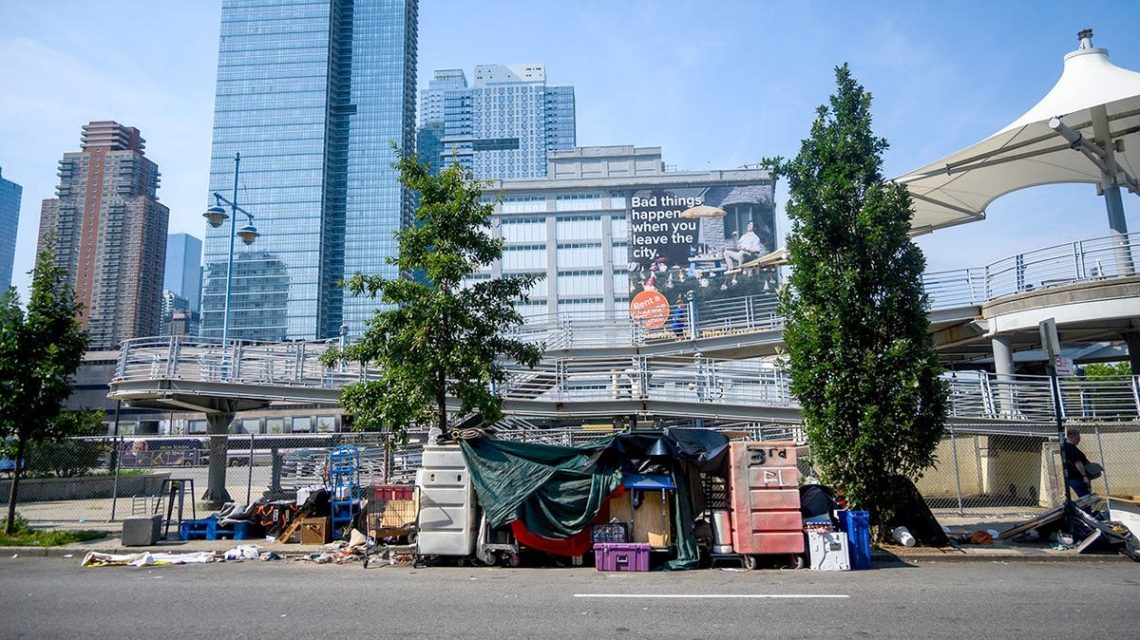
Democrats are challenging the Trump administration’s efforts to help 146,000 homeless individuals with severe mental illness. In July, House and Senate Democrats initiated an inquiry, accusing the administration of wanting to deny basic civil rights to people with disabilities. However, the system in place, which the Democrats are defending, contributes to the high number of mentally ill people living in poor conditions on the streets.
Previously, state efforts to aid the mentally ill homeless were restricted. For decades, broad interpretations of the Supreme Court’s 1999 Olmstead decision forced states to provide ‘community-based care.’ This often resulted in independent living situations where mental health and substance abuse treatments were optional, leading to frequent refusals of care.
“Housing First is a disaster. I saw Sacramento’s homeless chaos firsthand.”
In June, the Department of Justice issued a controversial legal opinion to revise federal oversight of state mental healthcare systems. This aims to enable states to offer small-scale, affordable supportive housing options. These include community-based group homes offering court-ordered treatment to individuals disabled by mental illness or substance abuse.
Historically, establishing and maintaining intermediate housing options was challenging due to regulations that prioritized autonomy over safety and clinical needs. This prevented states from finding a balance between hospitalization and community care. For the first time in 30 years, states may address this overlooked requirement.
The new framework, however, does not mean a return to large state hospitals, which are cost-prohibitive, at $1,400 per patient per day, and don’t offer federal reimbursement except when absolutely necessary. Nonetheless, activist groups argue that this change might lead to ‘warehousing people,’ evoking memories of outdated American asylums. Such claims are seen as unfounded, ignoring the conditions and safety risks of current systems that often ‘warehouse’ homeless people in dangerous outdoor encampments.
Mental illness and addiction among the homeless present urgent problems. Many Americans with serious mental disorders and substance-use issues live outside, posing risks to themselves and the public. They face victimization, crime, disease, and mortality at high rates and often resist outreach due to severe mental illness affecting reasoning.
The issue of homeless mental illness has been building for decades. Since 1992, federal regulations have heavily influenced state behavioral health systems, focusing resources on voluntary community mental healthcare, which is least suitable for the severely mentally ill needing daily care and support.
As a result, states complied with federal law to avoid litigation, often neglecting the most seriously ill patients. Before the Department of Justice memo, the fear of lawsuits led states to create ‘Olmstead Plans,’ setting goals for reducing psychiatric hospital populations without considering patient well-being or public safety.
Since 1990, states have eliminated thousands of psychiatric beds. By 2016, only 38,000 remained nationwide, a 96% reduction from the 1950s, despite the U.S. population increasing by 110%.
This trend was fueled by protection and advocacy agencies focusing on hospital patient releases under litigation threats, causing many to become homeless or entangled in the criminal justice system.
Justices Kennedy and Breyer anticipated these outcomes in the Olmstead ruling. Kennedy, quoting Justice Ginsburg, noted that it was not the ADA’s mission to relocate institutionalized patients to inappropriate settings like homeless shelters.
Federal policies may have removed individuals from psychiatric hospitals, but they now sentence them to conditions comparable to the world’s poorest areas.
The historical abuse in institutions is genuine, and past disability rights advocates helped end some of the worst practices. However, the current system, developed to prevent harm, has left many facing deteriorating conditions untreated on the streets.
The Trump administration’s review of federal regulations acknowledges the present evidence. Changes are necessary and overdue. Dr. Elinore McCance-Katz, a psychiatrist and senior fellow at the Cicero Institute, supports this approach.
 Will County Election: Key Races for Clerk, Schools, and Treasurer
  Voters to Address Education Ballot Measures in 10 States
  Policy Changes in SNAP Soda Purchases Save Taxpayer Dollars
  Iowa Republicans Discuss Midterm Election Landscape
  Texas Attorney General’s Campaign Contributions Under Scrutiny
  Michigan Senate Candidate Proposes AI Development Freeze