
Americans’ skepticism toward artificial intelligence (AI) stands out globally. A survey of 24,000 adults across 30 countries highlights that citizens of almost every other nation view AI more positively than Americans. This is surprising given that Americans, who live in a prosperous and tech-savvy nation, typically embrace new technologies.
Industry Perspective on AI Pessimism
The tech sector argues that American apprehension is misplaced. Industry leaders attribute this to media sensationalism and misinformation from abroad. They suggest that improved communication could shift public opinion in favor of AI. Enthusiasts, such as those found on Reddit and in tech company speeches, seem to fuel a narrative of AI optimism.
Yet, this strategy appears ineffective. The lack of impact indicates that attributing American pessimism to cultural or informational factors alone is simplistic. If this were the case, one would expect perceptions to align with media exposure, educational background, or political beliefs. Instead, the skepticism spans these categories, linking more closely to labor market structures.
AI Sentiment Based on Economic Context
Examining AI sentiment in the context of income levels and labor markets uncovers distinct patterns. People in poorer countries like Indonesia, Thailand, and Mexico show optimism towards AI, with approval ratings at 76%, 77%, and 63% respectively. In contrast, wealthier nations like the United States, the Netherlands, and Belgium show less enthusiasm.
In countries with informal economies, where many work without contracts or protections, AI represents a potential pathway to improved economic conditions traditionally accessible to those with wealth, education, or formal jobs. For example, a small-scale manufacturer in Guadalajara or a street vendor in Jakarta might see AI as an enabler of economic progress.
Conversely, in affluent countries with well-established labor markets, AI may resemble a threat. It poses risks to existing employment, stable incomes, and professional achievements. While AI could offer advantages, concerns about its potential to undermine job security and economic stability are substantial. This tension fuels the anxiety experienced by many in these nations.
The differences in AI perception highlight a broader economic divide, reflecting how technological advancements resonate differently depending on one’s economic and professional circumstances. As AI continues to evolve, addressing these disparities will be crucial in building a more universally optimistic outlook.
 Challenges of Self-Checkout Systems
  Democrats Block Data Center Bill in Senate
  Ambitious Future Cities: A Global Overview
  Washington’s AI Concerns and the Promised Technological Future
 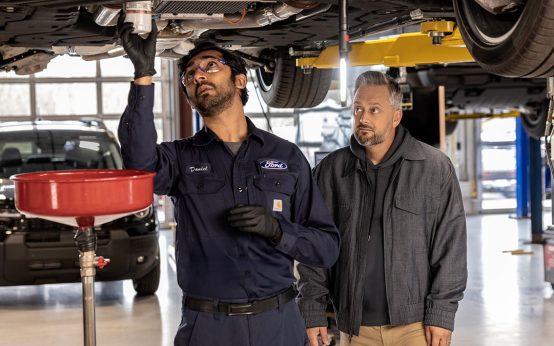 Nate Bargatze Embodies Simplicity and Trust in New Ford Campaign
  OpenAI Delays AI Model Release Over Security Concerns