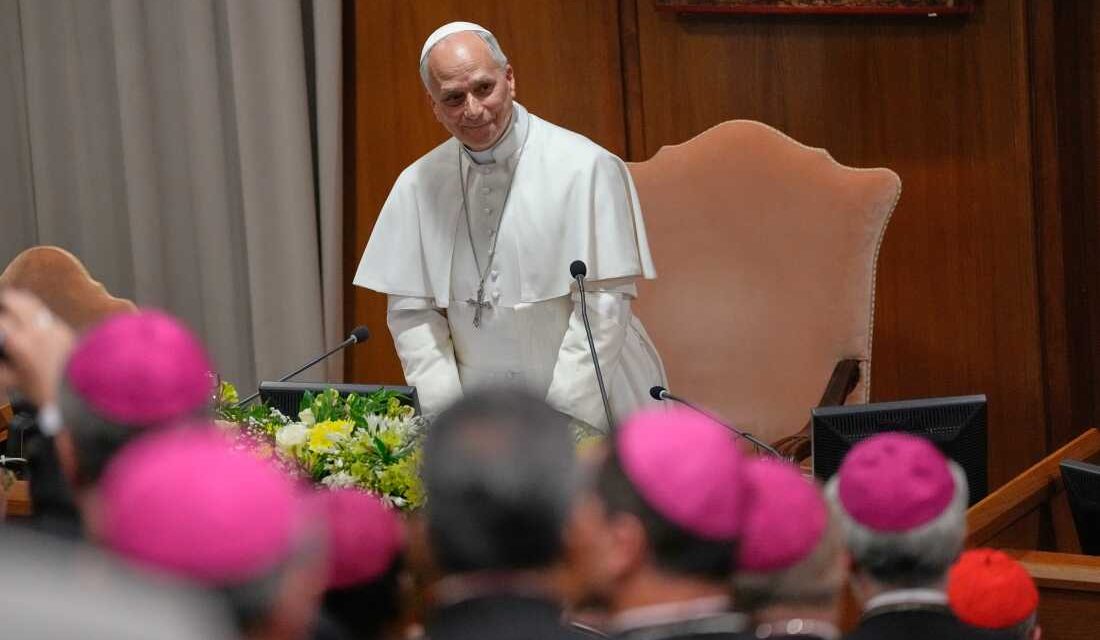
Pope Leo XIV unveiled his first encyclical, titled Magnifica Humanitas, on May 25, 2026, at the Vatican. This document addresses the impact of artificial intelligence (AI) on society, emphasizing the need for regulation and ethical considerations.
AI as the New Industrial Revolution
Leo XIV frames AI as a new industrial revolution with potential to widen inequalities, threaten democracy, and alter human identity. The encyclical urges disarming AI from military and economic interests and promoting stricter regulations.
Disarming AI means freeing it from the mentality of ‘armed’ competition, which is not just military but also economic and cognitive,
Leo wrote. He emphasizes that technology should serve humanity, stating merely regulating it is insufficient; it must be disarmed, welcoming, and accessible.
Challenges of Big Tech
The document critiques the power of Big Tech, pointing out risks of dominance by a few wealthy individuals, which may exacerbate digital divides. Leo noted, AI tends to amplify the power of those who already possess economic resources, expertise, and access to data.
Consequences include shaping of information, influencing democratic processes, and impacting economic dynamics.
Historical Context and Future Vision
Leo compares the current AI transition to challenges addressed in the 19th-century encyclical Rerum Novarum. He expressed responsibility to guide this transformation with faith, reason, and attention to global concerns.
Calling for broad involvement, he encourages community participation in AI’s development and regulation.
Collaboration and Ethical AI
Attending the presentation was Chris Olah, co-founder of Anthropic. He applauded Leo’s commitment to ethical AI development, stressing the need for diverse input in guiding AI usage.
Leo insists on prioritizing human dignity over technological advancement, warning against AI chatbots eroding human interaction and decision-making abilities.
Impact of AI on Society
The encyclical recognizes positive AI contributions but highlights risks, especially when driven by concentrated power. Leo stresses that moral principles should guide AI from inception, not after societal harm.
Leo explains that prudent AI regulation does not oppose progress but promotes responsible care. He underscores that ethical AI governance requires broader social justice criteria.
Cautioning Against Transhumanism
The document critiques transhumanist views, which seek to transcend human limitations. Leo argues these views neglect the essential human growth through challenges.
Cardinal Víctor Manuel Fernández noted Catholic teaching upholds the infinite dignity of every person, challenging the notion that humanity is obsolete.
Economic and Social Justice
Leo advocates for fair tax systems and shared technological benefits to combat technological-induced disparities. He warns against emerging forms of digital colonialism, emphasizing the importance of data ownership and transparent use.
War and AI Ethics
Addressing AI’s military use, Leo underscores the need for rigorous ethical constraints and maintaining human accountability in warfare decisions. He calls for international laws to regulate automated weaponry.
Drawing on Catholic social teaching, the encyclical focuses on human dignity and the common good. It affirms the need for solidarity and the protection of future generations.
AI’s Ethical Purpose
Brian Patrick Green, from Santa Clara University, highlighted the importance of considering AI’s societal role. He asked what purpose AI should serve and how it can meet human needs effectively.
This coverage stems from a collaboration between NPR and Religion News Service.
 Jesse Marsch: From U.S. Soccer to Canadian National Team
  Trump and Waltz Point to Immigration in France’s Riots
  Scrutiny Over Alberta Separatists’ Alleged Offer to the U.S.
  Alleged Cartel Leader Arrested in Mexico
  Trump Orders Nidal Hasan’s Execution by Firing Squad
  Russia Criticizes Potential U.S. Military Base and Nuclear Plan in Lithuania