Ice Storm Impact and Climate Change
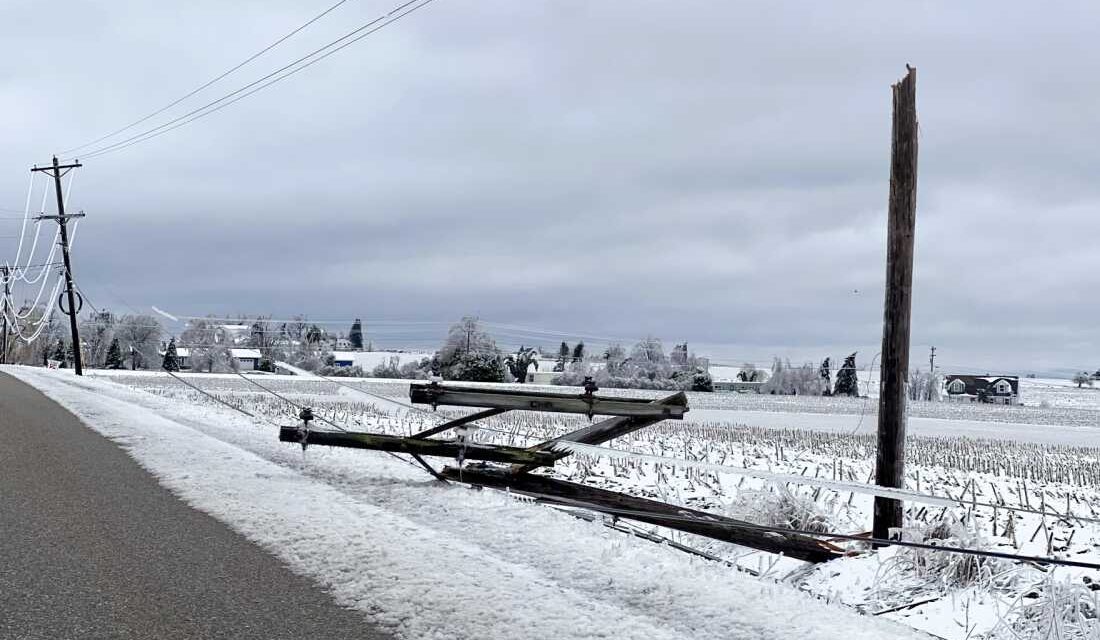
In March 2025, northern Michigan faced a destructive ice storm. Trees and power lines fell, causing widespread outages. Research links this kind of event to climate change. As the climate warms, freezing rain may replace snow, leading to more damaging ice storms.
Michael Livingston/IPR News
The Vulnerability of Power Lines
Across the U.S., unburied power lines suffer during severe storms. Hundreds of outages occur annually, often due to fallen trees on above-ground lines. Burying lines underground significantly enhances reliability in bad weather. Yet, only about one-fifth of the nation’s lines are buried, as reported by the U.S. Department of Energy.
March 2025 Ice Storm and its Aftermath
During the ice storm, northern Michigan saw trees and utility poles collapse. Thousands lost power for weeks. Lewiston resident Wanda Whiting faced difficulties getting her husband, Dave, to the hospital during the blackout. Roads, lined with falling debris, were dark and dangerous.
Whiting described driving over thick cables sprawled across the highway. Despite the outage, downed wires could still carry electricity. The couple reached the hospital, and fortunately, Dave recovered. However, the area’s power outage persisted for two weeks.
Vivian La/IPR News
Planning for Future Weather Events
Ice storms remind Michiganders of grid weaknesses during severe weather. The region is prone to lengthy outages. Climate change increases these risks. Richard B. Rood, a University of Michigan professor, emphasizes the need for future-oriented planning.
The state’s largest electric co-op is proactively burying new power lines underground, aiming to mitigate weather-related outages. Recent storms snapped poles, leaving residents like Wanda Whiting questioning the reliability of existing infrastructure.
Financial Challenges of Burying Lines
Cost remains the primary obstacle to undergrounding power lines. Estimates suggest it is considerably more expensive than installing overhead lines. Consumers Energy, a major Michigan utility, receives frequent customer inquiries about burying lines. Previously estimated expenses can reach $400,000 per mile. In urban areas, costs can soar to $2-3 million per mile.
Constructing buried lines during new builds, alongside other utilities, offers a cost-effective approach. Traverse City Light & Power aims for a balanced strategy amidst these financial challenges. Great Lakes Energy plans to bury all new lines following a storm that caused significant outages and damage.
Vivian La/IPR News
National Efforts for More Reliable Power
Nationwide, utilities are similar in experiences of increased outages due to severe weather. Many utilities aim to bury more lines, notes Andrew Phillips of the Electric Power Research Institute. However, rising electricity rates are a concern. Utilities need to upgrade aging infrastructure while managing customer costs.
Funding these improvements requires passing costs to consumers, Stanford University’s Tao Sun explains. Strategic planning, identifying high-benefit areas, and community agreement on rate increases are essential. Implementing changes often happens post-disaster.
In California, PG&E is undertaking the largest national undergrounding project as a response to wildfire damage.
One year post-storm, Michigan residents like Wanda Whiting remain affected. New poles and wires appear outside her home, but the question of future resilience lingers. “If going underground offers a solution,” Whiting states, “then that’s the path to take.”
Brian Brachel/IPR News
 Communities Continuing Recovery from Hurricane Helene Explored through Graphic Novel
  Fat Bear Week 2026 Highlights: Meet the Competitors
  Annual Fat Bear Week Begins at Katmai National Park
  Understanding Hurricane Development
  California Prepares for El Niño-Fueled Storms with Emergency Declaration
  California’s Growing EV Adoption: Challenges and Benefits