
Lake Mead, located on the Arizona-Nevada border near Las Vegas, has reached its lowest water level since it was filled approximately 90 years ago. The reservoir’s water levels dropped to 1,040.4 feet (317.1 meters) above sea level, slightly below the previous low recorded in July 2022 at 1,040.58 feet (317.27 meters).
This drop follows a severe winter for the Colorado River Basin, which experienced its worst snowpack on record. The melting snow is crucial for the river that supports farmers, industries, wildlife, hydropower producers, and over 40 million people across seven U.S. states, tribal nations, and Mexico.
In response, federal officials proposed a temporary plan to alleviate the crisis on the waterway. The plan emerged after states relying on the river—California, Colorado, Arizona, Nevada, New Mexico, Wyoming, and Utah—failed to agree on a long-term water-sharing strategy. Under the proposal, California, Nevada, and Arizona would face water reductions.
In addition to overuse, drought and rising temperatures have significantly depleted both Lake Mead and Lake Powell, the second-largest reservoir in the U.S. Together, these two crucial reservoirs of the Colorado River stand at their lowest levels in nearly 70 years.
To ensure the continued generation of hydropower, officials have announced a decision not to release cooler water from Lake Powell’s Glen Canyon Dam in northern Arizona. This action aims to protect a threatened native fish species whose habitat lies between the two reservoirs.
In 2022, Lake Mead’s severe drought exposed human remains and forced water authorities in Las Vegas to draw water from deeper within the reservoir to maintain supplies. These actions are essential to continue providing water to millions of people.
The Associated Press covers water and environmental policy, supported by the Walton Family Foundation. However, all content remains under the AP’s editorial control. For further AP environmental coverage, visit here.
 Great Lakes Face Beach Hazards Due to Dangerous Currents
  Surprising Encounter with Gulf Sturgeon in the Suwannee River
  Potential Impact of Tropical Storm Polo on Southern California
  Communities Continuing Recovery from Hurricane Helene Explored through Graphic Novel
 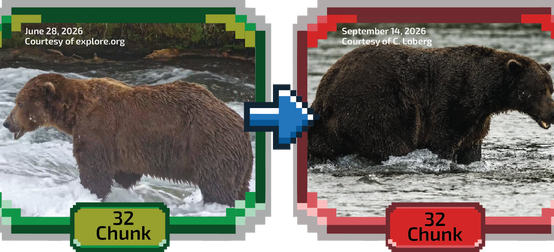 Fat Bear Week 2026 Highlights: Meet the Competitors
  Annual Fat Bear Week Begins at Katmai National Park