
Temporary Protected Status (TPS) has become a battleground for legal interpretation. The recent actions by U.S. District Judge Allison Burroughs illustrate this conflict. Judge Burroughs issued another stay to block the Trump administration’s effort to end TPS for over 1,000 Somali nationals. This decision came despite the Supreme Court’s earlier ruling in Mullin v. Doe that district courts lack authority to review TPS terminations on statutory grounds.
The conflict arises from Congress’s design flaw in the statute, which fails to establish a firm deadline for judicial review. Both Homeland Security’s general counsel and Rep. Andy Ogles criticized the judge’s action, citing defiance of governing instruments. However, the real issue lies in Congress’s inactivity in solidifying the legislative framework.
Stays are temporary measures, pending a final decision from a higher authority like the Supreme Court or Congress. The Mullin case was designed to serve this function, though its primary focus was on Haiti and Syria. The Supreme Court’s ruling restricts judicial review of TPS terminations, emphasizing that constitutional claims are the only basis for court intervention. The Somali plaintiffs leveraged this opening by refocusing their argument on equal protection and due process, resulting in Burroughs pausing the termination process.
The Supreme Court’s decision left room for constitutional claims, a loophole exploited by numerous lawyers seeking delays on TPS decisions.
This pattern highlights a trend larger than any single judicial figure. Over several summers, the Supreme Court aimed to limit district judges from halting federal policies nationwide, drawing culmination in Trump v. CASA, which restricts binding non-parties without a certified class. Mullin further closed the door on judicial reviews based on statutory grounds but did not entirely eliminate constitutional claims.
The case validates TPS’s existence. The State Department’s warnings about Somalia’s conditions present a factual dispute that suggests courts should be referees. The current statute lacks functionality concerning deadlines. The Supreme Court’s decision, rendered in June, contrasts sharply with Burroughs’s July stay, showing Congress’s design flaw.
Congress has a twofold task. First, it must amend the statute to mandate that any constitutional challenge to TPS terminations go directly to a circuit court of appeals, with a 60-day review limit — akin to channels set by the REAL ID Act. Second, congressional oversight needs strengthening through mechanisms other than impeachment. Effective tools include formal complaints and appellate scrutiny.
While some, like Rep. Ogles, advocate for impeachment, practical oversight provides a more strategic route to accountability. A Senate conviction for contested rulings presents a political risk, potentially affecting future judges across administrations.
Congress can address both statutory reforms and judicial accountability. Properly fixed statutes and robust oversight could prevent repetitive judicial stays and clarify legislative intent.
Jay Rogers is an experienced financial professional specializing in private equity, private credit, hedge funds, and wealth management.
Copyright 2026 Nexstar Media Inc. All rights reserved. This material may not be published, broadcast, rewritten, or redistributed.
 Key Developments from Recent Political Events
  Retired Special Ops Advocate for Nationwide Concealed Carry Privileges
  Community Ties Influence Key Congressional Races in Pennsylvania
  Doctors Condemn Trump’s Vaccine Executive Order
 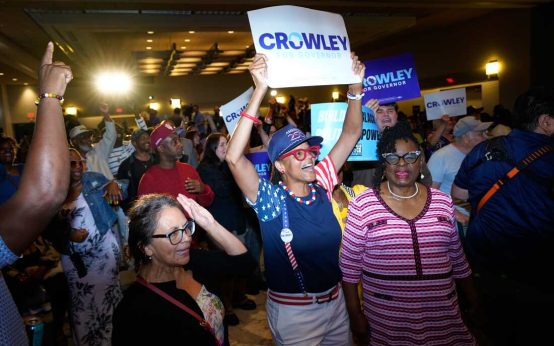 David Crowley Wins Democratic Nomination for Governor in Wisconsin
  David Crowley Secures Democratic Nomination for Wisconsin Governor