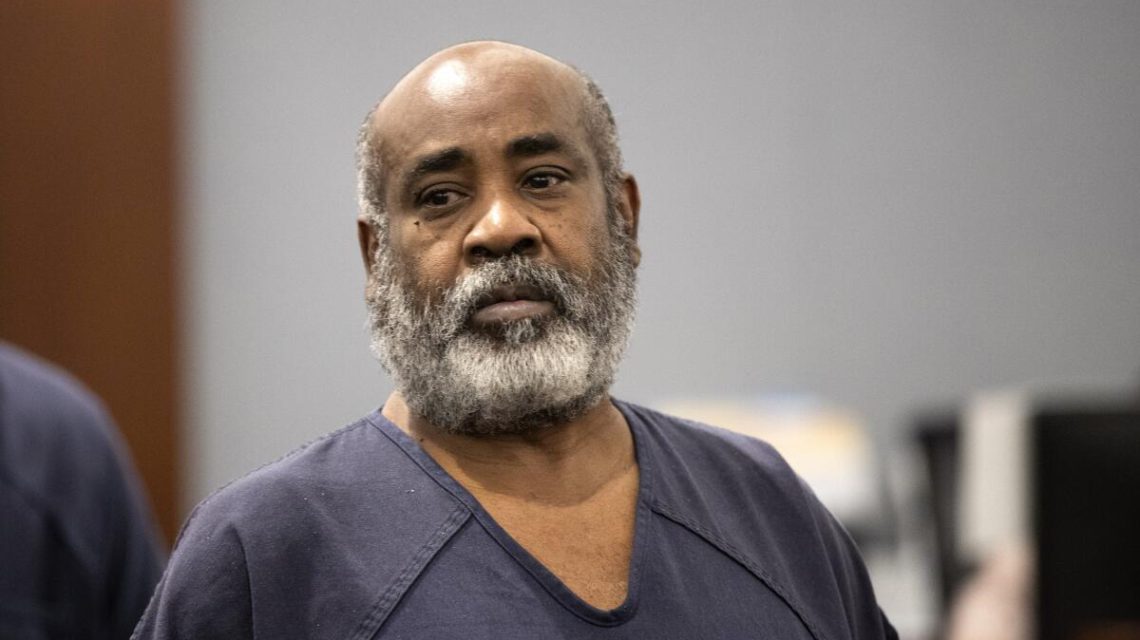
For nearly 30 years, Duane “Keffe D” Davis, a former Compton gang leader, has been a key figure in discussions about the murder of Tupac Shakur. Shakur, a prominent rapper, was fatally shot on September 7, 1996, in Las Vegas while in a car driven by Marion “Suge” Knight, head of Death Row Records.
Numerous investigations, documentaries, and reports have explored the events of that night, yet many details remain unclear. Recently, Davis has gone on trial in Las Vegas, accused of orchestrating Shakur’s murder. Prosecutors suggest Davis himself will provide crucial testimony, based on many statements he has made over the years.
Davis has openly discussed his connection to the case through interviews, a tell-all book published in 2019, and various outspoken interviews aimed at promoting his story. He is not accused of directly shooting Shakur, but prosecutors allege he planned the murder and supplied the gun as retribution for a gang dispute. Although Davis has recanted some statements, a judge has allowed these as evidence.
In the memoir titled “Compton Street Legend,” Davis recounts being in Las Vegas for the Mike Tyson versus Bruce Seldon fight. He claims his cousin Orlando “Baby Lane” Anderson was assaulted by Knight’s associates at the MGM Grand. Davis described in the book how he provided a gun, which was then used in the attack on Shakur’s convoy.
Davis wrote, “Tupac made an erratic move and began to reach down beneath the seat… and that’s when the fireworks started. One of my guys from the back seat grabbed the Glock and started bustin’ back.”
Legal experts indicate that prosecutors face the challenge of backing up Davis’ admissions with independent evidence. As the case is decades old, reliance may shift to testimony from cooperators, which presents its own difficulties given their backgrounds.
During a protected proffer agreement with the LAPD in 2008, Davis insinuated Anderson shot Shakur for revenge. Later reiterations were made in online interviews. Despite his prior assertions, Davis has since altered his account. Former LAPD Det. Greg Kading commented on Davis’ admissions, stating that Davis had incriminated himself.
Davis, now in his 60s, has pleaded not guilty to the murder charge. He has recently denied involvement and accused a former Death Row Records security head in interviews. Prosecutors plan to collaborate with multiple witnesses who have corroborated Davis’s earlier remarks, while defense strategies focus on portraying his recounts as fabrications.
In recent media interaction, Davis claimed he did not author the book himself but had a ghostwriter for financial motives. With no physical evidence or reliable eyewitness testimony apart from Knight, and relying on Denvonta Lee, an associate of Davis, prosecutors face significant evidential challenges.
Testifying to a grand jury, Lee mentioned the rivalry between Compton gangs linked to music labels as central to the shooting’s motive. He also provided insights into the distribution of the firearm used in the attack. While Suge Knight, currently detained for an unrelated offense, dissociated himself from the case.