
The U.S. Supreme Court may soon face another significant redistricting case following a federal court’s temporary block on Alabama’s Republican-led efforts to redraw congressional maps. This drawn-out dispute began when attorneys representing Black voters contested plans that might allow Republicans to claim a Democratic-held U.S. House seat in the upcoming midterms, echoing similar initiatives nationwide.
On Tuesday, a three-judge panel imposed a preliminary injunction. Alabama may appeal this decision to the Supreme Court, which has addressed similar cases, including one in Texas. Although Newsweek sought comments from Wes Allen, Alabama’s Secretary of State, and the plaintiffs’ lawyers, responses were not yet available.
Understanding the Alabama Redistricting Injunction
The judiciary ruled that Alabama must retain the court-ordered electoral districts implemented in the 2024 elections. This decision followed arguments from Black voters’ advocates that Alabama’s proposed map discriminated against them. The same judicial panel had made a similar ruling back in 2023, initially launched in 2021, when it was claimed the state’s map violated Section 2 of the Voting Rights Act. The map clustered most Black voters into a single district without establishing a second district where these voters could select a preferred candidate.
Federal courts have consistently sided with the plaintiffs in this matter. In 2022, a panel of three judges ruled in favor of the plaintiffs and instructed the state’s lawmakers to redraw the map to incorporate a second majority-Black district. Subsequently, the U.S. Supreme Court supported this finding in a 5–4 decision (Allen v. Milligan) in 2023, reaffirming the Voting Rights Act’s protections against racial dilution in voting.
Despite this, Alabama’s legislature proceeded in 2023 with a new map that still only had one majority-Black district, which led to more legal action. Consequently, a federal court blocked the plan again and mandated a map featuring two Black opportunity districts for the 2024 elections. Moreover, the court in a full 2025 trial, found Alabama’s map violated not only the Voting Rights Act but reflected intentional racial bias under the Constitution.
This ongoing legal battle enters its next phase ahead of the 2026 midterms. On May 11, 2026, the Supreme Court intervened again to invalidate the lower court’s 2025 decision. The case was remanded for further consideration, influenced by the Louisiana v. Callais ruling, which offered a new interpretation of applying Section 2 of the Voting Rights Act.
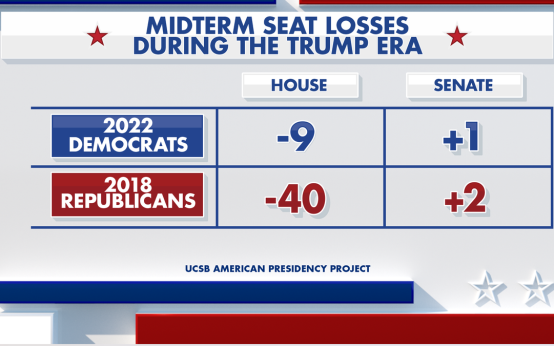 Poll Reveals MAGA’s Increasing Popularity Over DSA as Democrats’ Future Debated
  North Korea’s Hypersonic Weapon Test Amid Global Tensions
 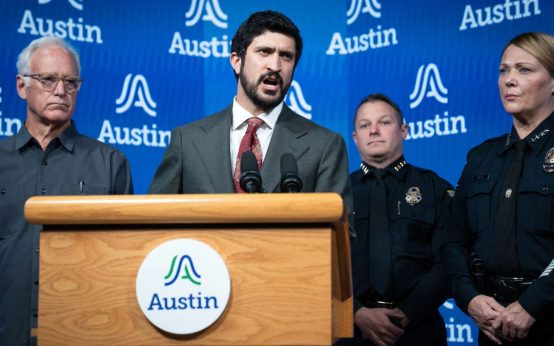 Debate Over ICE Action in Austin Escalates
  President Trump Warns of Escalating War with Iran at UN Assembly
  Tariffs and Their Impact on Everyday Products
 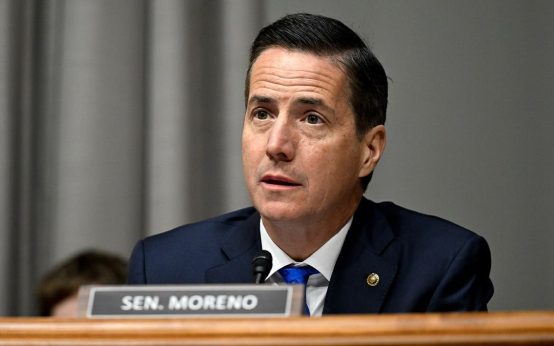 Senator Criticizes Drug Policy After Ohio Tragedy