Fewer Ships Transit Panama Canal Due to El Niño
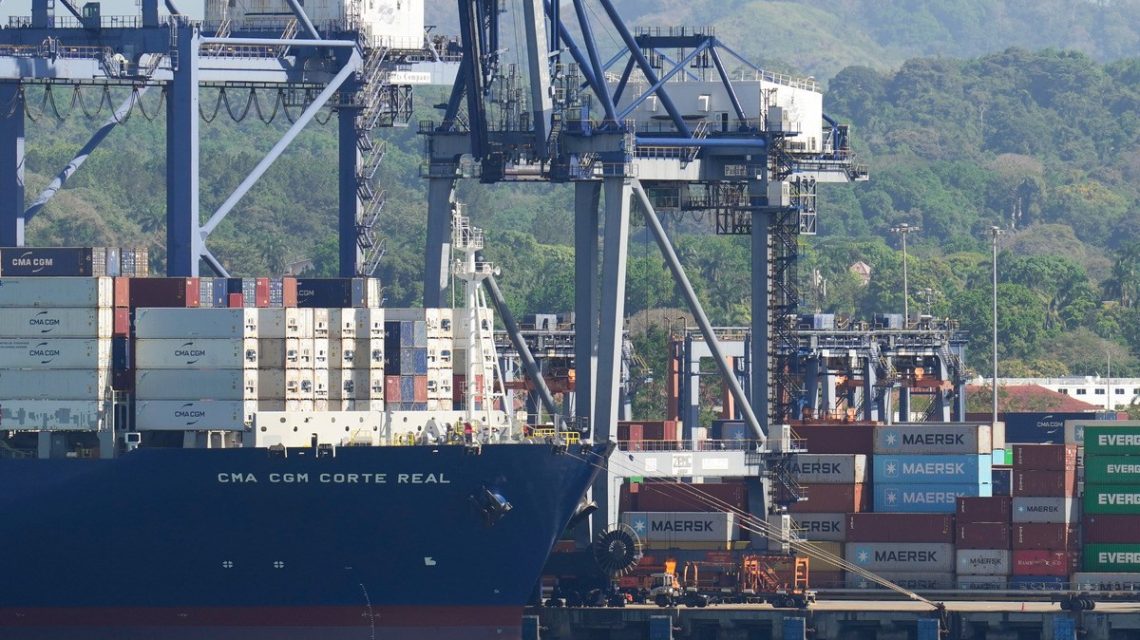
Starting next month, a decline in the number of ships passing through the Panama Canal is expected due to reduced rainfall linked to El Niño. The Panama Canal Authority (PCA) announced that from mid-September, daily transits will decrease from 36 to 32 ships. A gradual reduction will begin on September 3.
Although this reduction might not significantly impact the average U.S. consumer, there is a possibility that cargo owners could pass on increased shipping costs to customers. This was highlighted by Simon Heaney from the Drewry shipping research and consultancy firm.
Global Shipping Challenges and Strategic Routes
The U.S.’s conflict with Iran has disrupted global shipping for months. Iran has targeted cargo vessels and blocked the Strait of Hormuz. Reports from Reuters indicate only seven ships passed through the strait on a recent Thursday.
Additionally, Iran-allied Houthi rebels in Yemen have threatened to attack vessels in the Bab el-Mandeb Strait, another crucial maritime corridor.
El Niño’s Broad Impact
El Niño is affecting the U.S. and Latin America significantly, with Central America experiencing droughts due to the warming of the eastern Pacific Ocean. Other regions may face flooding as El Niño persists into 2027. U.S. scientists officially declared the beginning of El Niño in June, following the dissipation of La Niña in 2025.
Understanding El Niño
Typically, El Niño lasts between nine months and a year, occurring every two to seven years. Its irregular nature makes predictions challenging, according to the National Oceanic and Atmospheric Administration.
The PCA stated that despite the rainy season in Panama and existing water-saving measures, more actions are necessary to maintain canal operations.
The Panama Canal’s Significance
The 51-mile canal is vital for global shipping, linking the Atlantic and Pacific Oceans. This route eliminates the need for ships to travel around Cape Horn. Approximately 5% of global shipping, equating to 1,000 ships monthly, navigates through the canal, including $270 billion or 40% of U.S. container traffic annually.
Low water levels caused by droughts, compounded with conflicts like the Iran war, have significantly increased shipping rates along major routes. Some shipping firms might opt for U.S. West Coast routes, reminiscent of previous restrictions implemented by the PCA due to drought conditions.
In 2023, the PCA recorded the driest October since 1950, cutting daily transits to 18 ships, which caused delays. The International Monetary Fund noted that the effects of El Niño on the canal were impacting regions as distant as Europe and Asia.
Louis Sola, a former Federal Maritime Commission chairman, mentioned in 2025 that PCA’s improvements to counter drought were crucial. Without these efforts, the canal’s capacity could be halved by 2050, severely affecting global trade.
Historical Context and Recent Developments
The U.S. constructed the Panama Canal after aiding Panama’s separation from Colombia in the early 20th Century. Washington maintained control until Panama City assumed management in 1999. In 2016, the PCA completed enhancements to deepen, widen, and raise water levels in Gatún Lake, the primary source for the canal.
 Gorillaz and Macklemore Respond to Controversy Over Israel-Palestine Statements
  Investigation into Lion Deaths in Tanzania
  Merz Stays Resolute Amid Electoral Shifts in Germany
  ICE Agent Shoots Civilian in Austin: Investigation Underway
  U.S.-Iran Relations and Diplomacy at Upcoming U.N. Assembly
  US-China Relations Under Scrutiny: Expert Warns of Escalating Tensions