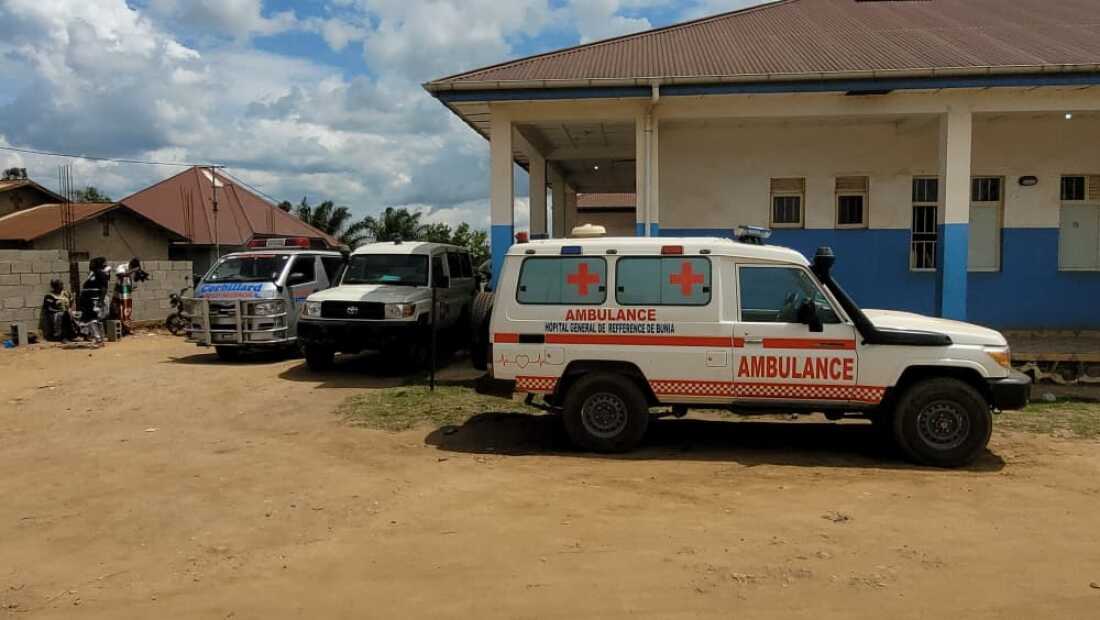
Ambulances line the entrance of a hospital in Bunia, Congo, as the World Health Organization announces a new Ebola outbreak in the Democratic Republic of Congo and Uganda. This outbreak is described as a ‘public health emergency of international concern.’ However, WHO Director-General Tedros Adhanom Ghebreyesus emphasized it does not qualify as a pandemic emergency and urged nations to avoid closing their borders.
The outbreak began in the DRC’s eastern Ituri province with hundreds of suspected cases, including one crossing into Uganda. This latest virus strain lacks a vaccine, according to the Africa Centres for Disease Control and Prevention (Africa CDC). Ebola spreads through blood, bodily fluids, and contaminated surfaces. Symptoms include fever, body pain, weakness, vomiting, and sometimes bleeding, the WHO reports.
Dr. Jean Kaseya, Africa CDC director general, indicated the outbreak likely started in late April, predominantly in the mining towns of Mongbwalu and Rwampara in the DRC. These areas see high movement due to employment opportunities. ‘This region is vulnerable and fragile,’ Kaseya noted.
Current statistics from the U.S. Centers for Disease Control and Prevention (CDC) list 10 confirmed cases, 336 suspected cases, and 88 deaths in the DRC. Neighboring Uganda shows two confirmed cases, including one death. Both Suspected and confirmed cases raise concern, but CDC officials assess a low risk to the American public.
Dr. Satish K. Pillai, the CDC’s Ebola response incident manager, stated they are proactively coordinating with partners to manage and mitigate Ebola’s spread. More than 30 CDC staff are onsite in the DRC, with additional personnel set to join soon. The CDC also aims to safely withdraw a few American citizens affected by the outbreak.
Kaseya recounted a case involving a 59-year-old Congolese man who died from the virus in Uganda’s capital, Kampala. His contact with multiple people before hospitalization, including travel via public transport, exemplifies the virus’s spread. Despite treating this case, the man’s body was returned to the DRC for burial, raising further infection risks.
Infected healthcare personnel must use comprehensive protection, including head coverings, goggles, masks, gloves, gowns, and boots. However, the exact protective measures employed in the man’s case remain unclear due to insufficient PPE resources in the region.
The virus’s spread rate remains uncertain. The Bundibugyo strain involved is rare and understudied. Traditional rapid tests often overlook this variation. According to Dr. Boghuma Titanji from Emory University, the virus circulated for weeks unnoticed, resulting in a delayed public health response.
No officially approved vaccines or treatments exist for this strain of Ebola. A potential experimental vaccine candidate demonstrates roughly a 50% efficacy in monkey trials, though human trials are pending.
The African CDC collaborates with health organizations and private companies to bolster cross-border surveillance and preparedness. Dr. Craig Spencer, experienced in treating the Zaire Ebola strain, highlighted the situation’s magnitude on social media, pointing to its already extended infection timeline.
Between 2014 and 2016, the largest recorded Ebola outbreak resulted in over 28,600 infections and 11,325 fatalities, primarily affecting West African countries.
 Lawsuit Filed Over Preeclampsia Death in Texas Amid Abortion Ban Controversy
  Illinois American Water Faces Opposition Over Proposed Rate Increase
  Porsha Williams Opens Up About Emergency Surgery and Health Challenges
  Discussing Weight-Loss Medication with Children: A Parent’s Approach
  Conjoined Twins Separated in Complex Surgery
  Genetic Mutation Linked to Elevated Lung Cancer Risk