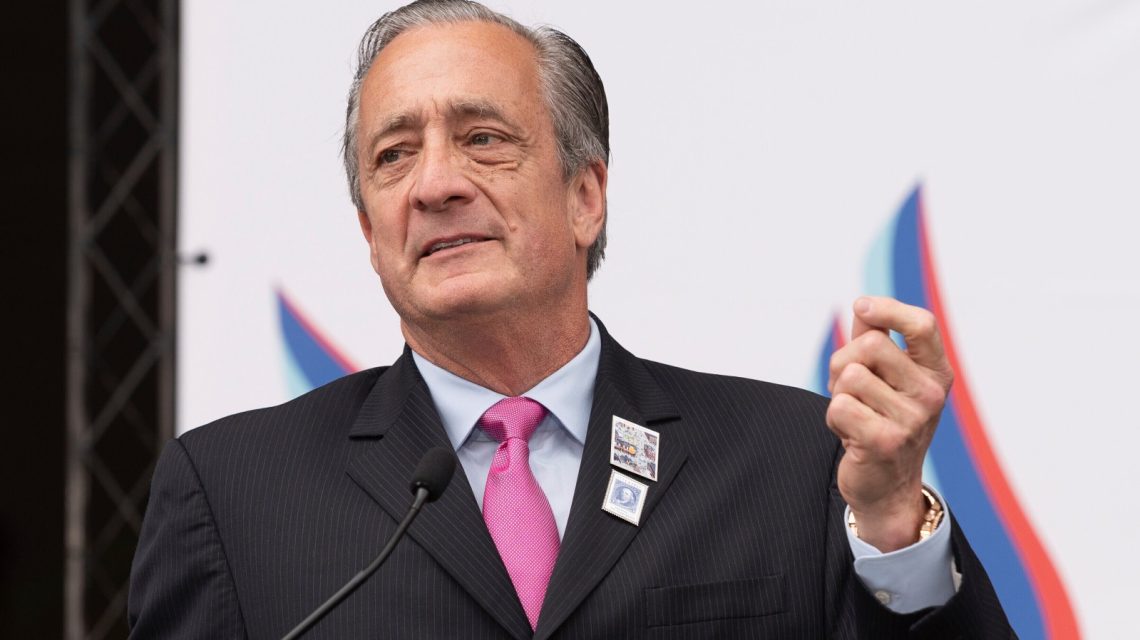
Lawmakers have heavily criticized Postmaster General David Steiner following his announcement of a rule that would prevent the United States Postal Service (USPS) from delivering mail ballots unless states share their voter lists with the Trump administration. During his testimony before a Senate committee, Steiner was asked if USPS would continue mailing ballots to states that refuse to provide absentee voter lists. His response was a firm ‘No,’ stating that they would inform the state of the necessity of providing the manifest.
Democratic Senator Gary Peters of Michigan, ranking member of the Senate Homeland Security Committee, expressed concern that this rule would compel states to share sensitive voter information. Peters stated that this was a way for the federal government to obtain voting information, which states control under the U.S. Constitution. He argued that this requirement would deny the option of voting by mail to many, deeming it unacceptable.
New Hampshire Democrat Senator Margaret Hassan echoed these sentiments, declaring that the rule was ‘blatantly illegal’ and could diminish democratic participation. She called for the immediate retraction of the proposal from Steiner.
The USPS’s new proposal is linked to President Donald Trump’s March 31 executive order, considered a significant move to change election administration and mail voting rules ahead of the 2026 midterms. The order, titled ‘Ensuring Citizen Verification and Integrity in Federal Elections,’ instructs federal agencies to create lists of verified citizens eligible for mail voting, requires USPS to send out absentee ballots only to approved voters, and implements ballot-tracking measures, such as unique barcodes on mail ballot envelopes. The order also threatens to withdraw federal funding from non-compliant states.
Critics argue that this directive oversteps presidential authority as the Constitution delegates states the main role in election administration, and Congress has the power to set national election standards. Federal courts are currently scrutinizing the executive order, with lawsuits filed by Democratic-led states and voting rights groups challenging its legality.
A recent federal judge decision in Massachusetts allowed significant challenges to the order to proceed, suggesting that courts may consider if the administration surpassed its authority by expanding the role of federal agencies, including the USPS, in election administration. One lawsuit, brought forth by organizations like the League of Women Voters and Delta Sigma Theta Sorority Inc., claims the order is unconstitutional, and its potential implementation threatens to disenfranchise American citizens reliant on mail-in voting.
Marcia Johnson of the League of Women Voters emphasized that mail voting enables millions, including seniors, individuals with disabilities, military families, students, caregivers, and working people, to engage in democracy. She declared that a president cannot single-handedly alter election rules or dictate state election administration, committing to defend voter rights.
President Trump has consistently criticized mail voting, alleging it heightens election fraud risk, despite bipartisan confirmation that widespread voter fraud is rare. Since returning to office in January 2025, he has advocated for stricter mail ballot regulations as part of his election-integrity drive. Trump’s disapproval of mail voting is persistent, as he has frequently voiced at rallies and through social media.
The ongoing legal challenges will likely decide the feasibility of the administration’s mail-voting measures ahead of future federal elections. Voting-rights groups, election officials, and some states are seeking court orders to prevent enforcement, while administration officials maintain these measures are vital for bolstering election security.
 Alani Bankhead Denies Being a Republican Plant Amid Senate Campaign
  Debate Over Driverless Vehicles in Washington D.C.
  Democrats Turn to Content Creators to Rebuild Latino Support
  Efforts to Close Loopholes in Cash Welfare Spending
  Former State Trooper Criticizes Handling of Gang Violence in Twin Cities
  Controversy Surrounds Jack Smith’s Actions and Public Appearances