
Prime Minister Keir Starmer of Britain has announced his resignation. He succumbed to a revolt within his party and a leadership challenge.
Mr. Starmer, promising to stay in office until a new leader is chosen, suggests the transition could occur by September. However, if Andy Burnham, favored after recent political successes, is the sole candidate, leadership may switch sooner.
Starmer’s reign, starting with Labour’s electoral win in 2024, is ending amidst political decline.
Political analysts refer to the original victory as a “loveless landslide” due to the record-low vote share of 34 percent. Recently, Starmer’s position weakened due to unpopularity and scandal.
Pressure and a Timetable
Starmer, confronted by party pressure, has outlined his departure plan. Nominations for a new leader will open July 9, targeting September for a decision. Starmer said the new leader will assume office in September unless Burnham stands unopposed.
“As a rare show of emotion, Starmer credits his family with unwavering support, dedicating future endeavors to them.
Starmer admitted he is not perceived as suitable to lead the party in the next election. Starmer informed King Charles III of his decision.
The political environment, filled with uncertainty, affects the bond market. Yield on British bonds rose, contrasting overall European market trends, amidst global diplomatic activities.
Since 2016, five prime ministers have similarly resigned, tarnished by scandals and lost elections.
Rise of Andy Burnham
Andy Burnham, Mayor of Greater Manchester, is poised for leadership following a parliamentary win. In a recent election, Burnham received 55 percent of the vote, boosting his standing.
Leadership Challenges
Starmer’s legacy is overshadowed by political turbulence. Burnham’s candidacy aims to rejuvenate party morale.
Peter Kyle, an ally of Starmer, hints at Starmer acknowledging political pressures.
Pressure mounts for Starmer to negotiate a transition to avoid escalation. Burnham has publicly called for change in leadership.
Burnham’s bid seeks a fresh course for Britain amid declining party fortunes, including recent election losses.
Burnham Vs. Starmer
Political strengths of Burnham, a charismatic communicator, contrast with Starmer’s struggling popularity.
Advocates argue Burnham’s leadership connects with English regional grievances, proposing public-controlled services, reduced taxation, and housing schemes.
Burnham won praise for transforming Manchester’s transit system, signaling policy potential.
Many party supporters, eager for electoral gains, rally behind Burnham for a strategic pivot.
Historical Perspectives
Political charisma — as demonstrated by past leaders — often prevails despite concerning policies.
Historical precedents underscore personality in political triumphs, highlighting similar transitions.
Burnham, in contrast to Starmer, projects authenticity and regional understanding, promising change amidst Britain’s challenges.
Political Identity and Path Forward
Burnham, heralded for his response to regional challenges, faces constraints shared with Starmer.
Critics point to Burnham’s adaptability, yet supporters value his connection with voters.
Burnham’s history reveals a focus on regional representation, emphasizing inequalities.
Evaluating leadership potential, Burnham’s regional policy focus contrasts with centralized governance, presenting opportunities despite constraints.
As Burnham considers leadership challenges, voter sentiments and political continuity remain crucial.
Strategic decisions — influence both party trajectory and national governance — amidst political divisiveness.
 Democrats and Republicans Face Off Over Ideology and Endorsements
 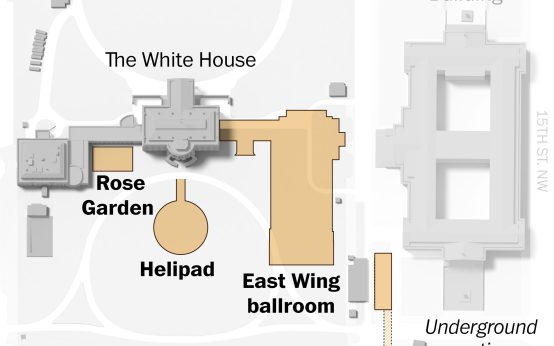 White House Construction Projects to Cost $900 Million
  Democrats’ Prospects Improve for Wisconsin Governor’s Race
  Private and Public Life of Alexandria Ocasio-Cortez Under Scrutiny
  Kremlin’s Exclusion of Anti-War Party Highlights Propaganda Gap
  Challenges in Chicago’s Education System