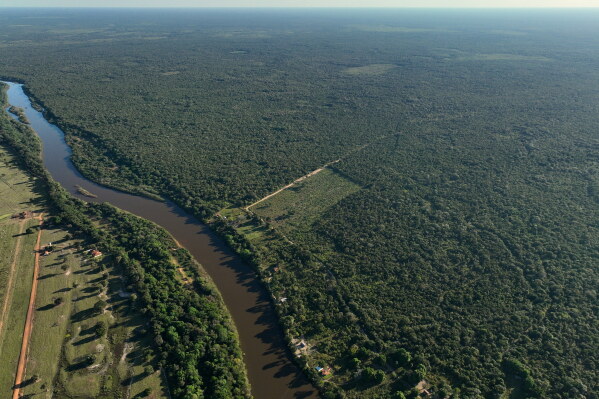
Formoso do Araguaia, Brazil (AP) — A significant conversation about cattle ranching and conservation is unfolding on Bananal Island, a large river island in northern Brazil. Recently, federal authorities directed the removal of cattle herds from this region, identifying the land as a protected Indigenous territory meant for conservation.
The authorities argued that the presence of these herds, managed by external ranchers, was unlawful and caused habitat degradation. In response, more than 100,000 cattle were moved from the island during low river periods. However, this decision had unintended consequences for the Indigenous populations reliant on leasing income from ranchers.
This scenario highlights the complex challenge of reconciling conservation objectives, Indigenous rights, and pressures from Brazil’s agribusiness sector. As the world’s largest beef producer, Brazil’s beef industry contributes around 20% to global output and 6% to the nation’s GDP. Deforestation driven by cattle ranching remains a central issue. Ranchers often clear forests for grazing, impacting the Amazon, the world’s largest rainforest.
Bananal Island, located in Tocantins state, has faced high deforestation rates, threatening biodiversity as trees that absorb pollutants are replaced by methane-emitting cattle. Brazilian laws restrict commercial activities on Indigenous territories, permitting cattle raising solely for subsistence. Yet, leasing arrangements persisted informally for decades. Ranchers paid low fees to Indigenous leaders, generating significant revenue, which was not always equitably distributed to the 5,000 residents across over 40 villages.
Leandro Milhomem of Brazil’s environmental agency noted the requirement for shared benefits, pointing out instances of malnutrition among children. Some Indigenous community members have expressed concerns about restricted access to communal farming areas due to ranchers fencing off sections of the island.
While leaders who negotiated with ranchers view these incidents as anomalies, they acknowledge that ranching exceeded sustainable limits, prompting the removal of cattle. Environmental authorities recently seized 550 cattle and issued fines. A wrangler disclosed being instructed to falsely report cattle ownership to avoid penalties.
Cattle ranching has led to soil acidification and increased wildfire risks. Historically, fires were used for land management, but they often originated near grazing zones, complicating the situation further.
The Javae Indigenous group, residing alongside the Karaja and Ava-Canoeiro communities on Bananal Island, have interacted with non-Indigenous ranchers for years. Relationships formed through marriages allowed economic activity within the protected territory.
In efforts to balance traditional and modern practices, the Javae are collaborating with The Nature Conservancy on a land management plan considering social, environmental, and economic needs. Recent efforts by Javae leaders included visiting the Macuxi people in Roraima to learn about balancing agricultural practices with safeguarding land rights.
The Macuxi, a model for Indigenous-led cattle ranching, collectively manage approximately 45,000 cattle. Their strategies are closely watched as Indigenous groups in Brazil grapple with economic activities’ implications on their territories and the environment.
The debate extends to other areas, such as mining. A Brazilian court recently affirmed the Cinta Larga people’s right to mine within their own territory, highlighting the need for tailored legal frameworks supporting diverse Indigenous communities.
Aureliano Ivo Macuxi, an Indigenous rights advocate, emphasizes the necessity of region-specific approaches, underscoring that no single model fits all Indigenous lands.
Note: The Associated Press provides climate and environmental coverage supported by various foundations, remaining responsible for all content. More information is available at AP.org.
 Historical Discrepancies and Diplomatic Sensitivities in U.S.-China Relations
  Escalating Tensions: Russia’s Nuclear Threat and the Kaliningrad Conundrum
  Suncor v. Boulder: Understanding the Supreme Court Case and Its Implications
  Marco Rubio Discusses Thwarted UK Terror Plot and Global Threats
 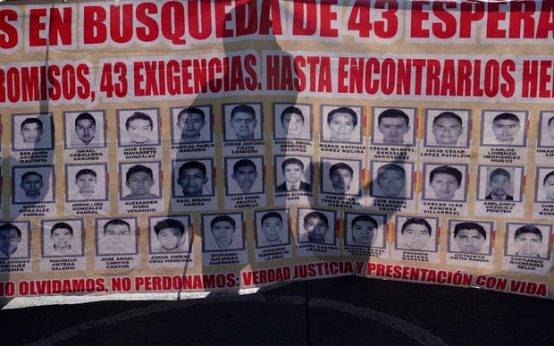 New Leads Emerge in 2014 Ayotzinapa Student Disappearance Case
  Concerns Over U.N. Secretary-General Candidate’s Alignment