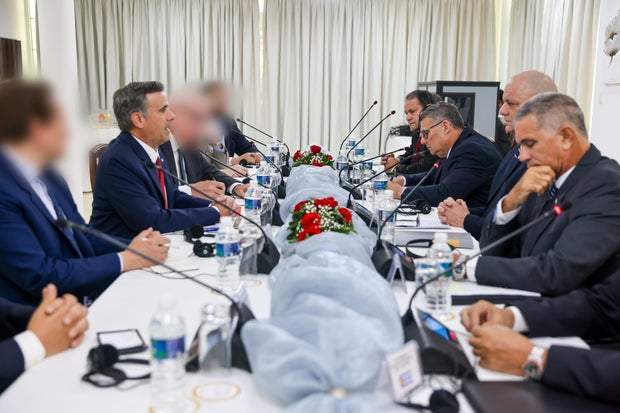
John Ratcliffe, CIA Director, recently traveled to Havana for a notable discussion with senior Cuban officials. He was accompanied by an operative involved in the U.S. mission that detained former Venezuelan leader Nicolás Maduro earlier this year. This meeting drew attention because Venezuela and Cuba had strong ties prior to Maduro’s capture.
The Cuban government reported that 32 of its military and police personnel were killed during the operation to seize Maduro. Ratcliffe introduced the paramilitary leader responsible for these actions, signaling a message to the Cubans. Although the CIA refused to comment, sources suggest the gesture was intended as a statement.
Ratcliffe’s visit follows mounting U.S. pressure on Cuba. The U.S. government has threatened hefty tariffs on nations exporting oil to Cuba, intensifying fuel shortages in the nation. Secretary of State Marco Rubio has insisted on the need for Cuba to implement substantial economic and political reforms. Meanwhile, President Trump has considered a ‘friendly takeover’ of the island, viewing Cuba’s communist government as a longstanding challenge since 1959.
Shortly after the operation against Maduro, Rubio highlighted Cuba’s ties to Venezuela, indicating the Cuban influence within Venezuela’s intelligence agency. “If I lived in Havana and I was in the government, I’d be concerned, at least a little bit,” Rubio commented.
A CIA official stated that Ratcliffe conveyed a message offering serious engagement on economic and security topics, contingent on Cuba making fundamental changes. During his visit, Ratcliffe interacted with Raúl Rodriguez Castro, the grandson of Raúl Castro. Following this meeting, an indictment was unveiled against the elder Castro, charging him with murder and conspiracy related to the 1996 downing of two planes.
This meeting between an American intelligence leader and a Castro family member inevitably recalls the Cold War era, which framed U.S.-Cuba relations. Historical efforts by the U.S. to alter the Cuban regime, including the Bay of Pigs invasion and Operation Mongoose led by the Kennedy administration, contribute to ongoing tension.
Current U.S.-Cuba relations continue to be shaped by this complex history. According to Rubio, Cuba harbors weaponry acquired from Russia and China and accommodates their intelligence presence. A CIA official remarked last week that discussions covered security concerns, emphasizing that Cuba must not serve as a sanctuary for Western Hemisphere adversaries.
As tensions mount, the U.S. intelligence community is considering potential Cuban reactions to any American military initiatives. CBS News reports confirm that Cuba has procured attack drones. Despite escalating tensions, Cuban President Miguel Díaz-Canel Bermúdez asserted that Cuba poses no threat to the U.S., cautioning against military action that could lead to a “bloodbath.”
 British Police Arrest Man in Suspected Terror Plot Involving U.S. Air Base
 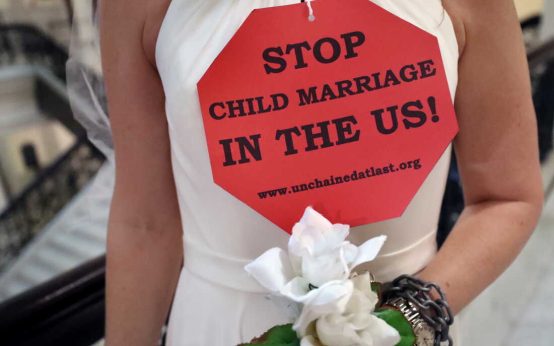 Campaigns Against Child Marriage in the U.S. and Globally
  Drone Incursions Highlight Moldova’s Security Gaps
  Lisdoonvarna Matchmaking Festival: A Traditional Search for Love
 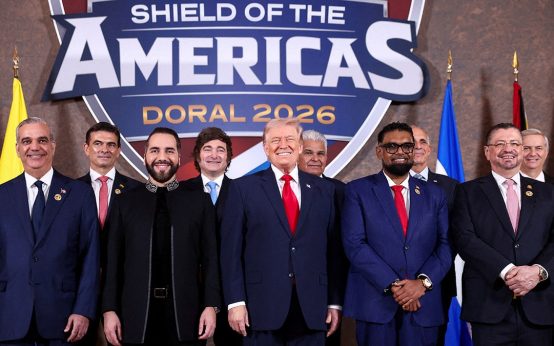 Bolivia Faces Security Challenge Amid Shield of the Americas Test
  Investigation Continues Into FlyDubai Co-Pilot Incident