
When I read about China’s extensive surveillance and the ranking of citizens by political and social standards defined by the Communist Party, George Orwell’s ‘1984’ immediately came to mind. In recent years, China has become a leader in global surveillance, heavily using artificial intelligence. This represents an intensified version of Mao-era policing.
This surveillance model is now spreading globally. Authoritarian states and wavering democracies are picking up on these methods. Journalists David Pierson and Berry Wang report that this policing approach is being adopted beyond China’s borders.
In a village within the Solomon Islands, issues arose with young men causing disturbances fueled by betel nut and moonshine. Residents sought assistance from local police, who were Chinese due to a recent security agreement with Beijing. The response involved collecting fingerprints, palm prints, and detailed information from every resident. This strategy mirrors a Mao-era community surveillance system recently revived by President Xi Jinping. The system promotes informing on neighbors to identify political adversaries.
China’s influence in global surveillance practices is growing. These methods, once confined within China, are now being implemented in places like the Solomon Islands, showcasing a significant extension of China’s impact on policing and surveillance worldwide.
 Ukrainians Honor Oleksiy Yukov for Recovery Efforts
 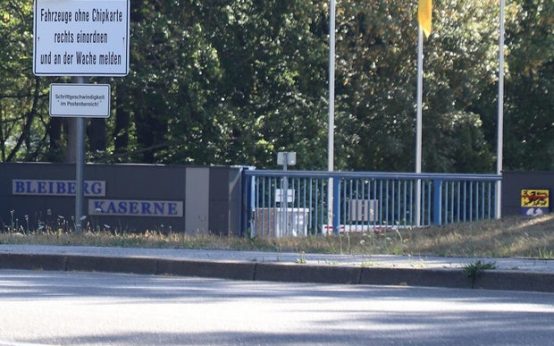 Drones Spotted Over German Military Base Amid Rising Tensions
  Haitian Nationals Face Deportation Risks as TPS Ends
  Conservative Activists Aim to Shape Judicial Perspectives on Birthright Citizenship
  Impact of Deregulation on Air Travel
  Jorge Messi, Father of Soccer Star Lionel Messi, Passes Away at 68