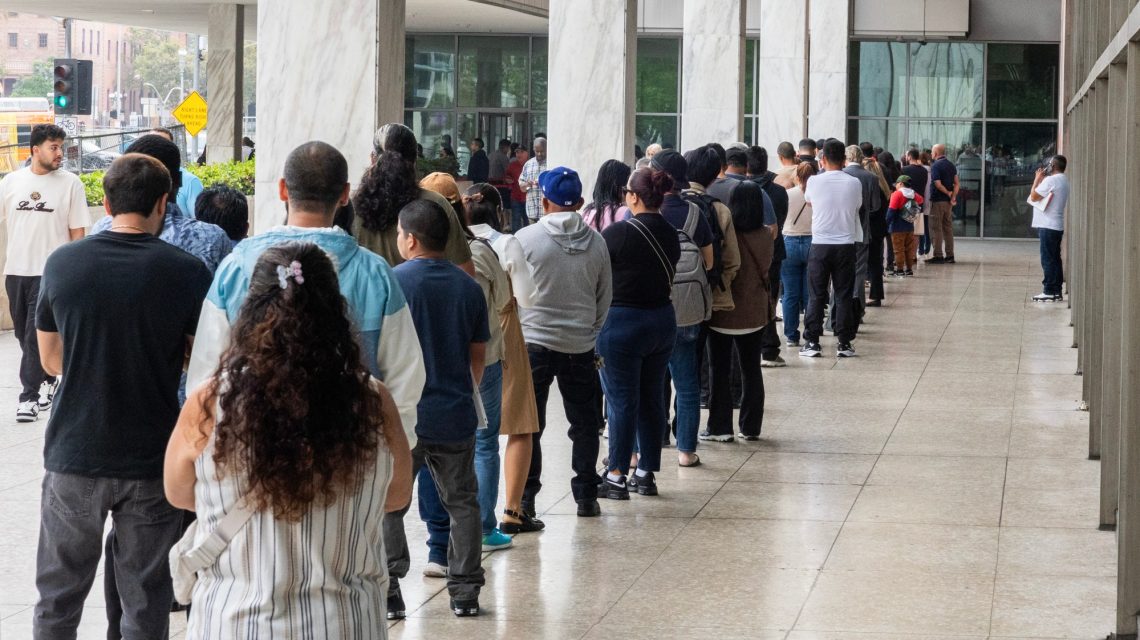
A significant change is underway at the Los Angeles Immigration Court. Recently, the Department of Homeland Security accelerated its efforts to speed up immigration cases. They implemented a practice of scheduling multiple cases simultaneously on the same docket.
The presidential administration has been effective in curbing the immigration court backlog for the first time in over a decade. A Justice Department official emphasized the priority of reducing this backlog, which had steadily increased every year from fiscal 2013 to fiscal 2024, when it hit a record of 3,716,106 cases.
The Trump administration reversed this trend in fiscal 2025, lowering the backlog to 3,416,921 cases. Today, this number stands at 3,195,137 cases. Despite progress, the system remains strained, prompting the administration to explore new methods.
Procedural Changes in Court Process
In May 2026, the number of individuals at master calendar hearings was raised from a maximum of 20 to up to 150. Known as “mega master calendar hearings,” these have led to a sharp increase in in absentia removal orders. These orders increased from 35,000 in May to 54,000 in June.
Master calendar hearings serve several purposes, including pleadings, scheduling merits hearings, advising individuals about their rights, and outlining the charges against them. Notifications for these hearings are sent to the address that the individual provided. It’s mandatory for those in removal proceedings to update the court with any changes in their address and phone number.
Under the current regulations, the hearing date must be set at least ten days after notice is served, allowing time for securing legal representation. Failure to appear can result in an in absentia removal order if ICE verifies notice was provided and the individual is removable.
Concerns and Legal Implications
Immigration advocates argue that these hearings primarily accelerate removal rather than providing opportunities for applying for relief. Individuals who do not update their addresses face the risk of being subject to absentia proceedings.
An absentia removal order cannot be directly appealed. However, a motion to rescind the order can be submitted within 180 days of service, citing non-receipt of notice or detention by federal or state authorities as reasons. These motions can be further challenged at the Board of Immigration Appeals and in federal courts.
Key litigation matters include:
- Hearing Notice: An individual can counter the presumption of notice delivery if evidence is provided indicating non-delivery.
- Right to Counsel: The Board of Immigration Appeals recently affirmed that hearings must not be scheduled less than ten days following notice. This is to protect the right to counsel without cost to the government.
- Absentia Removal Order: DHS must demonstrate that proper notice and evidence of removability were established. These can be contested through various legal channels.
Effective training for immigration judges is vital to ensuring proper proceedings. Legally sustainable orders from mega master calendar hearings are essential for backlog reduction.
Nolan Rappaport served as an immigration law expert to the House Judiciary Committee and wrote decisions for the Board of Immigration Appeals over two decades. His insights on immigration policy are available on his blog.
Copyright 2026 Nexstar Media Inc. All rights reserved.
 Media Outlets Sue After White House Ban
  American Public Opinion on Press Freedom
  Media Lawsuit Against Trump Administration for White House Ban
  The Cost of Challenging Beijing
  Analyzing Midterm Elections and Party Dynamics
  Allan Lichtman’s Framework for Assessing Presidential Greatness