
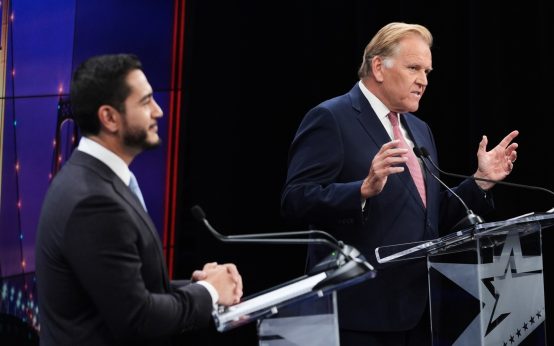
In a contentious Michigan Senate debate on Thursday, Democratic candidate Abdul El-Sayed and Republican candidate Mike Rogers exchanged sharp words and accusations. The debate focused on critical issues like the Iran war, a trade war with Canada, immigration, healthcare policy, and cost-of-living concerns.
El-Sayed called Rogers “weak” and “cowardly,” alleging he was merely a “sock puppet for the Trump administration.” Rogers retorted, labeling El-Sayed a “glitchy AI chatbot” engaged in a “con” to win the election.
The debate, a crucial event in a closely watched midterm race, showed both candidates frequently throwing barbs across the stage and accusing each other of flip-flopping on key issues. Moderator Rick Albin pleaded with both to maintain order, noting their disagreements even during the commercial break.
El-Sayed emerged as the Democratic nominee after a challenging primary where he clashed with moderate party members over his support for single-payer healthcare and opposition to U.S. military aid to Israel. Rogers, a former congressman, secured the GOP nomination with an endorsement from President Trump. Trump’s fluctuating approval rates have impacted Republican candidates in the midterms.
The race seeks to fill the seat of retiring Democratic Sen. Gary Peters and could influence Senate control. Both candidates supported pausing the gas tax due to rising energy prices amid Middle Eastern conflicts and criticized ongoing tariff battles with Canada.
Rogers suggested ending the trade dispute by negotiating with Canada, mentioning a conversation with Commerce Secretary Howard Lutnick about advancing a deal. El-Sayed countered by criticizing Rogers’ alignment with the Trump administration’s trade and Iran policies, questioning his independence from presidential dictates.
Addressing immigration, Rogers noted that earlier aggressive actions in Minnesota were “probably not appropriate” but claimed adjustments had been made. He argued that operations should target serious criminals, while El-Sayed, who advocates for abolishing Immigration and Customs Enforcement, opposed constitutional rights violations in deportations.
On healthcare, Rogers attacked El-Sayed’s support for Medicare For All, warning it could dismantle private insurance. El-Sayed clarified that he was fine with families keeping private insurance, surprising Rogers.
Foreign policy dominated discussions, with El-Sayed opposing the Iran war and pushing for a diplomatic solution. He referenced the nuclear deal from the Obama era, which Trump ended. Rogers maintained the war could end, citing damage to Iran’s military capabilities.
El-Sayed criticized Israel’s actions in its conflict with Hamas and questioned U.S. military support. When asked to compare threats from Israel and Iran, he dismissed it as a “ridiculous hypothetical,” criticizing both nations’ dangers. Rogers affirmed his strong support for Israel and stated any nuclear threat from them would change his stance.
Rogers challenged El-Sayed’s lack of a public statement marking the anniversary of a Hamas attack on Israel. El-Sayed said he condemned it privately to avoid politicization.
The candidates battled over financial entanglements, discussing El-Sayed’s wife’s rental property in the UAE and Rogers’ Florida waterfront home ownership. Their debate highlighted personal and policy divides pertinent to Michigan’s Senate seat race.
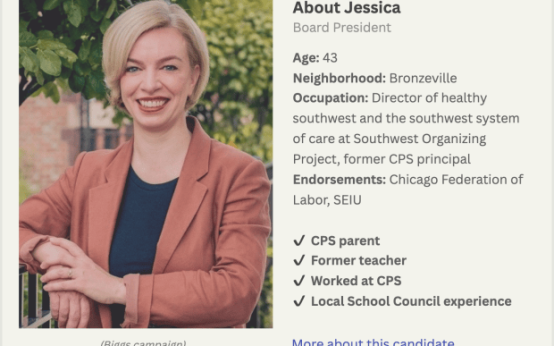 Chicago School Board President Election: Candidate Overview
 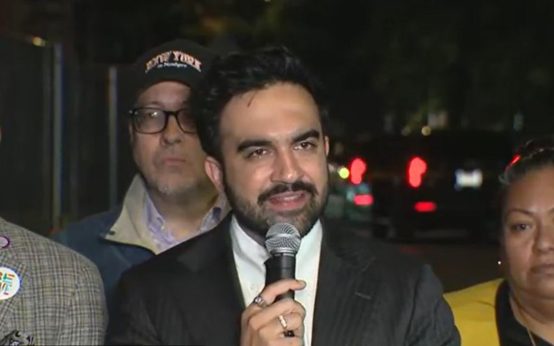 NYC Mayor Calls for End to ICE Enforcement After Shooting
 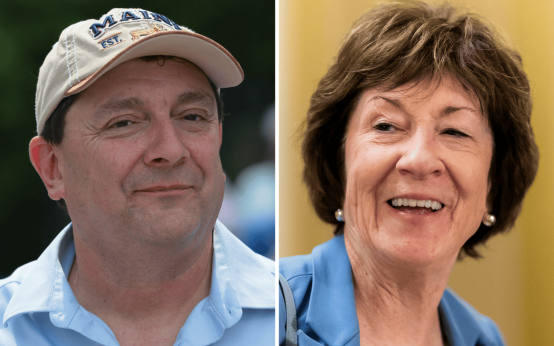 Collins and Jackson Clash in Maine Senate Debate
 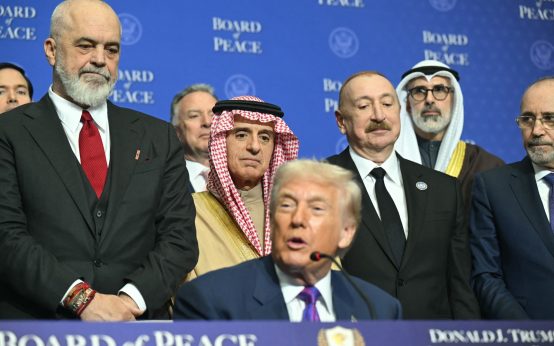 Trump’s Nobel Peace Prize Aspirations and Current Contenders
  Contentious First Debate in Michigan Senate Race Highlights Divisions
  Trump’s Approval Rating Drops as Democrats Gear Up for Midterms