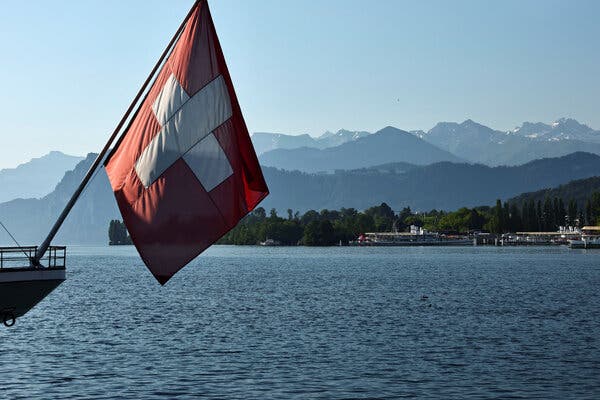
The preliminary agreement between the U.S. and Iran, less than a week old, has led to several issues, including canceled signing ceremonies in Switzerland, disagreements with Israel and Congress, and uncertainty about further talks.
On Thursday, Switzerland prepared for a pivotal moment in attempting to end the war in Iran. Swiss officials organized a luxury resort for crucial negotiations to finalize the preliminary deal. Vice President JD Vance was scheduled to fly there, with Air Force Two waiting on a runway outside Washington.
However, at 3 a.m. on Friday, Swiss time, the U.S. sent a message; Mr. Vance would not be attending. The talks were postponed indefinitely, with little explanation. A White House statement acknowledged the unpredictable logistics of negotiations. Diplomats revealed that Iran backed out in response to Israeli strikes in Lebanon, where Israel is involved with the Hezbollah militia, an ally of Iran.
Each day has brought new challenges and adjustments, impacting the path toward peace and collaboration.
This decision followed a week of uncertainty surrounding President Trump’s efforts to finalize a deal with Iran.
Among the key points of confusion:
- The terms of the agreement took time to publicize and remain unclear. U.S. and Iranian officials have differing descriptions, with American leaders claiming promises are included that are absent in the text.
- The deal does not settle major questions about Iran’s nuclear program or the Strait of Hormuz’s free passage. These questions are delayed to a second 60-day negotiation phase, just beginning. Yet, talks have been delayed without clarity on when they will continue or on what steps will follow if issues are unresolved.
- The U.S. and Israel, who initiated the war together, are divided on the deal. Israel’s compliance is uncertain, and renewed clashes between Israel and Hezbollah might have already endangered the agreement.
These challenges have disrupted what was expected to be a stabilizing period in global politics, trade, and markets, leaving global leaders uncertain about future developments.
Irish Prime Minister Micheál Martin expressed his concerns after a meeting in Belgium: I think it’s regrettable. It’s not surprising in some respects, but I would urge continued dialogue and adherence to the agreement, as the world requires stability and peace.
The agreement’s signing details were unclear initially. Confusion began on Sunday when the president announced the deal without specifying its contents. There were early discussions of a signing ceremony by Lake Geneva, near Switzerland’s western border with France.
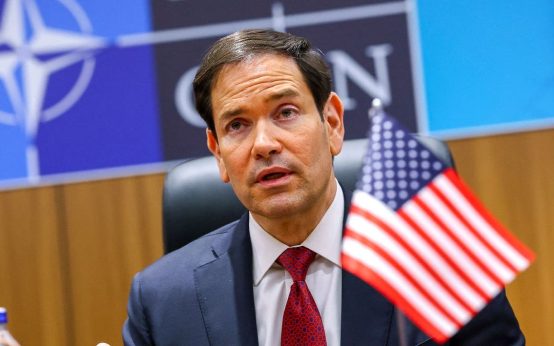 Secretary Rubio Discusses Middle East Conflict and NATO Relations
  Israeli Leader’s Upcoming U.N. Assembly Speech Marked by Controversy
  United States Secures Arctic Defense Pact
 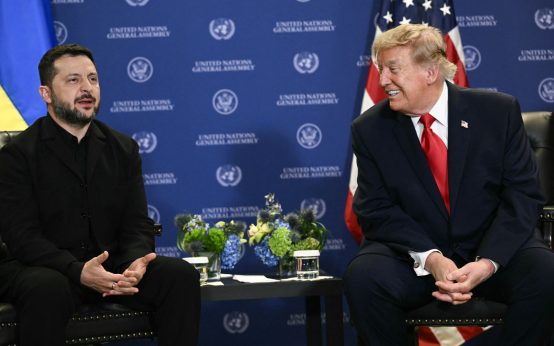 Trump’s Engagements at the UN: Focus on Ukraine and White House Developments
  Trump Administration to Admit 17,500 Afrikaner Refugees from South Africa
 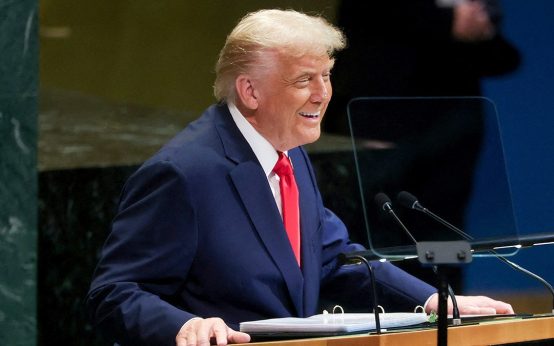 Trump’s Vision for Global Security: Iran, AI, and the Role of the U.S.