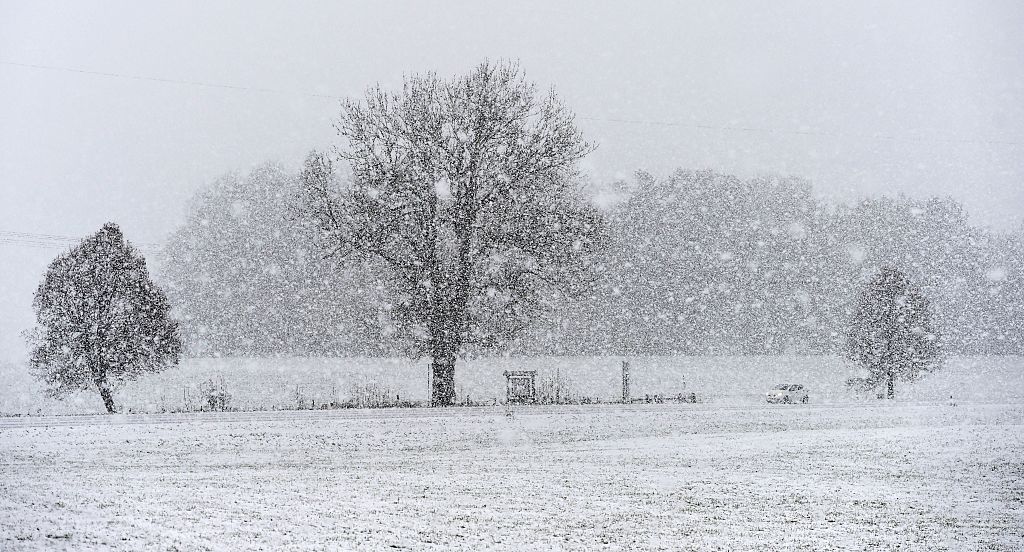
The Old Farmer’s Almanac has released its Winter 2026–2027 forecast, highlighting the potential impact of a strengthening Super El Niño on weather patterns across the United States. Currently, ocean temperatures in the tropical Pacific are rising, a change known to disrupt the jet stream and trigger major winter storms. This could lead to wetter conditions, heavy snow, icy mixes, or sudden cold snaps for millions of Americans as different climate signals converge heading into the new season.
Winter Predictions from the Old Farmer’s Almanac
The Almanac predicts a winter season defined by sharp contrasts, with various regions experiencing vastly different conditions. An active southern storm track is expected, bringing wetter-than-normal weather from Southern California through Texas, the Gulf Coast, and into the Southeast. This region may experience repeated storms, muddy conditions, and collisions of cold air with moisture, resulting in sleet, freezing rain, or heavy, wet snow.
The North will likely face more volatile conditions. The West, northern Plains, Upper Midwest, and Great Lakes are expected to have near-normal average temperatures. However, “near normal” doesn’t guarantee stability. There may be rapid-moving clippers, sudden cold snaps, and bursts of bitter air, interspersed with brief thaws.
Inland areas of the Northeast could see several heavy, wet snowfalls, while coastal communities might face more rain or mixed precipitation due to storm track shifts. Minor changes in temperature could shift forecasts from slushy snow to significant winter storms.
Impact of Super El Niño on Winter
Super El Niño is a major factor shaping the coming winter, and it is escalating rapidly. A warming tropical Pacific affects the jet stream, which directs storms over North America. A stronger El Niño often pushes the jet stream south, intensifying storms and channeling moisture into the southern United States.
In a Super El Niño condition, with exceptionally warm Pacific waters, these effects are amplified. Wetter conditions become more probable in the southern U.S., while northern areas might see more variable patterns, including brief cold snaps and sudden snow squalls.
According to meteorologist Crystal Egger, a stronger El Niño typically strengthens the subtropical jet, sending more storms into the southern U.S. This can lead to increased chances of heavy rain and flooding, particularly in California, the Southwest, and the South. Florida is also at risk for severe weather, like tornadoes, during such winters.
Egger noted that extreme winter weather—like snow and ice storms—can occur when these storm systems meet colder air. For businesses, such variability can mean significant disruptions, affecting energy, transportation, and infrastructure.
The Polar Vortex Factor
The polar vortex, a large mass of cold Arctic air usually confined near the North Pole, remains an unpredictable factor. If its circulation weakens or shifts, frigid air can spill southward, causing extreme cold outbreaks in U.S. regions that normally experience near-normal temperatures.
Forecasters are observing the Quasi-Biennial Oscillation (QBO), a wind pattern near the equator that can influence the polar vortex. Should the vortex become unstable, it could result in unexpected cold conditions even in typically moderate areas.
Egger emphasized the unpredictability of these interactions, stating that impacts often result from a mix of factors, not a single storm. El Niño winters can historically lead to significant weather events, though each season’s atmospheric conditions differ.
Reliability of the Old Farmer’s Almanac Predictions
The Old Farmer’s Almanac claims about an 80% accuracy rate for long-range weather forecasts. Last winter, it reported an 86.1% accuracy overall, forecasting temperature trends at 88.9% and precipitation variations at 83.3%. Accurate predictions included a rare storm dropping up to nine inches of snow from Mobile to Pensacola, with New Orleans receiving eight inches.
The Almanac combines a historical proprietary formula dating back to 1792 with modern meteorological tools, comparing solar activity, historical patterns, and long-term climate signals for its seasonal outlooks. Independent reviews often find lower accuracy than the Almanac’s claims, yet it remains a widely respected long-range forecasting resource.
Egger warns about misunderstandings regarding Super El Niño, noting that a stronger El Niño may lead to a less active Atlantic hurricane season but not necessarily less impactful. Only one major storm is needed to cause significant damage.
Her advice for businesses and households is to understand weather risks in advance, not waiting until the weather becomes problematic. Preparing for uncertainty is vital for minimizing impacts.
 Impact of New Tariffs on Green Energy Transition
  Cornell University Implements Ban on Processing Wild Game in Campus Kitchens
  Lake Mead’s Historic Low Water Levels Highlight Colorado River Crisis
  Impact of Saharan Dust on U.S. Weather
  Hanoi’s Urban Transformation: Growth and Challenges
  Grayslake Residents File Lawsuit Against Data Center Project