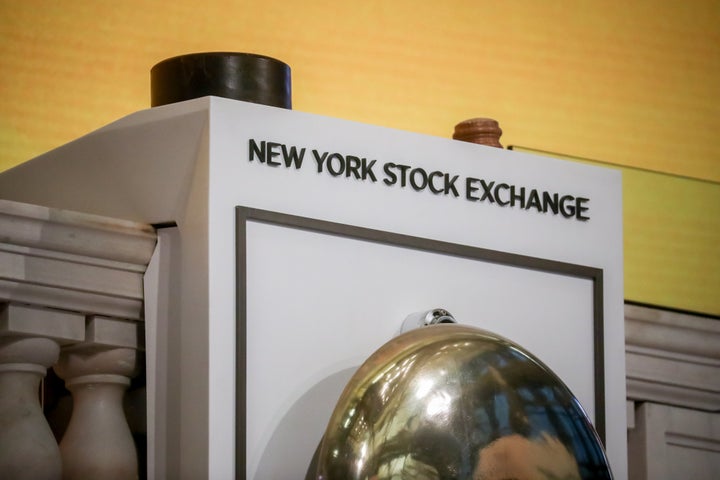
Thursday witnessed a significant downturn on Wall Street, driven by steep declines in stocks linked to AI data center development. The stock market lost all the gains recorded the previous day, which marked the best performance in three months.
The S&P 500 dropped 4.4%, marking its worst performance since April 2025, a period influenced by President Donald Trump’s tariffs. The Dow Jones Industrial Average decreased by 1,833 points, or 3.4%, while the Nasdaq composite, heavily populated with tech and AI stocks, plummeted 5.5%. This decline places the Nasdaq 11.9% below its recent all-time peak, fitting the definition of a ‘correction’ when losses exceed 10%.
Global markets felt the pressure as AI-related stocks fluctuated due to concerns over the soaring costs of AI data centers. The South Korean Kospi index fell by 5.3%. The rising costs associated with borrowing money instigated fears of a slowdown in the construction of AI data centers. Critics pointed out that AI stock prices had skyrocketed and were in a bubble.
The recent U.S. midterm elections added another layer of uncertainty. Democratic victories raised potential challenges for AI data center projects, with bipartisan voter concerns over the impact of AI on power bills.
This potential slowdown could reduce demand for AI chips and related services, elements crucial to U.S. economic growth. Nvidia, a leading player in the AI chip sector, declined by 9.3%, becoming a major factor in the S&P 500’s drop. It registered a 2.6% decline for the year, despite previous yearly gains of 39%, 171%, and 239%. Advanced Micro Devices also tumbled 17.3%, while CoreWeave fell 9.8% and GE Vernova decreased 7.5%.
Losses extended across Wall Street as morning gains dissipated swiftly. However, AppLovin bucked the trend with a 31% increase after surpassing revenue and profit expectations. Their board authorized a large stock buyback program. Tapestry also rose 7.1%, gaining from higher-than-expected profit and improved revenue forecasts.
The S&P 500 ended at 7,353.73, a loss of 334.89 points. The Dow Jones fell to 51,523.06, and the Nasdaq to 24,315.00.
Oil prices saw recovery as Brent crude increased by 3.9% to $98.29 per barrel, recouping some of the loss from the previous day. Uncertainty persists over the future of the Iran conflict and its impact on the energy sector.
Meanwhile, U.S. Treasury yields fell, indicating a shift toward perceived safer assets. The 10-year Treasury yield decreased to 4.84% from 4.90%. Despite the drop in yields, encouraging economic indicators emerged. Fewer workers applied for unemployment benefits, and productivity gains exceeded expectations, potentially easing inflationary pressures.
Global stock indices were a mixed bag. In Asia, Japan’s Nikkei 225 fell 1.8%, echoing the techno-centric losses. Europe’s FTSE 100 decreased by 0.4% following the Bank of England’s interest rate hike, the first in three years, aimed at curbing inflation.
We’ve seen encouraging news in the past 48 hours,
said Bank of England Governor Andrew Bailey, emphasizing the importance of resolving conflicts in the Middle East.
 U.S. Stock Market Rebounds Amid Political Shifts
 Gold Faces Its Worst Year in Over a Decade
 Impact of Rising Mortgage Rates on the Housing Market
 U.S. Stocks End Winning Week as Oil Prices Drop, Despite Inflation Concerns
 Consider a 2-Year CD for Secure Savings in an Uncertain Economy
 Impact of Federal Reserve Rate Decisions on Gold and Silver