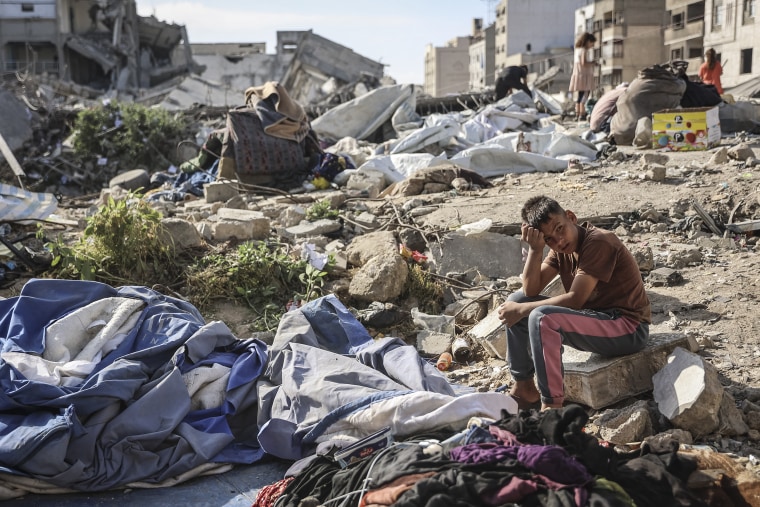
On May 29, 2026, a significant diplomatic turn occurred when President Donald Trump insisted that in exchange for ending the war with Iran, several Arab and Muslim nations sign the Abraham Accords to normalize relations with Israel. Despite the hefty potential benefits for Israel, Trump’s proposal has seen little response from the named countries. Many of these countries already maintain diplomatic relations with Israel.
Analysts suggest that Trump’s sudden condition feels impractical and resembles a desperate attempt to secure a legacy with an unpopular conflict. Instead of risking negotiations by affronting nations Trump needs to partner with, experts and diplomats indicate these countries are not taking Trump’s demands seriously.
“It’s gaslighting,” commented Aaron David Miller, a fellow at the Carnegie Endowment for International Peace, comparing the demand to Trump’s promise to transform the Gaza Strip economically, despite ongoing humanitarian struggles.
An Arab official directly involved in the peace talks between Washington and Tehran shared that Trump mentioned the Abraham Accords during these discussions. “There’s a big misunderstanding,” the official remarked concerning Trump’s statements. “We should be compensated, not bear the cost.” Several countries, including Turkey, Saudi Arabia, and Qatar, expect acknowledgment from the U.S. for their mediation roles in ending the conflict. Pakistani diplomat Asif Durrani argued that Gulf states have already incurred economic and security burdens from the war.
Regions like Saudi Arabia, the UAE, and Qatar have faced Iran’s counter-attacks, notwithstanding their non-involvement in the initial U.S. and Israeli assaults on Iran. Iranian strikes have notably affected areas like Sharjah in UAE.
White House spokeswoman Anna Kelly clarified in a statement that since Trump’s first term, expanding the Abraham Accords has been a priority, labeling it a “natural complement” to a peace deal between the U.S. and Iran.
On Monday, Trump proposed a quid pro quo, encouraging eight Middle Eastern and South Asian nations to join the Abraham Accords. In a post on Truth Social, he expressed that Middle Eastern leaders would welcome Iran’s inclusion in the accords.
The Abraham Accords marked a significant shift previously when countries such as the UAE, Bahrain, and Morocco established formal relations with Israel in 2020, altering the geopolitical landscape. Despite this shift, Israel’s involvement in the Gaza Strip conflicts has sparked outrage across the Muslim world, complicating regional dynamics.
Trump reiterated his stance, hinting at withholding agreements with Iran if these countries don’t sign the accords. No official responses have followed from the parties involved, including Israeli Prime Minister Benjamin Netanyahu.
An Israeli official noted, “Israel is keen on expanding the circle of peace for the benefit of all involved in the Abraham Accords. Trump continues to be a force in promoting these prospects.” However, analysts suggest diplomats across the conflict are increasingly dismissive of some of Trump’s comments.
For nations like Saudi Arabia and Qatar without official ties to Israel, the Abraham Accords are seen distinctly from the Iran conflict. Both have stipulated recognizing Palestinian statehood as a prerequisite for formal ties, which Israel has historically rejected.
Michael Koplow from the Israel Policy Forum highlighted, “The Israelis want an expansion of the accords and normalization with Saudi Arabia, but linking these to the Iran situation may not align with their interests.”
 NATO’s Commander Warns of Strong Response to Potential Russian Aggression
  Trump Plans Rally for Senator Roger Marshall Amid Tight Kansas Race
  Houthis’ Attack on Saudi Airport Sparks Controversy in Wrestling Event
  Trump’s Diesel-Deal Feud with Zelensky Obscures a More Important Effort
  Energy Ceasefire Challenges Amid Russia-Ukraine Tensions
  Trump’s Stance on Energy Prices and Ukraine-Russia Conflict