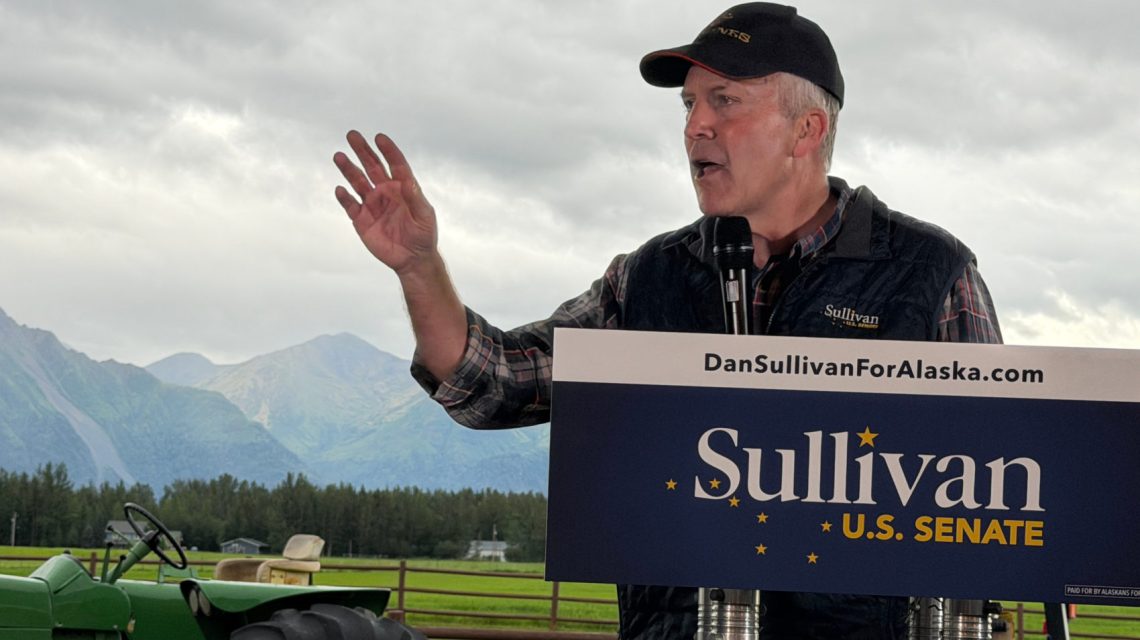
In a move underscoring Republican efforts to maintain control of Congress, President Donald Trump traveled to Alaska to support Republican Senator Dan Sullivan. This visit comes just before crucial midterm elections on November 3, where Trump seeks to bolster GOP chances in a predominantly Republican state.
Trump headlined a rally in Wasilla, approximately 45 miles north of Anchorage. The town is known as the hometown of former Republican vice-presidential nominee Sarah Palin. It also serves as the headquarters for the Iditarod sled dog race.
Addressing reporters before departing the White House, Trump emphasized his support for Sullivan, stating, “I’m going to Alaska to help Dan Sullivan.” This rally is part of a western tour including planned stops in Arizona and Montana.
Alaska’s political landscape has seen Democrats’ minimal success. The last Democratic Senate win occurred in 2008 and the state has favored Republican presidential candidates, except for supporting Lyndon B. Johnson in 1964. Yet, economic challenges like high fuel prices and inflation have hurt Trump’s approval ratings, motivating Democrats to aim for unexpected victories in Alaska.
Sullivan’s opponent, Democrat Mary Peltola, focuses her campaign on cost-of-living issues, connecting with voters’ economic concerns. Pollster Ivan Moore notes a decrease in Trump’s support in Alaska, paralleling his national approval rating trends.
The visit reflects Trump’s continued backing of Sullivan, including efforts that involve substantial investment announcements, such as a $54 billion South Korean investment in Alaska’s natural gas sector, though final details remain unconfirmed.
Trump’s trip to Alaska, just before the midterms, highlights his commitment to supporting Sullivan. Previously, Trump campaigned in Anchorage against Republican Senator Lisa Murkowski, who challenged him in his second impeachment trial.
This year, Alaska voters will encounter a unique ballot with two Dan Sullivans—Sen. Dan Sullivan and retired teacher Dan J. Sullivan. The latter denies being a candidate set to confuse voters. Additionally, Trump campaigned for Republican Rep. Nick Begich, who faces competition from independent Bill Hill.
Alaska’s election system, featuring open primaries and ranked-choice voting, complicates straightforward party support, as highlighted by state GOP leaders. Despite opposition to this voting method, they urge aligning votes with Republican candidates to retain momentum.
Another point of political tension involves Trump’s trade war with Canada. Alaska’s significant trade relationship with Canada faces strain from reciprocal tariffs and bans, affecting local economies.
Pollster Moore comments on this strained relationship, noting Alaskans often feel closer to Canadians than to residents in the Lower 48 states. This evolving political and economic situation remains a critical factor in upcoming elections.
Freely providing access to quality journalism is vital for democracy, encouraging informed and civil discourse.
 Investigation of Representative Ilhan Omar During Trump’s Second Term
  Pete Buttigieg Addresses Concerns and Energizes Indiana Democrats
  Judge Rules Against Trump’s Ban on News Outlets
  Gov. Tim Walz Warns Democrats About Potential Backlash and Urges Structural Change
  Diesel Prices, Tariffs, and War Impact Republican Senate Seats
  Alaska’s Political Landscape Poised for Change