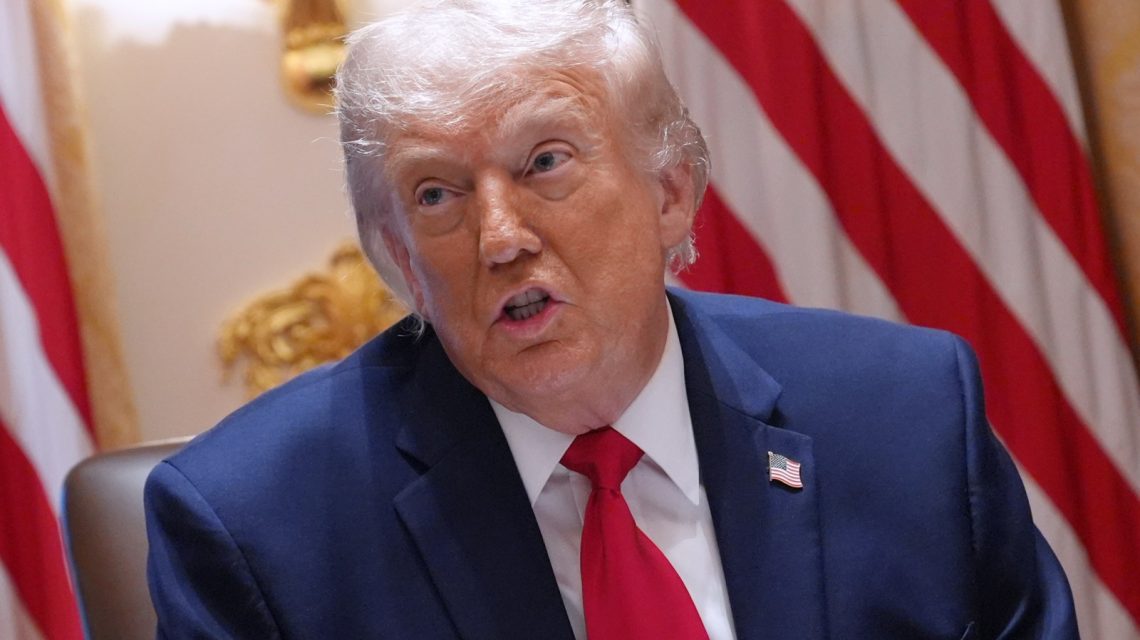
Former President Donald Trump criticized the Supreme Court for its approach to his attempt to limit birthright citizenship. He described the system as “rigged” and cautioned that the court might invalidate his executive order. On Truth Social, Trump claimed the political and judicial systems are compromised, asserting his election victory was due to overwhelming public support. The comments arrive as the Supreme Court reviews cases challenging Trump’s 2025 executive order that aims to alter birthright citizenship protections under the 14th Amendment. A ruling on this matter could significantly impact his agenda, particularly concerning citizenship by birth on U.S. soil.
Newsweek attempted to contact the Supreme Court for comments outside regular hours for their perspective on the matter.
Judge’s Family Targeted
In the same online post, Trump criticized U.S. District Judge Christopher Cooper. Cooper had ruled against Trump in a different case involving the Kennedy Center. Appointed by former President Obama, Cooper blocked efforts to rename the center the “Trump Kennedy Center” and stopped renovations after deeming the board’s actions illegal. Trump also mentioned Cooper’s wife, Amy Jeffress, labeling her an “anti-Trump hater.” Jeffress, a law firm partner, represented figures in litigation linked to Trump, including working as an adviser to the House committee on the January 6 Capitol attack.
Trump made significant changes to the Kennedy Center board, appointing influential allies, a move detailed by Forbes.
Updates on Birthright Citizenship Case
Trump’s 2025 executive order, named “Protecting the Meaning and Value of American Citizenship,” seeks to redefine the 14th Amendment’s interpretation of birthright citizenship. It proposes that automatic citizenship should not apply to those born to some immigrants and visitors, a practice upheld for 150 years. Under the order, at least one parent must be a U.S. citizen or a lawful resident for a child to receive citizenship. The administration contends that the phrase “subject to the jurisdiction thereof” excludes children of undocumented immigrants and certain visitors, sparking legal challenges.
Numerous lawsuits emerged against this policy, originating from states and civil rights entities. Ten cases have coalesced into three primary challenges from Massachusetts, Maryland, and Washington. The Supreme Court agreed to address this dispute, having conducted oral arguments with a decision anticipated in the current term.
Supreme Court Justices’ Reactions
During the oral arguments, several justices expressed doubts about the administration’s initiative to restrict birthright citizenship. Chief Justice John Roberts questioned the feasibility of considerably broadening historical exceptions to encompass large immigrant groups, dismissing some as “very quirky” examples, according to Axios. He also responded to Solicitor General D. John Sauer’s assertions about modern challenges due to increased global travel, emphasizing consistency with the existing Constitution.
Justices Neil Gorsuch, Brett Kavanaugh, and Amy Coney Barrett also queried the historic and legal grounds of redefining birthright citizenship, noting inconsistencies in the administration’s argument.
 Early Voting Kicks Off in Lake and Porter Counties with High Turnout
  Support for White Nationalism Among Young White Men in the U.S.
  Senate Race Prognosis: Democratic Surge in Key Battlegrounds
  Los Angeles Councilmember Nithya Raman Calls for Leadership Change Over Immigration Raids
  Trump and the French School Protests
  Debate Surrounds Kamala Harris’s Potential 2028 Presidential Run