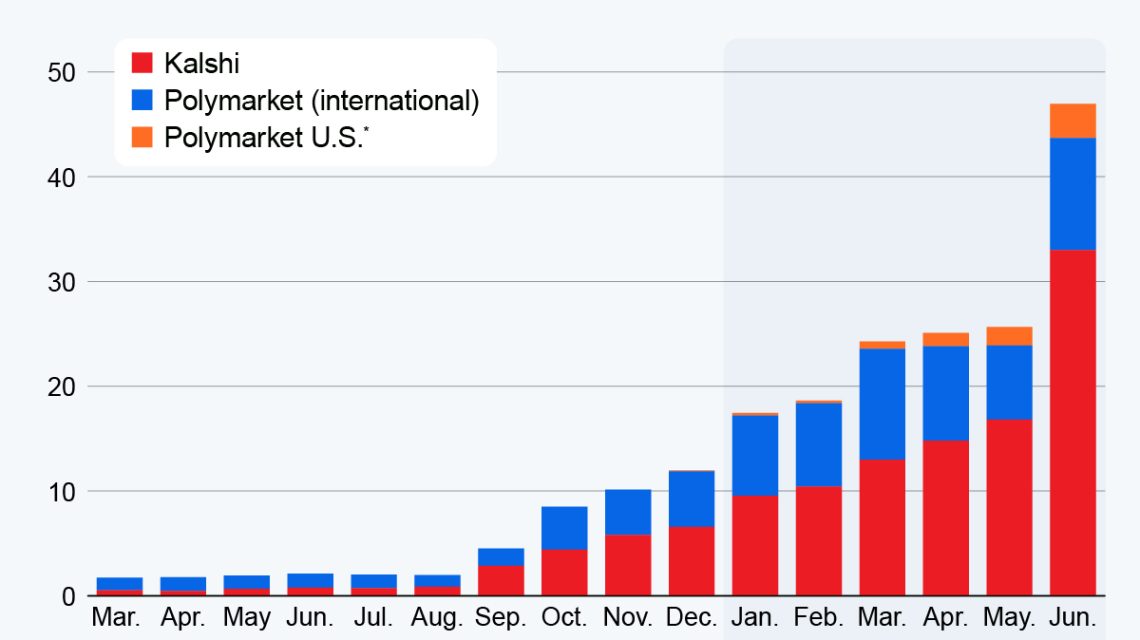
The revelation on Thursday about a White House employee placed on unpaid leave over a betting scandal involving Donald Trump’s speeches garnered little surprise. This incident might be viewed as yet another example of how prediction markets, such as Kalshi and Polymarket, are becoming associated with gambling or even insider trading.
The Real Stakes Behind Prediction Markets
The intrigue in these markets extends beyond simple wagers on trivial matters, such as a presidential preference for wallpaper. They potentially involve serious issues, such as elections or covert military operations. In a world overloaded with information and falsehoods, these markets might provide clearer insights.
Inside Information Becomes Public
While insider trading remains unethical, prediction markets have democratized the access to inside information. Historically, this was a luxury for the affluent and influential. Now, every wager leaves a footprint. Pay attention, and you might uncover the narratives driving major events and policies. Consider the example of a military insider using classified information to profit by over $400,000, offering clues to significant plans underway.
These markets can highlight discrepancies in official statements. A single confident bet, made by someone with insider knowledge, might unravel the narratives spun by influential institutions.
Comparison with Traditional Polling
Unlike opinion polls, prediction markets reflect what individuals are ready to put their money on, not just their thoughts. The primary difference lies in speed. While polls help gauge public sentiment over time, markets respond instantly to developments, from courtroom decisions to viral videos. Such immediacy can even lead to more accurate forecasts.
Evidence from a Vanderbilt University study indicated that prediction markets outperformed traditional polls in forecasting the 2024 Presidential Election results, especially in swing states. Despite requiring further research, keeping track of prediction markets before significant events could offer more reliable insights.
Broader Implications and Risks
Beyond individual insights, prediction markets have expansive applications. They might improve climate forecasting by providing unbiased probabilities instead of potentially biased reports. While they can’t solve climate change, they could pressure forecasters to prioritize accuracy over popularity.
However, the powerful nature of these markets means they could be abused. Congressional actions have already prohibited Senators from engaging with them. Proposals to extend this to the House, alongside state-federal regulatory disputes, underline the risks.
Consider potential misuse by governments. Could prediction markets be manipulated to detect changes in adversarial defenses or provoke unnecessary military actions?
Prediction markets hold significant potential. While they could become influential tools for understanding complex global scenarios, they must be approached cautiously. Misuse by influential entities could blur lines between reality and deception. Regular scrutiny and informed use could help mitigate these risks.
 Media Outlets Sue After White House Ban
  American Public Opinion on Press Freedom
  Media Lawsuit Against Trump Administration for White House Ban
  The Cost of Challenging Beijing
  Analyzing Midterm Elections and Party Dynamics
  Experts Warn Against Alarmism in AI Governance