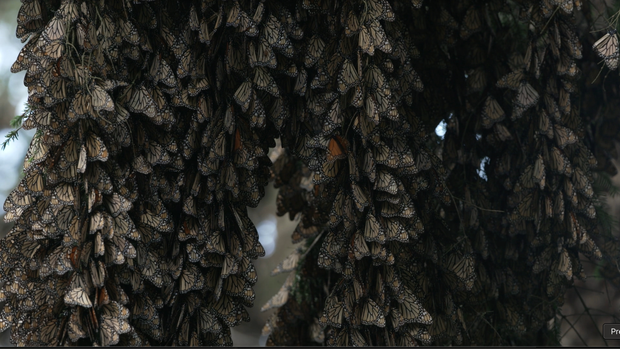
Monarch butterflies embark on a unique migration that stands out as one of the most fascinating natural occurrences. Every spring, millions of these butterflies travel from Mexico to the United States on a vast aerial journey. They spend the winter in secluded forests on Mexican mountains, gaining strength after earlier flights from Canada and the northern United States.
Studies suggest that monarchs have been undertaking this journey for millennia, though their numbers have drastically reduced. In Mexico, a 70% decline in their population has occurred over the past three decades. Witnessing the butterflies reawaken here in February is a mesmerizing event, as they prepare to take flight once again.
The Monarch’s Migration Path
Starting in late October, monarchs gather in Michoacan, central Mexico. Jorge Rickards, from the World Wildlife Fund in Mexico, guides visitors through the fir and pine forests where the butterflies roost. Upon initial observation, these forests may appear to house clumps of dead leaves. However, these are clusters of butterflies, weighing down the branches.
The monarchs enter a hibernation phase on their way to Mexico, relying on nectar to sustain them through winter. The mountain climate and tree canopy offer ideal shelter from the elements. Despite the drab appearance attributed to closed wings, this coloration serves as a natural defense.
Winter in Mexico
In the mornings, monarch butterflies may fall to the forest ground due to cold, but they can be revived with warmth. As sunlight warms the trees, these butterflies start opening their wings, and their vibrant orange hues emerge.
Court Whelan, a wildlife photographer, highlights how sunshine triggers increased butterfly activity. The sight is awe-inspiring as the air fills with these delicate creatures, creating a spectacle that resembles a living snow globe.
The Super Generation
It remains a mystery how monarchs navigate these long journeys. Most live roughly a month, spending time feeding and mating. However, a unique generation emerges in late summer that executes this extensive migration.
These butterflies undergo diapause, a process where reproductive hormones are suppressed, extending their lifespan to nine months. Born in Canada and eastern United States, they return to Mexico as part of a journey spanning 3,000 miles.
Environmental Challenges and Conservation Efforts
The exact reasons for this migration remain unknown. Yet, monarchs continue to follow their ancestral path. Since their discovery in Mexico in 1975, the forest’s health has been threatened by illegal logging, reducing the butterflies’ roosting area.
Efforts to protect monarch habitats involve assessing forest conditions and collaborating with local communities. Tourists bring economic benefits, contributing to conservation.
The Monarch’s Lifecycle
As monarchs near the end of their lifecycle, they mate and start migrating north to lay eggs. They rarely survive to return to their birthplace, relying on catch and tag programs to monitor migration.
Chip Taylor, an ecologist with Monarch Watch, has tagged over two million monarchs, aiding research and awareness.
Planting Hope
Monarchs rely on milkweed—a plant now scarce due to agricultural practices. Monarch Watch advocates for milkweed planting, establishing Monarch Waystations to help sustain butterflies.
These initiatives have garnered attention in Mexico, with evidence of tagged butterflies validating migration routes. Despite challenges from climate and environmental shifts, recent surveys report promising numbers.
The butterflies’ autumn arrival in Mexico coincides with the Day of the Dead—a cultural event believed to unite spirits with loved ones. Locals associate returning butterflies with ancestor spirits, adding a mystical dimension to their migration.
Conservation measures show success, as monarch colonies cover increasing forest areas, marking progress in preserving this natural wonder.
Produced by Denise Schrier Cetta; Associate producers include Katie Brennan, Georgia Rosenberg, Grace Conley; Edited by Craig Crawford.
 Communities Continuing Recovery from Hurricane Helene Explored through Graphic Novel
  Fat Bear Week 2026 Highlights: Meet the Competitors
  Annual Fat Bear Week Begins at Katmai National Park
  Understanding Hurricane Development
  California Prepares for El Niño-Fueled Storms with Emergency Declaration
  California’s Growing EV Adoption: Challenges and Benefits