
Four years ago, when the Supreme Court issued its decision in Dobbs v. Jackson Women’s Health, the focus was on overturning the constitutional right to an abortion, dismantling nearly 50 years of precedent. However, the impact of this ruling extends beyond abortion itself, affecting areas such as in vitro fertilization (IVF), which accounts for the birth of almost 3 percent of babies annually. Public support for access to IVF remains strong. During his campaign, President Trump promised to cover all costs associated with IVF treatments, even introducing a rule to facilitate employer coverage of fertility care.
Treating IVF and abortion as separate issues proves challenging. Both involve choices about family creation and control over prenatal life. IVF, with its costs ranging from $15,000 to $20,000 per cycle, often leads to the creation of excess embryos to boost efficiency and reduce expenses. Prospective parents traditionally have control over these embryos, deciding whether to discard, donate, or save them. An estimated 1 million frozen embryos exist in the U.S. currently.
The production of excess embryos poses a problem in states banning abortion to protect unborn children. The Dobbs ruling allows states to preserve prenatal life at all stages, encouraging embryo-protective laws. Consequently, some states treat embryos in test tubes differently from those in utero. This creates complications. If embryos are considered people, IVF would face bans or restrictions, potentially decreasing its success rate. Measures like prohibiting embryo destruction, mandating the transfer of all fertilized embryos, or limiting fertilization numbers could be enforced. Italy implemented such a law in 2004, resulting in a drop in IVF success rates and an increase in multiple births, posing risks to women and children.
Four years after Dobbs, balancing embryo protection with the popular demand for IVF remains contentious. The Trump administration introduced a document on ’embryo adoption,’ viewing embryos as existing children needing families, while backing IVF. Meanwhile, the Texas Republican Party debates banning IVF to safeguard prenatal life. In 2021, the Southern Baptist Convention urged constituents to use infertility treatments respecting embryonic dignity. In Alabama, a Supreme Court ruling that considered cryopreserved embryos as persons for wrongful death claims led to a temporary halt in IVF until a legislative immunity law was passed for providers.
Despite these tensions, IVF is likely to remain protected in most states. The demographics of fertility patients—typically older, married, non-Hispanic white or Asian, and wealthier—suggest they vote to defend their interests. Allowing control over embryos might be justified by the view that IVF creates life. However, a world permitting IVF but banning abortion will exacerbate social inequities, particularly for less privileged groups struggling with access to both IVF and abortion.
Individuals seeking abortions primarily include low-income women in their 20s, women of color, and unmarried individuals, facing greater challenges in circumventing abortion bans compared to wealthier counterparts pursuing fertility treatments. The high cost of IVF also renders it inaccessible to many. Both IVF and abortion are deemed essential reproductive healthcare by the American Society for Reproductive Medicine. Pursuing either is integral to reproductive justice, which champions the right to have or not have children and to raise them with dignity.
Post-Dobbs, states banning abortion have compromised these rights, especially for the disadvantaged. Since the ruling, rises in abortion rates, pregnancy-associated and pregnancy-related mortality, as well as infant mortality, have been noted in states with abortion bans. Maintaining the capability to form families through IVF must not become the next casualty in a post-Dobbs landscape. Upholding reproductive justice and equity necessitates that neither abortion nor IVF be banned, as they represent two sides of the same reproductive issue.
Sonia Suter is a professor of law at The George Washington University Law School and the founding director of the Health Law Initiative.
Copyright 2026 Nexstar Media Inc. All rights reserved. This material may not be published, broadcast, rewritten, or redistributed.
 The Impact of Arts and Closure on Democracy
 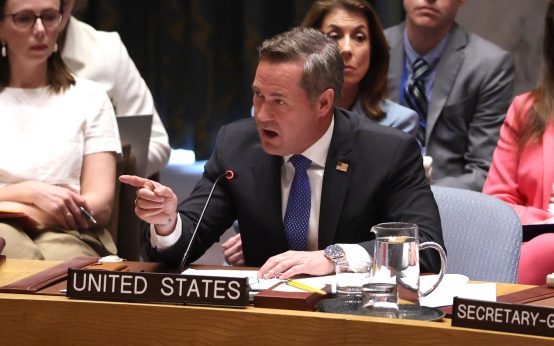 U.S. Ambassador Comments on Iran War Duration Amid Political Concerns
 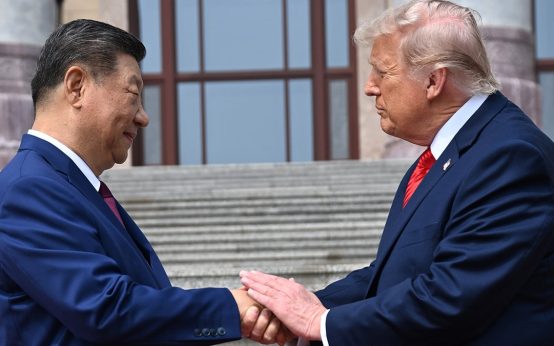 US-China Relations Under Scrutiny: Expert Warns of Escalating Tensions
  No Timeline for End of Iran Conflict
  German Chancellor Merz Vows to Pursue Reforms Despite Election Setbacks
  The Technology Rivalry: Trump’s Meeting with Xi and the AI Ecosystem Clash