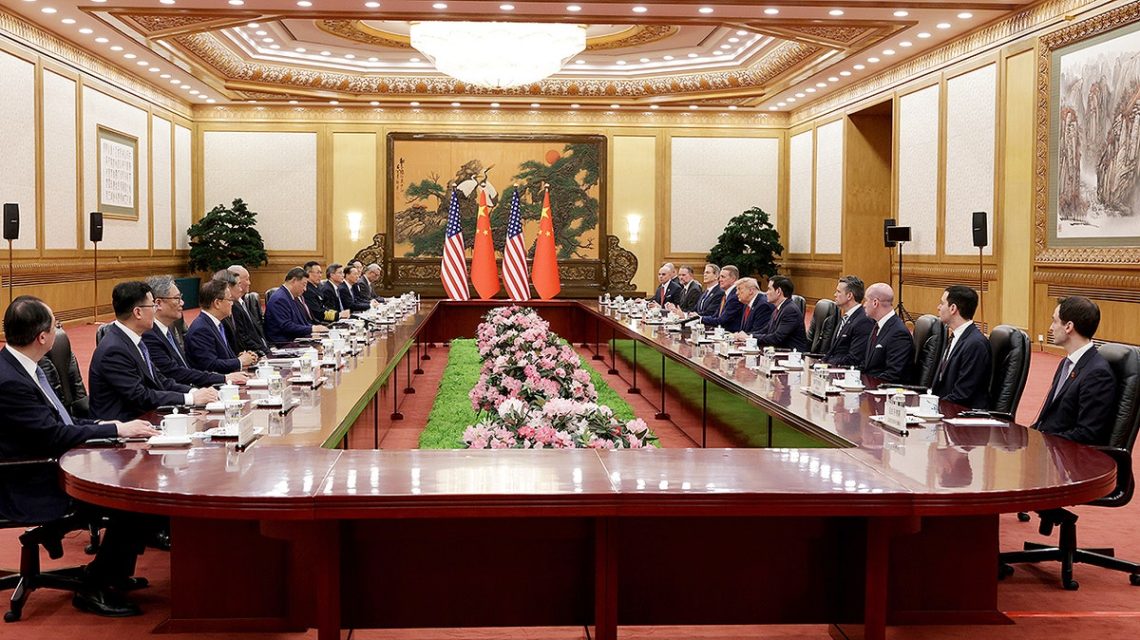
When President Donald Trump meets with Chinese President Xi Jinping in Washington, several important topics will dominate the discussion. These include trade, tariffs, rare earth minerals, national security, and supply chains. However, a significant focus will be the technological competition that could define global economic and military power for years: artificial intelligence (AI).
The conversation about AI involves not only who builds the best models but also who controls the chips, computing infrastructure, and the technology ecosystem. The United States remains a leader in advanced AI and semiconductor design, yet China aggressively seeks independence from American technology.
For many years, the U.S. has used export controls to limit China’s access to advanced semiconductors and related technology, aiming to prevent enhancing China’s military capabilities. However, this policy has unintended consequences. China has accelerated efforts to build an AI ecosystem independent of U.S. technology.
Huawei has played a critical role in this ecosystem development. The company expanded its AI chip plans and adapted domestic hardware and software, investing heavily in computing systems. Recently, Huawei reported a high demand for its AI computing equipment, which exceeds supply, prompting further development of its processors.
“America runs on data. If we don’t build the infrastructure, China will.”
The strategic question for Washington is no longer about merely keeping sensitive technology away from China. It also involves ensuring that the world continues to choose American technology over Chinese alternatives. If American technology becomes globally inaccessible, incentives for China to develop substitutes and for Huawei to sell these substitutes increase significantly.
The AI ecosystem involves much more than chip sales. It revolves around the software, computing systems, and technology standards that countries and companies adopt. America aims to promote its technology, but China wants its own companies, like Huawei, to create a separate, Beijing-controlled technology stack.
President Trump’s administration has taken a unique approach, differing from the Biden administration. While maintaining controls on technologies with serious national-security implications, it has eased some restrictions, considering licenses for certain advanced chips for Chinese customers under particular conditions.
Huawei’s goal is not merely to endure American restrictions but to compete with U.S. technology. It wants Chinese chips powering AI, with infrastructure supporting Chinese models. Ultimately, the aim is to have customers globally using Chinese technology systems.
The next phase of competition concerns which countries buy certain chips, which systems they install, which software developers learn, and which technology stack becomes the standard for the AI economy.
America holds significant advantages with leading semiconductor designers, AI companies, and universities. However, technological leadership requires defense. Washington should avoid policies that make American technology hard to use globally, allowing Beijing to present alternatives.
Some suggest slowing AI development or imposing broader restrictions for safety and security, a debate warranting serious attention. While AI presents risks and advanced semiconductor technology has military applications, export controls must be considered carefully for their impact on American security.
The United States has a strategic interest in ensuring its companies remain integral to the AI ecosystem, avoiding past mistakes of offshored manufacturing. Where semiconductors used to be simple components, now they represent strategic power.
The nations controlling advanced computing will have advantages in scientific discovery, medicine, manufacturing, intelligence, cybersecurity, and military technology. This is why the Trump-Xi meeting has global significance beyond trade agreements.
The U.S. should protect its intellectual property and technologies with military potential while allowing American companies to compete internationally. The imperative is to design and build technological infrastructure domestically to maintain leadership in the AI economy.
With AI already at the center of global competition, American innovation and technological competitiveness must prevail on the global stage.
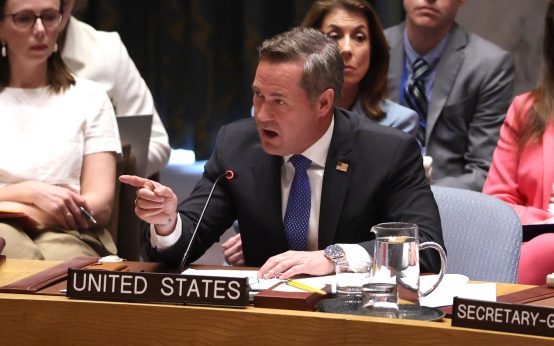 U.S. Ambassador Comments on Iran War Duration Amid Political Concerns
 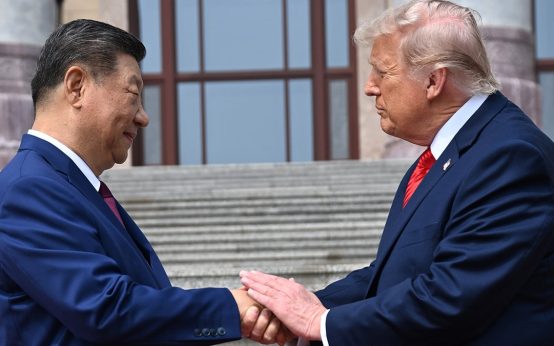 US-China Relations Under Scrutiny: Expert Warns of Escalating Tensions
  No Timeline for End of Iran Conflict
  German Chancellor Merz Vows to Pursue Reforms Despite Election Setbacks
 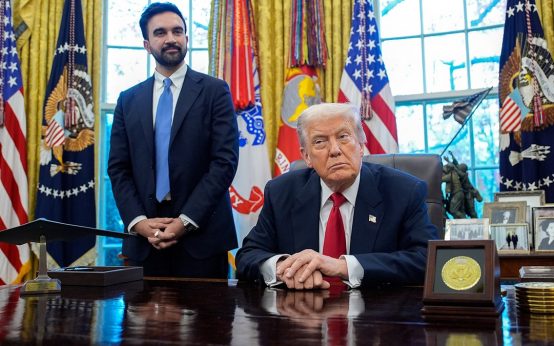 Mayor Mamdani’s Meeting with President Trump to Address NYC Issues
  German Chancellor Stands Firm After Electoral Setback