Scientists such as Britt Lundgren and David M. Klein express concern over the increasing risks posed by space debris in Earth’s orbit. Kessler syndrome, an anticipated situation involving continual collisions of orbital debris, has long worried experts. A significant chain reaction in low Earth orbit (LEO) could affect satellite functionalities and introduce long-lasting dangers. Millions of reflective debris fragments could heighten light pollution, challenging astronomical research globally, even in remote areas.
This scenario, initially seen as speculative, is becoming more tangible. The frequency of satellite launches has risen, with both governments and private sector entities responsible. Despite this, cleanup protocols remain insufficient and primarily voluntary. The impact of debris has extended beyond orbit. An incident in 2024, where debris from the ISS damaged a home in Florida, highlighted the immediate threat.
To mitigate these risks, enhanced international collaboration and regulations are imperative. The 1967 Outer Space Treaty laid down basic non-binding principles for space activities but lacks specific rules for debris management, space traffic control, and collision prevention. A modernized framework under the United Nations Office for Outer Space Affairs is crucial.
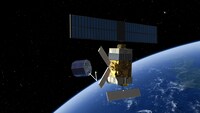
Entities responsible for and benefiting from space infrastructure must assume a protective role. An updated enforcement regime could enforce mandatory satellite disposal plans and limits on harmful anti-satellite weapon trials. It should also support investments in debris-removal technologies, such as NASA’s Active Debris Removal Vehicle. This prototype targets removing larger space debris by synchronizing with the object’s movement and rotation. Continuous deployment of costly equipment at risk of collisions threatens not only astronauts but also our satellite-reliant modern society.
An artistic concept illustrates how a non-functional satellite could undergo controlled reentry and destruction within Earth’s atmosphere. This process would burn and safely eliminate it, reducing the hazard of space debris. Effective measures are vital to prevent further space congestion, ensuring both current and future safety and functionality of orbital operations.
 Facing the Reality of U.S. National Debt
  Ari Emanuel: A Hollywood Insider’s Journey
  Reader Reactions on Grizzlies and Data Centers
  Embracing Change: Navigating Political Shifts and Biases
  The Debate on ‘Fair Share’ in Taxes
  Diversity at Football Games Should Be Celebrated, Not Criticized