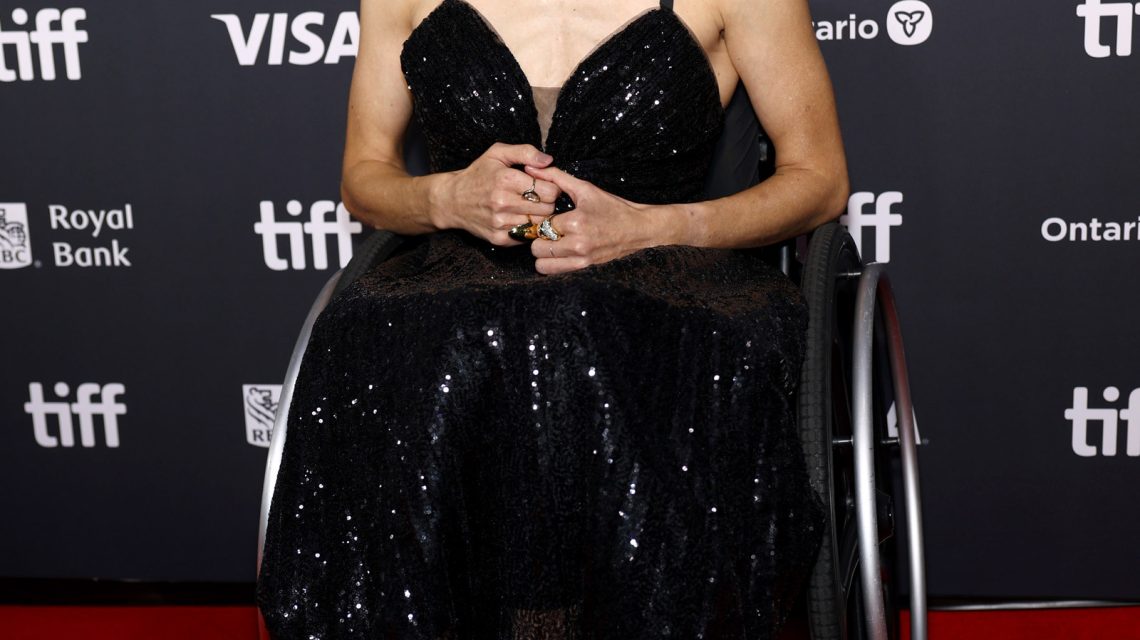
The night before an airline lost my wheelchair was one of the most eventful evenings of my life. I sat at a large table in the back of a Los Angeles movie theater, where talented writers, actors, and creatives read aloud a script I had co-written with Oscar-winning filmmaker Siân Heder. The audience laughed at the right moments, and many were moved to tears. I marveled at the possibility that our movie might become a reality.
Growing up paralyzed in the ’90s, I saw few relatable disability stories. Films like Forrest Gump and Million Dollar Baby presented disability in problematic ways. Our script, Being Heumann, narrates a real-life David and Goliath story. It’s about a group of disabled protesters, led by Judy Heumann, who took on the U.S. government in a pivotal standoff that reshaped disability rights in America.
The conflict centered around Section 504 of the Rehabilitation Act, a piece of legislation that redefined disability in society. Passed in 1973 but unapplied for years, it highlighted that exclusion was socially constructed and not a personal tragedy. Heumann led a sit-in at the Department of Health, Education, and Welfare in San Francisco, demanding its implementation. The government attempted to oust them by cutting off water and phone lines, but the protesters held their ground for nearly a month until the government conceded.
The success of Section 504 paved the way for the Americans with Disabilities Act (ADA) in 1990, largely thanks to disabled WWII veteran and Kansas Senator Bob Dole. The ADA, signed into law by President George H.W. Bush, was a landmark civil rights law that profoundly shaped our world, ensuring access to education, employment, and public facilities for everyone, not just individuals with disabilities.
However, growing up in America, I barely learned this crucial history. My perspective broadened only when I worked on this script. I realized how past activists’ efforts had shaped my present—from accessible infrastructure to the broader world I navigate today. While chatting with Judy during the script development, I understood how intertwined our narratives had become.
After a script reading, an incident highlighted the ongoing challenges faced by disabled travelers. Upon landing, I found my customized wheelchair missing. The temporary airport wheelchair was a non-self-propelling cart, limiting my mobility. Thankfully, my husband accompanied me on the trip and assisted me, but the ordeal underscored the unpredictable hazards disabled travelers still face.
Recapping this experience to Siân, we discussed the irony; we were telling the story of Judy’s fight for aviation accessibility, yet similar challenges persist today. While our fight continues, significant progress has been made, and it is essential to both build upon and protect this progress.
Almost a year later, Apple Studios greenlighted Being Heumann. Embracing authentic representation, the studio prioritized casting for roles that mirrored the diversity of experiences depicted in our film. Watching actors embody this story deeply moved me. Such representations can deeply impact those with similar experiences.
However, the emergence of the lawsuit Texas v. Becerra aimed to dismantle Section 504’s protections. Despite widespread advocacy and historical application since the activists’ protests in 1977, a recent court decision altered the interpretation of the law, undercutting previous integration rights.
Against this backdrop, Being Heumann premiered at the Toronto International Film Festival. It was a surreal feeling to celebrate this film amid legal challenges that threaten the very rights it portrays. Such occasions spotlight the dissonance between cultural recognition and regulatory setbacks.
Reflecting on Judy Heumann’s legacy, I’m reminded of her ability to galvanize change. Her life’s work inspired campaigns that have transformed countless lives. As new leaders step in, they must continue the activism she and her peers began, championing both legislative and cultural shifts.
Through storytelling, societal values surrounding disability can evolve. Films like Being Heumann could reshape perceptions without solely focusing on legal reforms. While legislation remains crucial, fostering a societal framework that meaningfully respects and implements these laws is key.
The quest for genuine inclusion remains ongoing. Judy’s teachings resonate: we persist not because outcomes are certain, but precisely because they aren’t.
 Blueprint for GOP Renewal: Lessons from Ballot Measures
 Minnesota and Medical Aid in Dying: A Call for Reconsideration
 The Complexities of Post-Divorce Interactions
 Restoring Democracy Through Legal Means
 Michael Goodwin’s Commentary on Political and Social Issues
 Understanding Fear and Masculinity in American Politics