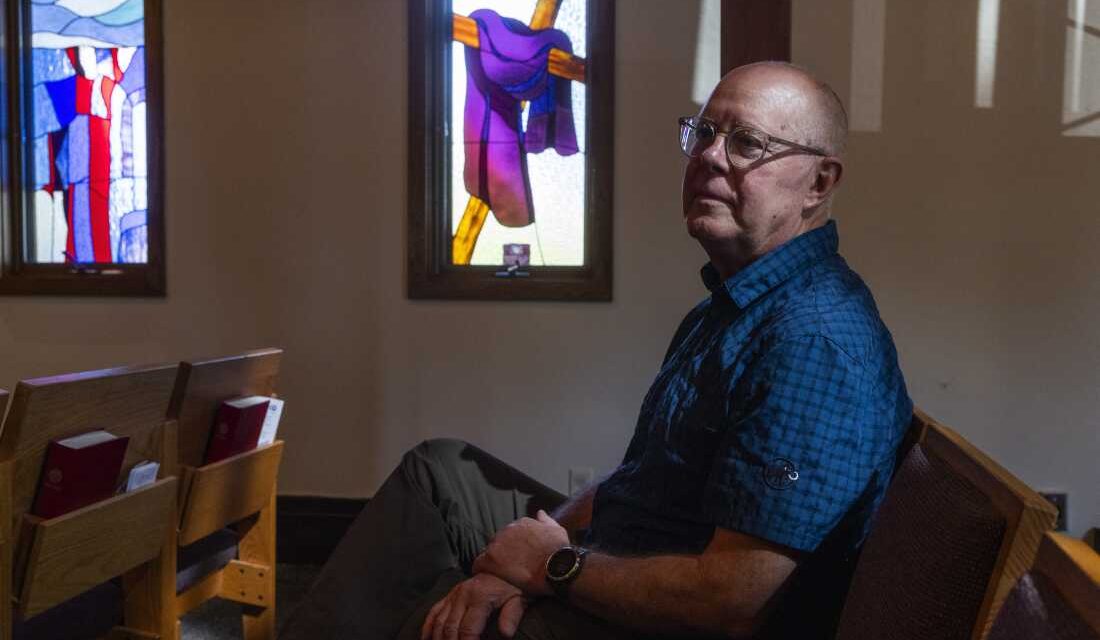
The interim Pastor of the Prince of Peace Lutheran Church in Roseville, Minnesota, Rev. Steve Sylvester, recently informed his congregation about unusual surveillance activities. The Department of Homeland Security (DHS) had monitored their church during a federal immigration enforcement surge last winter. This was disclosed as part of a federal court filing related to an ongoing conspiracy case against Immigration and Customs Enforcement (ICE) protesters.
According to government documents, an undercover DHS agent attended an ICE protest meeting at Prince of Peace in February. The agent recorded license plates of attendees and compiled detailed profiles, including personal information about their families and jobs. Rev. Sylvester expressed discomfort with these activities, likening them to eastern European practices in the 1950s.
The surveillance didn’t just stop at this church. Government documents reveal that federal agents secretly recorded meetings at various places, including churches, libraries, and schools around the Twin Cities. They infiltrated private group chats and sought financial records from national labor unions, affecting community members not accused of crimes.
Rachel Levinson-Waldman from the Brennan Center for Justice expressed astonishment at the extent of the surveillance, describing the use of government resources as substantial. Cody Sanders, the interim pastor at the University Baptist Church in Minneapolis, was surprised and angered upon learning that an agent attended a self-defense class at his church wearing a wire.
Sergio Manancero, general manager at La Doña Cerveceria in Minneapolis, mentioned that an undercover agent attended an open meeting in January. He noted that while he thinks such surveillance might be inappropriate, he isn’t shocked that it happened. The meeting they attended was set for a lawful protest against ICE.
Privacy and Free Speech Concerns
Levinson-Waldman highlighted that while the federal government has authority under the Fourth Amendment to gather information, other laws limit this practice. The legality of the Minnesota surveillance remains unclear. Even if legal, the ethical implications and alignment with public comfort come into question.
Levinson-Waldman referenced COINTELPRO, an FBI program from the mid-20th century known for aggressive surveillance on organizations deemed subversive. The abuses of that program led to stricter investigative guidelines. The government, however, defended its current surveillance efforts in Minnesota, identifying those targeted as conspirators planning unprotected activities by the First Amendment.
Aaron Terr, from the Foundation for Individual Rights and Expression, pointed out potential First Amendment concerns, as surveillance could impact lawful activities. The DHS, within its investigation scope, accessed financial records of several nonprofits and unions, raising questions about the focus of the investigations.
Some government documents show a troubling depiction of 18 organizations interconnected in a conspiracy, including local unions and a bicycle repair shop. Though the government clarified that these groups were not accused of conspiracy, the association creates an environment of caution, according to Terr.
He warned that such government actions might deter Americans from participating in protests or supporting advocacy groups out of fear of investigation. DHS and the U.S. Attorney’s Office declined to comment on the matter. A court hearing on the conspiracy case is scheduled for this week.
 A Mother’s Tragic Journey Under Abortion Ban
  U.S. Strategic Goals Remain Unmet Amid Prolonged Conflict
  The Impact of Arts and Closure on Democracy
  U.S. Ambassador Comments on Iran War Duration Amid Political Concerns
  US-China Relations Under Scrutiny: Expert Warns of Escalating Tensions
  No Timeline for End of Iran Conflict